Kwaidan: Strange Tales of Nature and War
Masaki Kobayashi’s Kwaidan is usually filed under horror. Seen on a big screen, its four ghost stories read better as mysteries: about a nature full of spirits, and about the dead of a lost war.
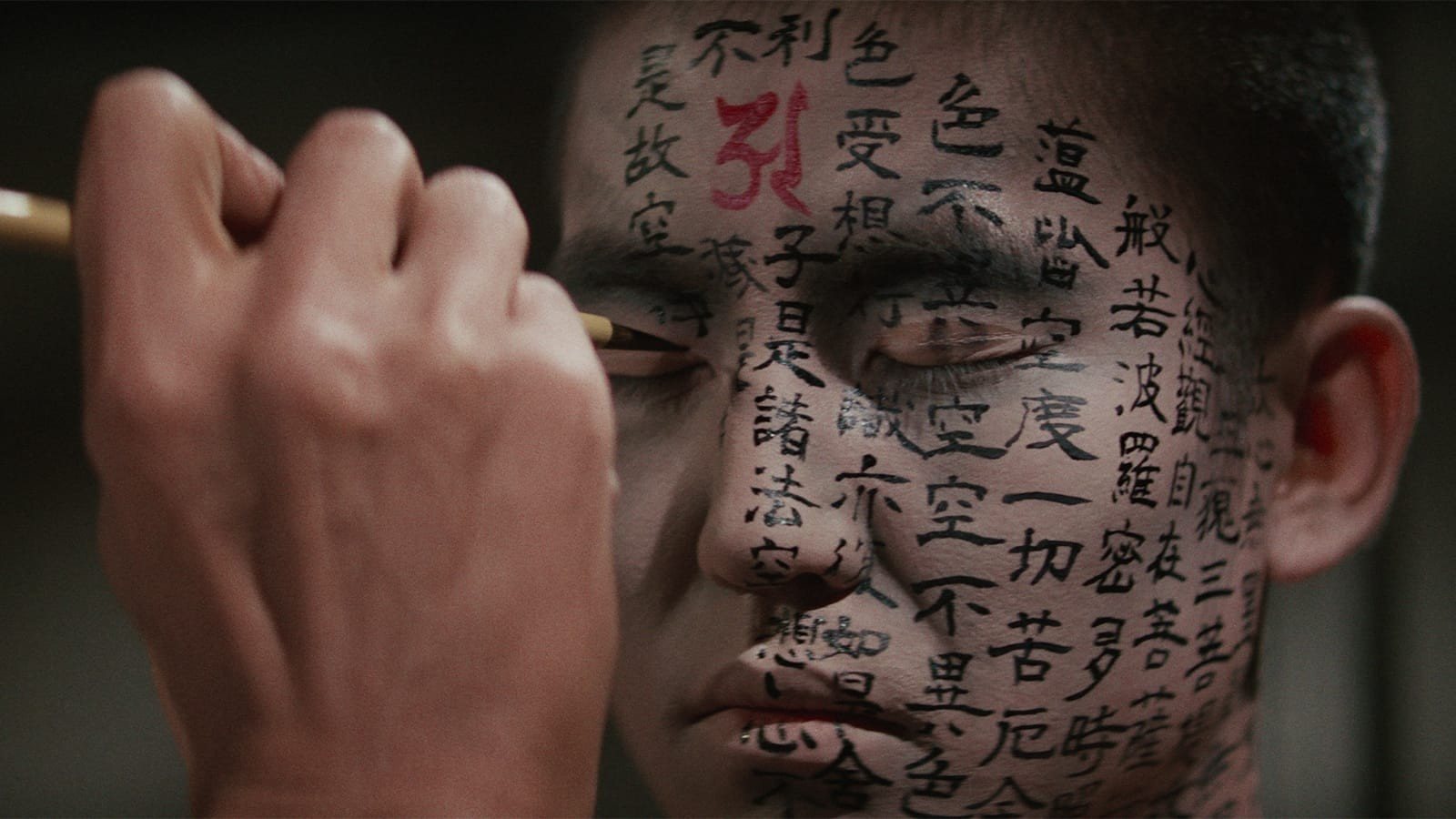
The sound of the Gion Shōja bells echoes the impermanence of all things; the color of the śāla flowers reveals the truth that the prosperous must decline.
Today I saw Masaki Kobayashi’s Kwaidan at the Egyptian Theatre in Hollywood, at the Los Angeles premiere of Toho’s new 4K restoration. The film is from 1964 and runs a little over three hours in its complete form. It adapts four Japanese ghost stories that Lafcadio Hearn retold in English: “The Black Hair,” “The Woman of the Snow,” “Hoichi the Earless” and “In a Cup of Tea.” It won the Special Jury Prize at Cannes in 1965 and was nominated for the Academy Award for best foreign-language film, though American audiences first saw it cut to about two hours, without the second story.The complete version runs 183 minutes. The American release of 1965 ran 125 minutes and dropped “The Woman of the Snow.” Almost all of it was shot on sets, under skies painted by hand, to a score by Tōru Takemitsu that is often closer to sound than to music. I have seen many films this year and have wanted a place to write about them, and this seemed the right one to begin with.
Kwaidan is usually filed under horror, and it appears on lists of the best horror films ever made. Very little in it is meant to frighten. Nothing jumps out of the dark, the pace is slow and ceremonial, and the ghosts, when they come, are beautiful and mostly sad. Kobayashi himself disliked the label. “I am not really satisfied with the designation of ‘horror film,’” he told the critic Joan Mellen. “Its spiritual concerns are the center of the drama.”Joan Mellen, Voices from the Japanese Cinema (1975), p. 148. He described his intention as exploring “the juxtaposition between man’s material nature and his spiritual nature, the realm of dream and aspiration.” I think it is better described as a film of mysteries, in the older sense of the word: things that can be approached and honored but not explained. Two threads run through the four stories, and they are what I want to follow here. The first is a view of nature that comes from Shinto and Japanese folk religion, in which the world is full of spirits that are neither good nor evil, and in which a snowstorm can have a face. The same view runs through the animated films of Hayao Miyazaki, and it is the main reason Kwaidan is not a horror film. The second is Kobayashi’s own. He was drafted to fight in the Second World War and refused to be promoted above private, and the longest of the four stories is about the dead of a lost war who return every night to hear the story of their defeat. Its closest relative among his films is Harakiri. Beneath both threads runs Buddhism, which in these stories governs how the living deal with the dead.
Strange Tales
The Japanese word kaidan (怪談) is made of two characters: 怪, the strange or uncanny, and 談, talk or a story. A kaidan is a tale of the strange. Hearn spelled it “Kwaidan” after the older reading, kwaidan, which was still in use in his day. In the Edo period such tales were a social pastime. In the game called hyakumonogatari kaidankai, a gathering for a hundred strange tales, the players lit a lamp with a hundred wicks and took one out after each story, so that the room grew darker as the night went on. The stories were told for the pleasure of the strange as much as for fright, and many of them are not frightening at all.
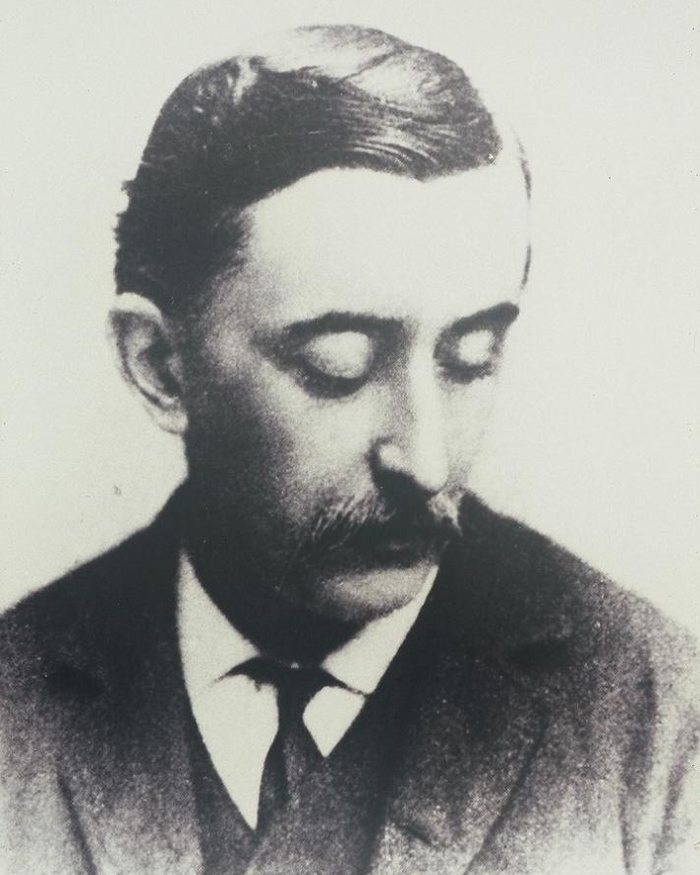
Hearn was born in 1850 on the Greek island of Lefkada to an Irish father and a Greek mother, worked as a journalist in Cincinnati and New Orleans, and arrived in Japan in 1890. He taught English in Matsue, married Koizumi Setsu, the daughter of a samurai family, became a Japanese citizen under the name Koizumi Yakumo, and died in Tokyo in September 1904, five months after Kwaidan was published. Many of the stories came to him through Setsu, who read the old books and retold them to him at night. In her memoir she recalled that he would not let her read to him from the page:
If I told him the story by reading it from a book, he would say, “There is no use of your reading it from the book. I prefer your own words and phrases — all from your own thought. Otherwise, it won’t do.”
Much of the film’s tone comes from this, I think. These stories reached Hearn the way they had reached everyone before him, told aloud at night in a quiet room, and not as entertainment built to shock.
To see why they are mysteries rather than horror, it helps to know what the Japanese tradition means by a god. The eighteenth-century scholar Motoori Norinaga spent more than thirty years on a commentary on the Kojiki, the oldest Japanese chronicle, and his definition of kami, the spirits or gods of Shinto, is still the one most often quoted. In D. C. Holtom’s translation, the word covers not only gods and human beings but “birds, beasts, trees, plants, seas, mountains and so forth”:
In ancient usage, anything whatsoever which was outside the ordinary, which possessed superior power or which was awe-inspiring was called kami. … Evil and mysterious things, if they are extraordinary and dreadful, are called kami.
A kami in this sense is not good. It is anything out of the ordinary that inspires awe, and Norinaga is explicit that this includes what is evil and dreadful. The feeling it calls for is reverence with fear in it, and the right response is not to destroy it, as the hero of a horror film destroys the monster, but to keep the proper distance and observe the proper forms. Horror is a genre about a threat to be overcome. The kaidan is about a presence that has to be lived with. Japanese aesthetics also has a word for the quality of what lies just past understanding. Yūgen describes, in the words of a standard sourcebook, “the profound, remote, and mysterious, those things which cannot easily be grasped or expressed in words,” and the Noh playwright Zeami made it the highest aim of his art.Sources of Japanese Tradition (1958), p. 284. Kobayashi’s film moves at something like the pace of Noh, and I think it has the same aim.
The kami are only half of this world. For more than a thousand years Japanese religion did not keep the gods of Shinto apart from the buddhas. Shrines had temples attached to them, and from the Heian period on the kami were commonly explained as local appearances of buddhas and bodhisattvas, a doctrine called honji suijaku. The ghost story owes at least as much to Buddhism as to Shinto. The oldest Japanese collection of strange tales, the Nihon ryōiki, finished around 822, was compiled by Kyōkai, a monk of the Yakushiji temple, to show karmic retribution at work in the world. The Konjaku monogatari of about 1120, where Hearn found “The Black Hair,” puts its book of ghosts and demons after many books of Buddhist tales from India, China and Japan. The Edo kaidan grew partly out of sermons. The Zen monk Suzuki Shōsan, a former samurai, collected tales of karmic retribution, many of them ghost stories, as material for preaching, and his disciples published them in 1661 as Inga monogatari. Asai Ryōi, whose Otogi bōko (1666) is one of the founding collections of Edo ghost stories, was a priest of the True Pure Land school. In this tradition a ghost is someone who cannot let go. Attachment to a place, a person or a grievance holds the dead back, and the remedy is not to destroy the ghost but to perform the rites and offer the prayers that will release it.
The two religions were separated by force only in 1868, when the new Meiji government ordered Shinto disentangled from Buddhism, and in the years that followed many temples were stripped or destroyed. The temple of the Hoichi story was among them. The Amidaji at Shimonoseki was abolished around 1870, and its memorial hall for the drowned emperor became a Shinto shrine, today’s Akama Jingū. When Hearn arrived in 1890, the Japan whose stories he collected was already being sorted into two religions. Kwaidan puts them back together. Its spirits of nature come from the old Shinto world, and its dead belong to Buddhism.
The Black Hair
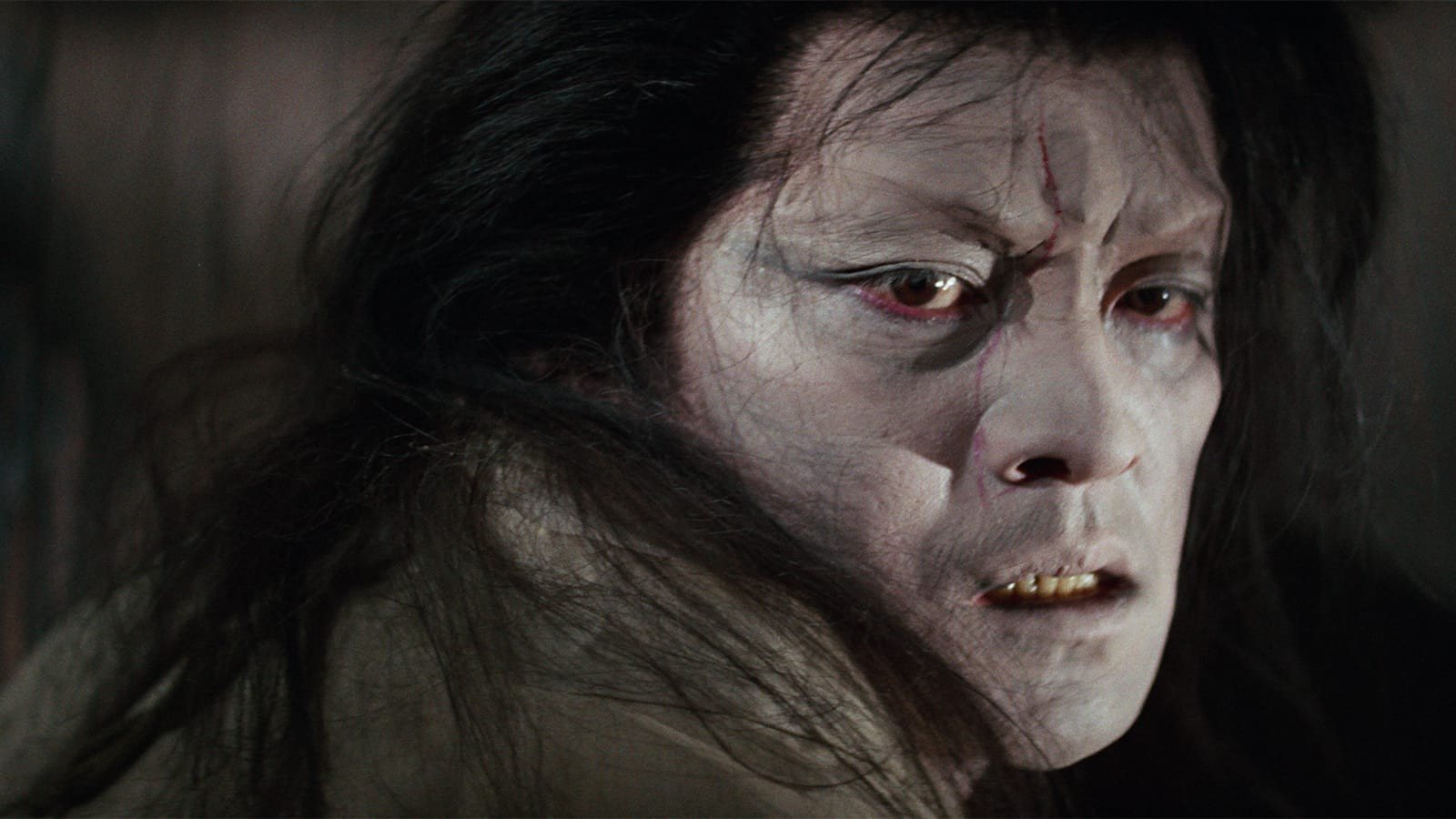
The first story is set in old Kyoto. A samurai, poor since the ruin of his lord, leaves his wife, a weaver, to marry into a family of higher rank and enter the service of the governor of a distant province. The new marriage brings him rank and comfort, and his second wife is proud and cold. He thinks of the first more and more, and when his term of service ends he goes back to Kyoto to find her. The house is falling apart, but she is there, unchanged. She does not reproach him. They talk through the night about the years apart, and he promises never to leave again. At dawn he wakes beside a corpse, a skeleton in a rotted robe with long black hair. In Hearn the story ends there. Kobayashi goes further: the hair comes after him through the ruined house, and he ages, in a few minutes, into an old man.
Hearn’s footnote gives the source as the Konjaku monogatari, a collection of tales compiled in the twelfth century, and the tale seems to have reached him the usual way, read and explained to him by Setsu.Kadota Mamoru, in the Bulletin of Nara University of Education 54 (2005), identifies the Konjaku tale. Hearn’s version is “The Reconciliation,” in Shadowings (1900). Setsu had worked at a loom from the age of eleven, and her first husband had left her within a year because of her family’s poverty. I do not know whether she thought of herself as she told it, but the story of a weaver abandoned by a poor husband came to Hearn through a woman who had lived a version of it.
On its surface this is a story about ambition and its price, and it turns on a choice that Kobayashi’s films keep returning to, between a private loyalty and a hierarchy that offers advancement. The samurai chooses the hierarchy. What strikes me is that the ghost does not accuse him. In Hearn’s version there is no sign that the wife meant him any harm, and even in the film, where the hair attacks, it feels less like revenge than like the house closing over him. What destroys the samurai is the belief that he can go back. The Japanese folktale it most resembles is that of Urashima Tarō, the fisherman who spends what feel like a few years in the palace of the Dragon King under the sea and comes home to find that centuries have passed. When he opens the box the princess gave him and told him never to open, he becomes an old man on the spot. The samurai, too, ages in a single night, all the years he spent away arriving at once.
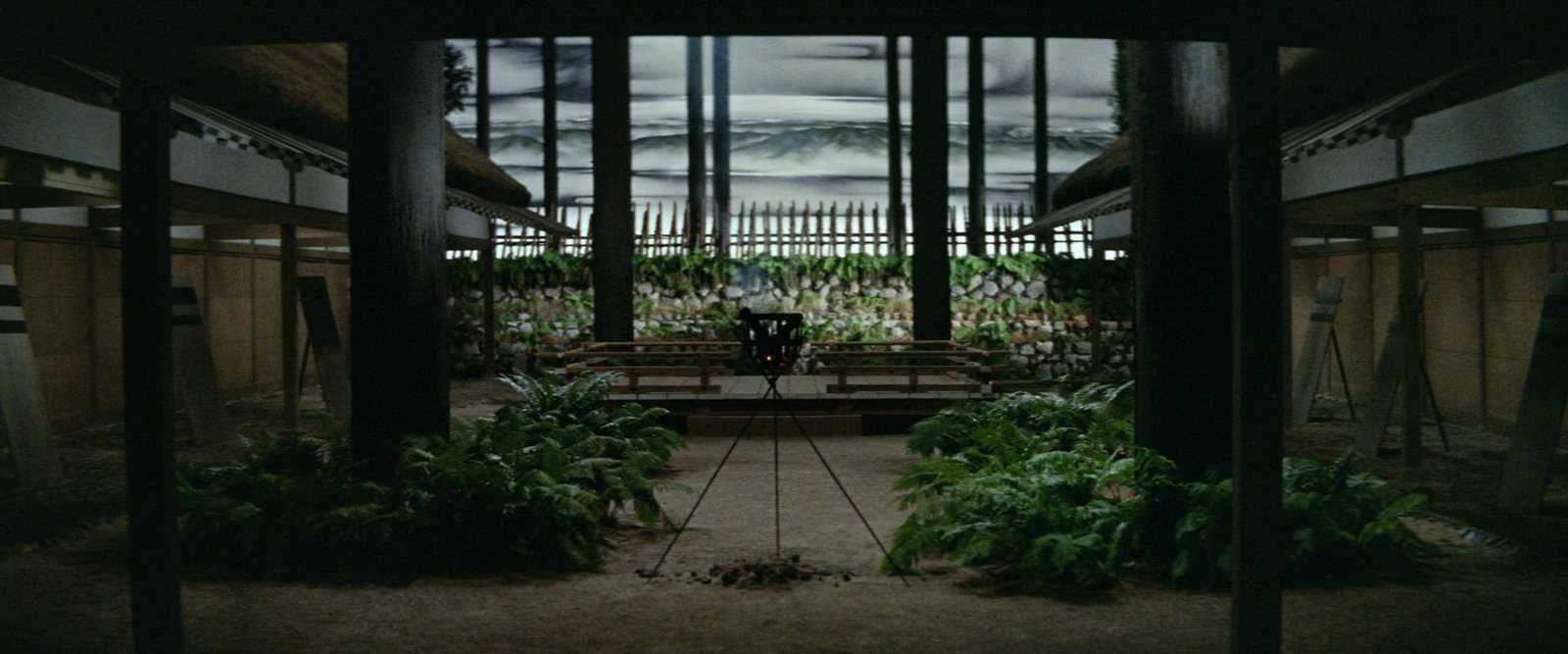
The house matters as much as the ghost. When the samurai returns, grass grows through the floor and the roof is open to the sky. Nature has come back into the human space, and the wife has become part of it, like the house. The one thing about her that survives is her hair, which in the court culture of Heian Japan was the measure of a woman’s beauty. In this first story the strange thing is time itself, which does not punish anyone and cannot be undone. Buddhism calls it mujō, impermanence, the subject of the bells in the epigraph.
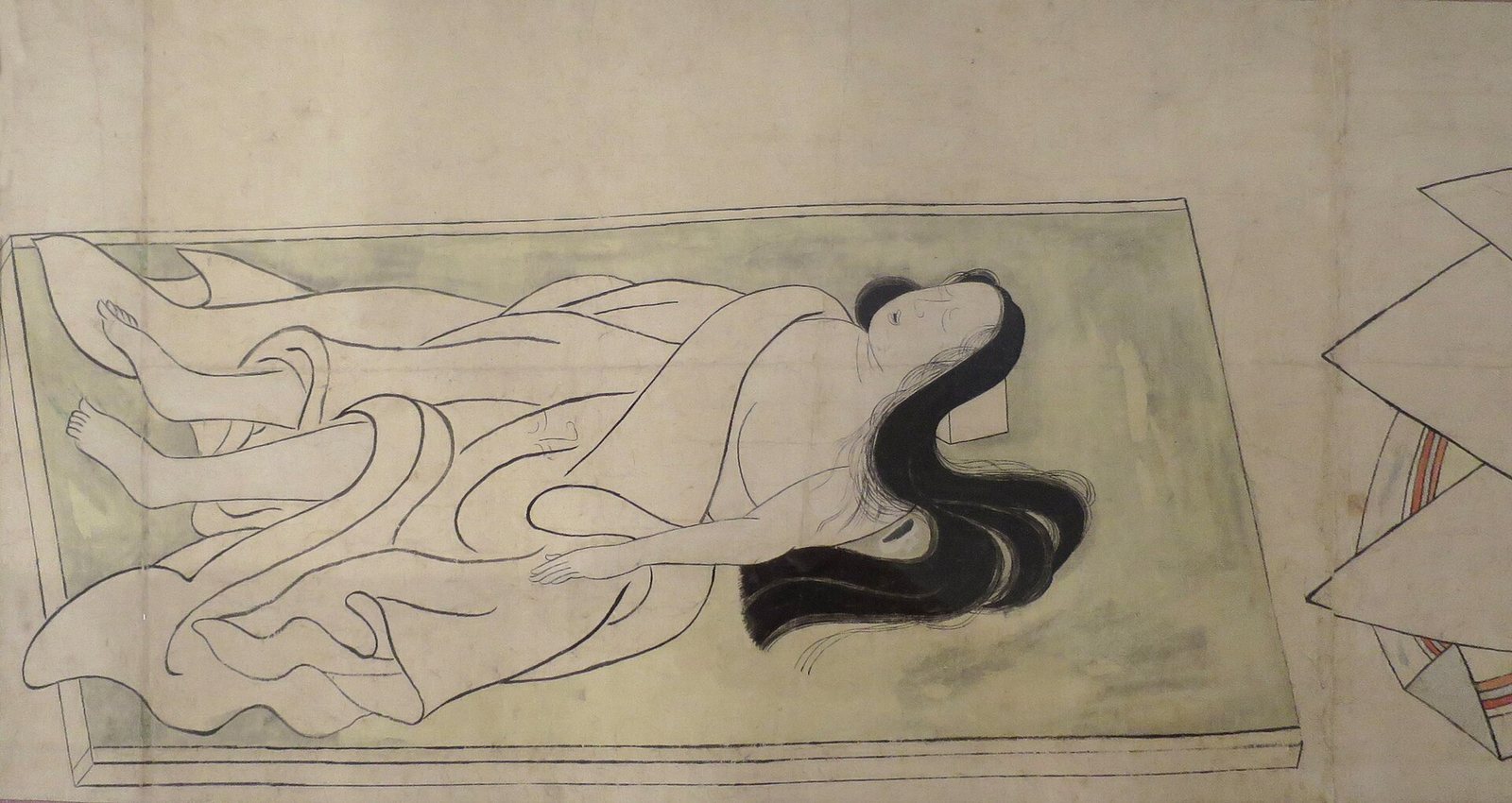
Buddhist art has a name for what the samurai sees when he wakes. Japanese painters made scrolls called kusōzu, pictures of the nine stages of a corpse, in which a beautiful woman, often identified with the poet Ono no Komachi or the Empress Danrin, lies newly dead, then swells, splits, rots, is eaten by dogs and birds, falls apart and ends as bones and ash. They served the meditation on impurity, fujōkan, in which a monk contemplates the decay of the body in order to cut his attachment to it.Fusae Kanda, “Behind the Sensationalism: Images of a Decaying Corpse in Japanese Buddhist Art,” The Art Bulletin 87 (2005). The samurai is put through the whole meditation in a single morning without having asked for it, and the lesson is the same: what he loved was always going to look like this. In Buddhist terms his fault was not only ambition but attachment, first to rank and then, when rank disappointed him, to a past he thought he could go back to.
The Woman of the Snow
The second story is the one American audiences did not see for years, and to my eye it is the most beautiful of the four. Two woodcutters, the old Mosaku and his young apprentice Minokichi, are caught in a blizzard and take shelter for the night in a ferryman’s hut. A woman in white comes in and breathes on Mosaku, who freezes to death. She bends over Minokichi too, but spares him because he is young and handsome, on one condition: he must never tell anyone what he has seen, or she will kill him. A year later he meets a young woman on the road named O-Yuki, which means snow. They marry and have three children, and she does not seem to age. One winter night, while she sews by the lamp, he tells her the story of the woman in the snow, and remarks how much she looks like her. O-Yuki stands up and tells him it was she. She would kill him now, she says, if it were not for the children, and she leaves him to raise them and disappears into the storm.
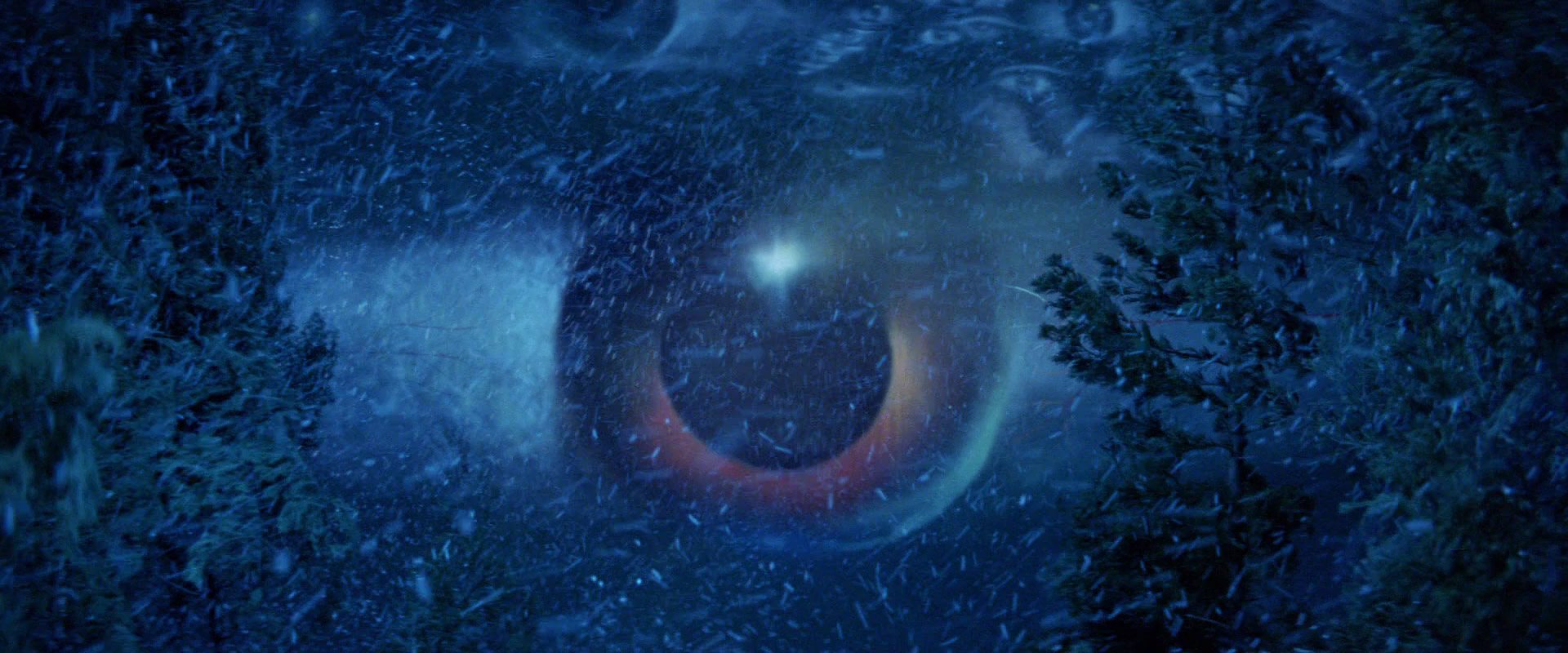
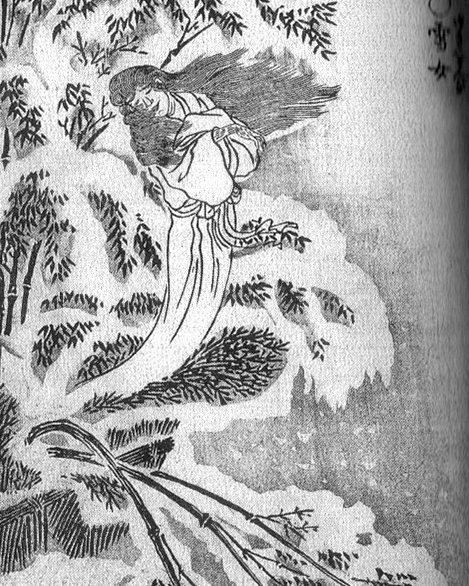
The woman of the snow, Yuki-onna, was a familiar figure in Japanese folklore long before Hearn, and the print shown here, from an eighteenth-century catalogue of spirits, is one of many pictures of her. She is a kami in Norinaga’s sense. She kills the old man and spares the young one because the young one is beautiful, which is the logic of weather and not of morality, and the film shows her in the same way. Above the blizzard, Kobayashi painted a sky full of eyes. The storm is watching, and it does not care in our sense, but it is not blind.
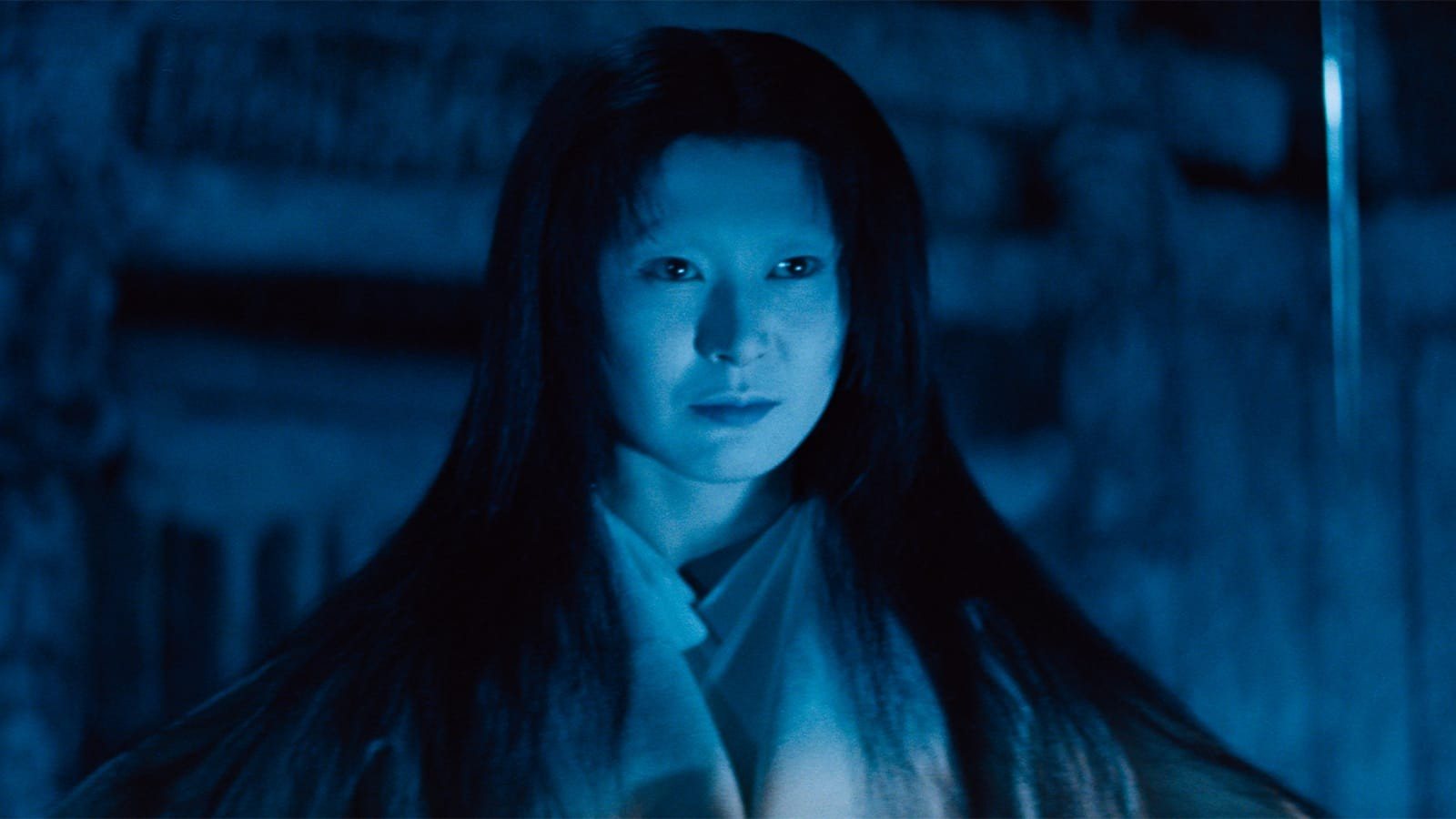
The story belongs to a family of Japanese tales about marriage between a human and a being that is not human, called irui kon’in tan.Ikeda Shirō, writing on Hearn’s Kwaidan in Hērun kenkyū 2, places “Yuki-onna” squarely in this genre. The best known is the crane wife. A man saves a crane, and later a woman comes to his door and becomes his wife. She weaves him a precious cloth on the condition that he never watch her at the loom, and when he looks he sees a crane pulling out her own feathers for the weaving, and she flies away. In most of these tales the marriage ends because the man breaks a taboo, and the taboo is older than any folktale. In the Kojiki, the god Izanagi follows his dead wife Izanami to Yomi, the land of the dead, and she tells him, “Look not at me!” He lights a torch, sees her body rotting, and runs. In the quarrel that follows she swears to kill a thousand of his people every day, and he answers that he will cause fifteen hundred to be born. The psychoanalyst Kitayama Osamu named this motif the “prohibition of looking,” miruna no kinshi, and traced it from the Kojiki through Japanese folktales.
In the snow story the taboo is on speaking rather than looking, and I find that the more interesting form of it. Minokichi’s fault is to turn a sacred encounter into a story told by the fire, to bring the spirit into the human world as an anecdote. The rule protects a distance between the human and the nonhuman. A man may live with nature, even marry it, so long as he does not reduce it to something he can tell.
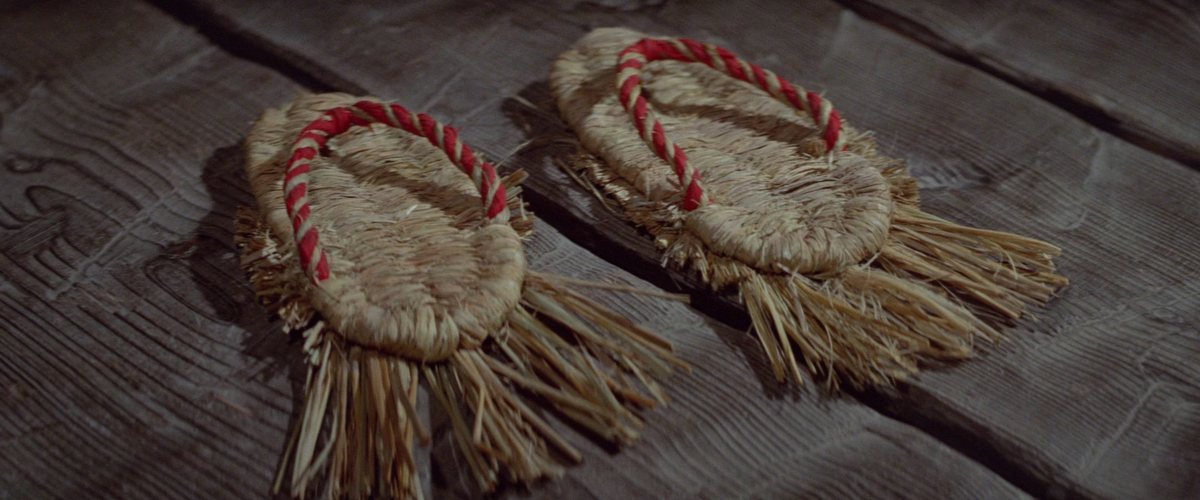
And yet she spares him. The film does not explain why, beyond the children, and that is part of its mystery. Kobayashi adds one detail that is not in Hearn. Minokichi has made a pair of straw sandals for his wife, and after she is gone he sets them out in the snow, and they disappear. Nature has taken his gift. Nothing has been forgiven or explained, but something has been exchanged, and the story ends not in terror but in grief and a kind of tenderness. It ends as a love story between a man and the winter.
The Gods in the Bathhouse
Anyone who has seen Spirited Away will recognize this world. Miyazaki’s film of 2001 is set in a bathhouse where, as its owner puts it, the “eight million gods” of Japan, yaoyorozu no kami in the traditional phrase, come to rest and wash. Haku, the boy who helps the heroine, Chihiro, turns out to be the spirit of the Kohaku River, which was filled in and built over with apartments, and he has forgotten his own name because his river is gone. The filthy “stink spirit” whom Chihiro bathes turns out to be a powerful river god choked with human refuse, and when she pulls a bicycle out of his side, he rises clean and laughing. Miyazaki said the scene came from his own experience: “There is a river close to where I live in the countryside. When they cleaned the river we got to see what was at the bottom of it, which was truly putrid. In the river there was a bicycle.”Interview with Tom Mes, Midnight Eye, January 7, 2002. Totoro lives in an old camphor tree wrapped in a shimenawa, the straw rope that marks something as sacred in Shinto, and the Forest Spirit of Princess Mononoke gives life and takes it away with the same step.
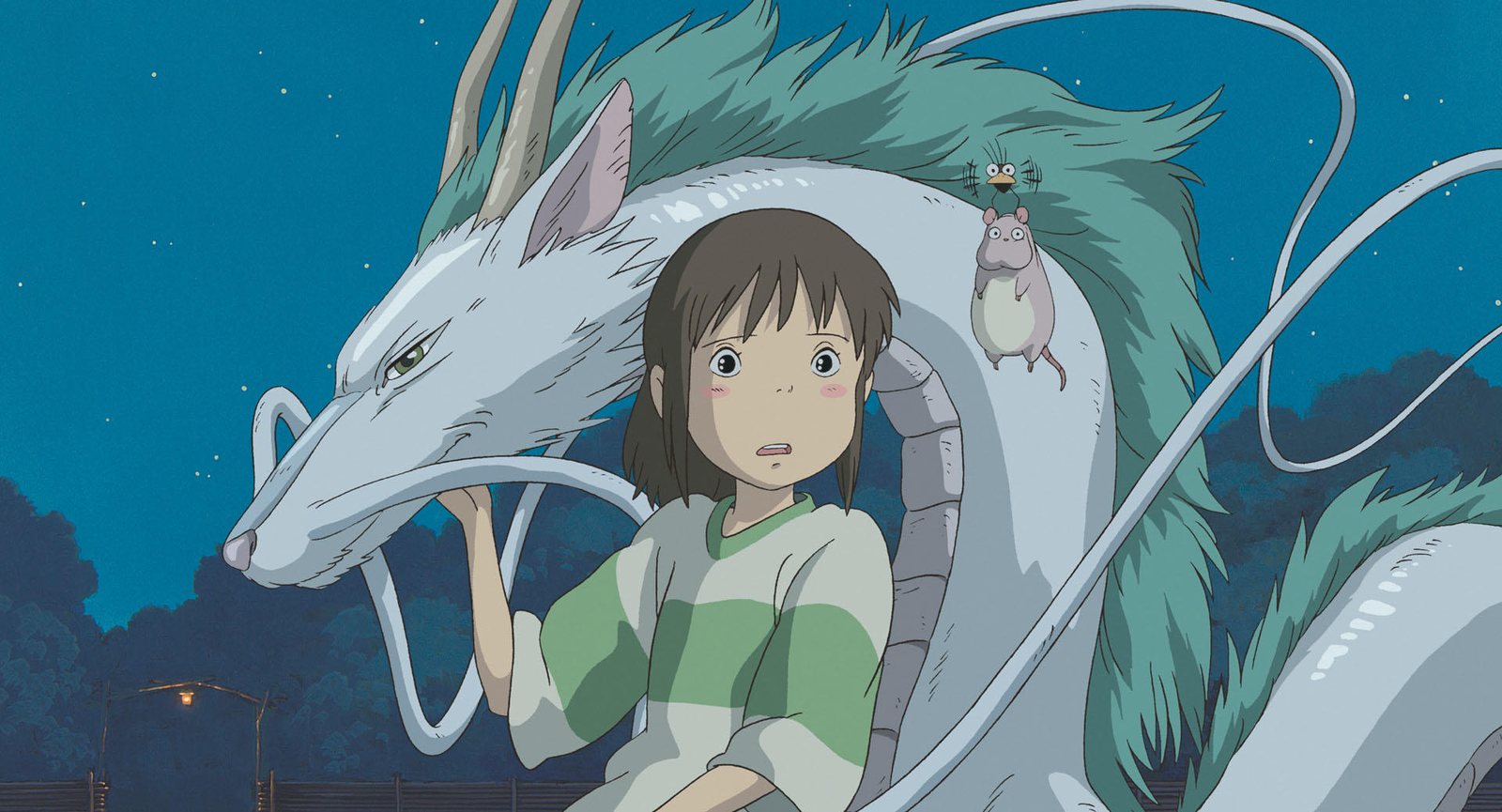
Miyazaki’s spirits are like the woman of the snow. They are not good or evil, and what his films ask of the human beings in them is to recognize this and keep the proper distance and the proper courtesy. In this they are the opposite of horror. A horror film usually ends with the monster killed or driven out, and the human world restored. These films end with an agreement or a loss, and the human world is left knowing that it shares the earth with powers it does not control.
In November 1917 the sociologist Max Weber gave a lecture in Munich, “Science as a Vocation,” in which he said: “The fate of our times is characterized by rationalization and intellectualization and, above all, by the ‘disenchantment of the world.’” Both Hearn and Kobayashi worked in the middle of such a disenchantment. Hearn came to a Meiji Japan that was modernizing at a speed few countries have matched, and he wrote down its ghost stories as a record of an old Japan he believed was passing. Kobayashi made Kwaidan in 1964, the year of the Tokyo Olympics and the first bullet train, when Japan was remaking itself as a modern industrial power, and he built his old Japan almost entirely indoors, under painted skies. Haku loses his name when his river becomes real estate. None of these works asks us to believe in snow spirits. They share the sense that a world in which nothing is sacred is a poorer world, and they treat the old stories as one way to keep a relation with nature that modern life no longer has a place for.
Hoichi the Earless
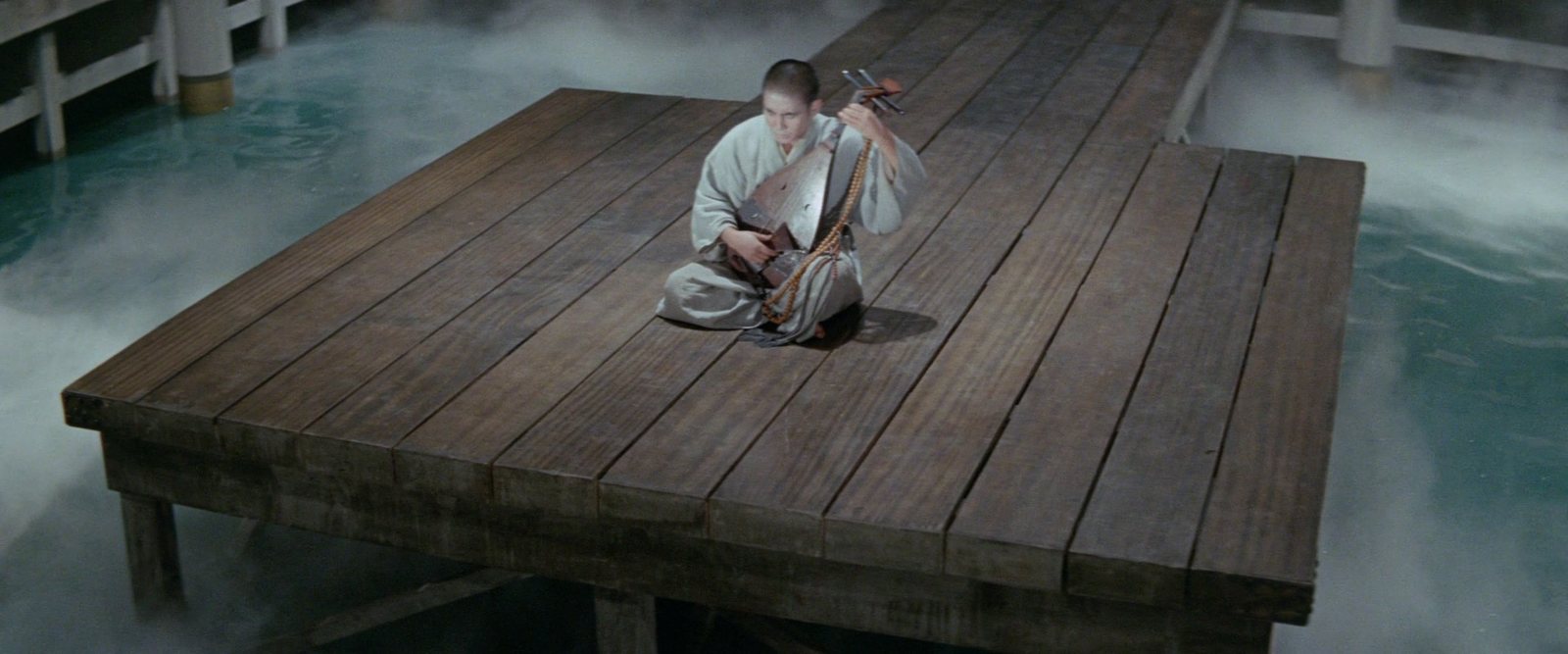
The third and longest story opens with history. In 1185, at Dan-no-ura in the strait of Shimonoseki, the Taira clan, also called the Heike, was destroyed by the Minamoto in a sea battle that ended the Genpei War. When the battle was lost, Taira no Tokiko, the grandmother of the six-year-old emperor Antoku, took the child in her arms and leapt into the sea. In the Tale of the Heike, the great epic of the war, quoted here and in the epigraph in Helen Craig McCullough’s translation, she comforts him as they go: “There is a capital under the waves, too.” Kobayashi tells the battle twice, first over painted scrolls in the manner of the old narrative handscrolls, to the chant of a biwa, and then with actors on a stage. The painted version follows a long tradition of pictures of the battle, among them a set of paintings on gold paper still kept at the shrine that was once Hoichi’s temple.
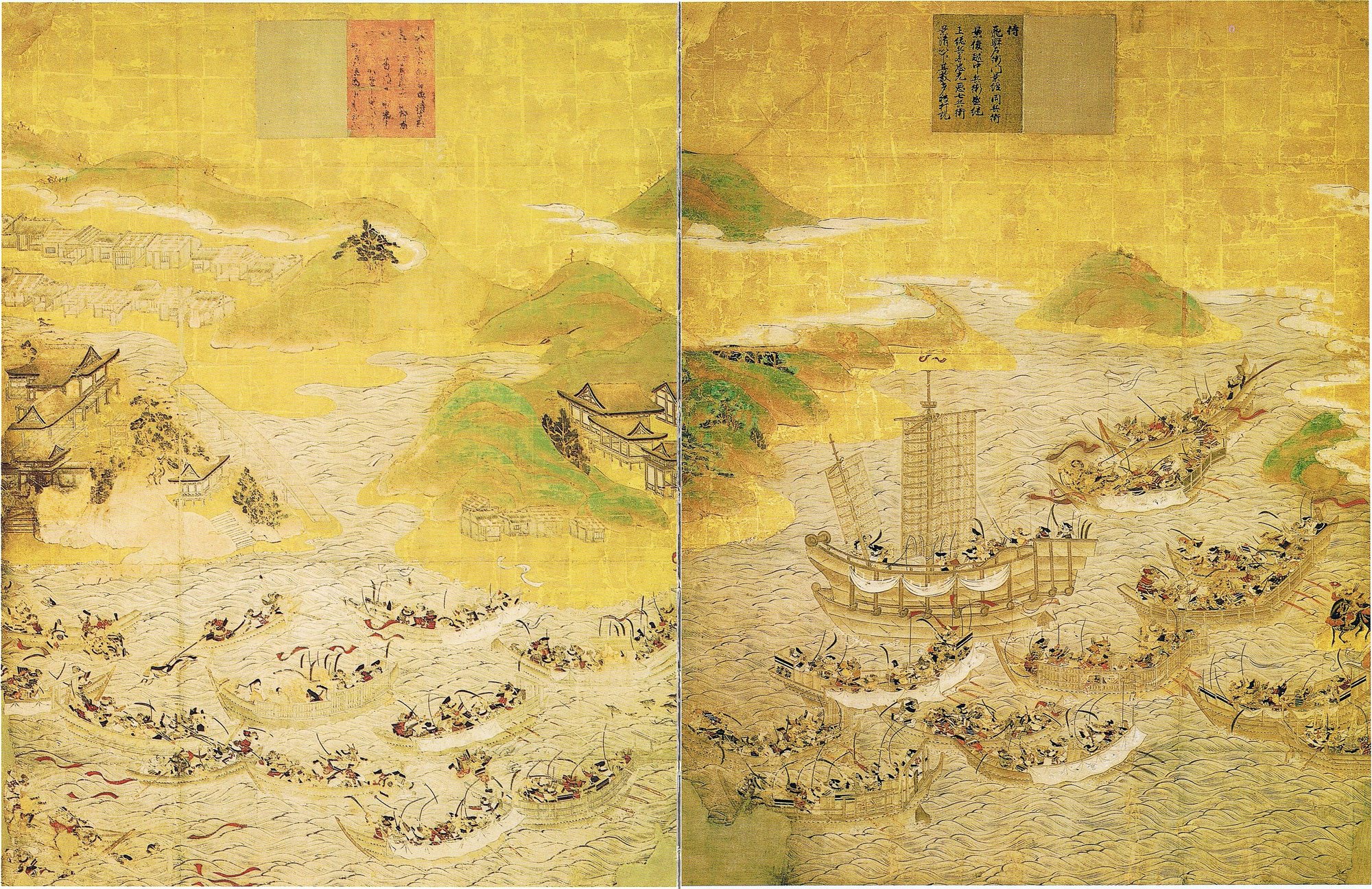
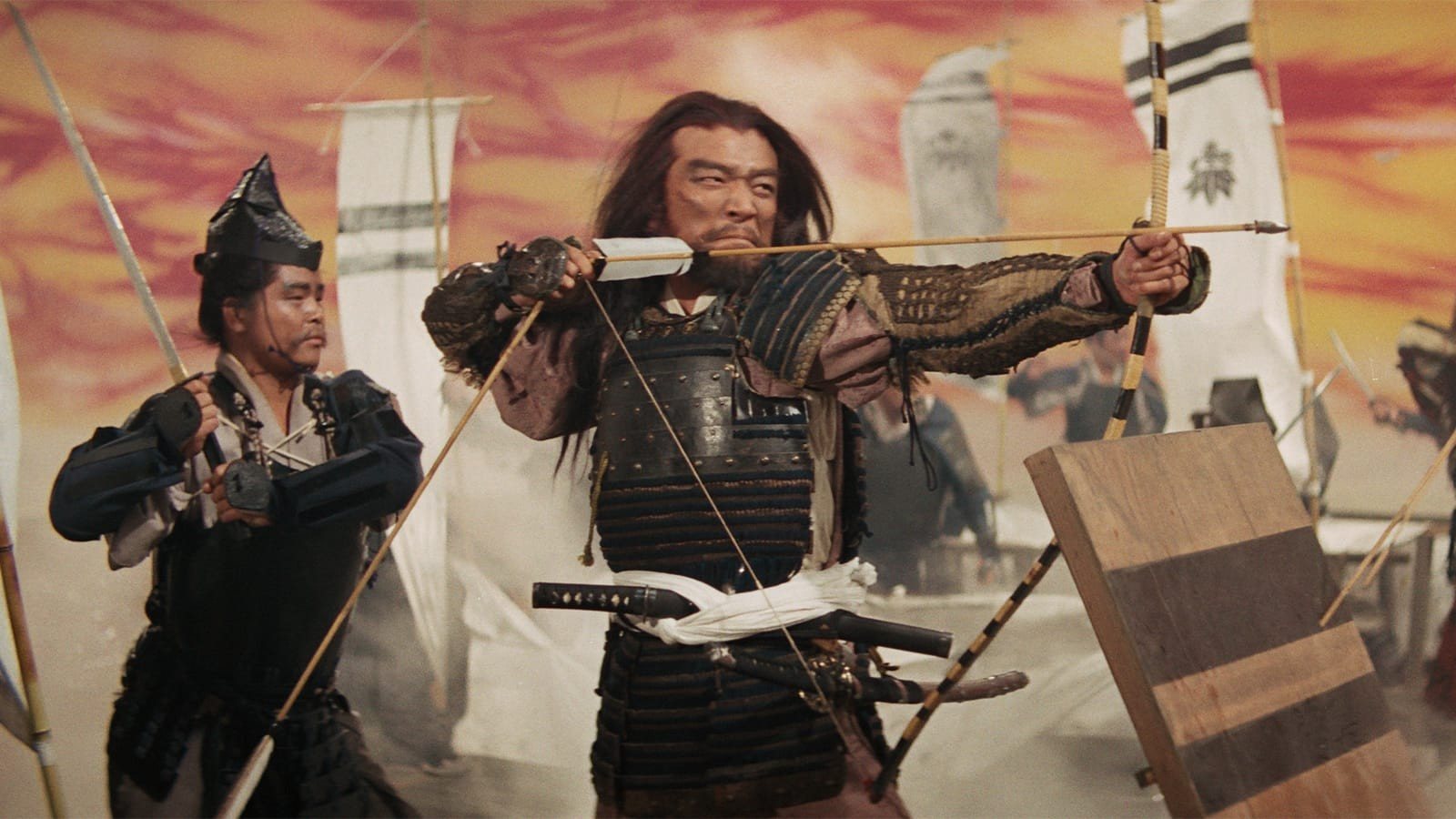
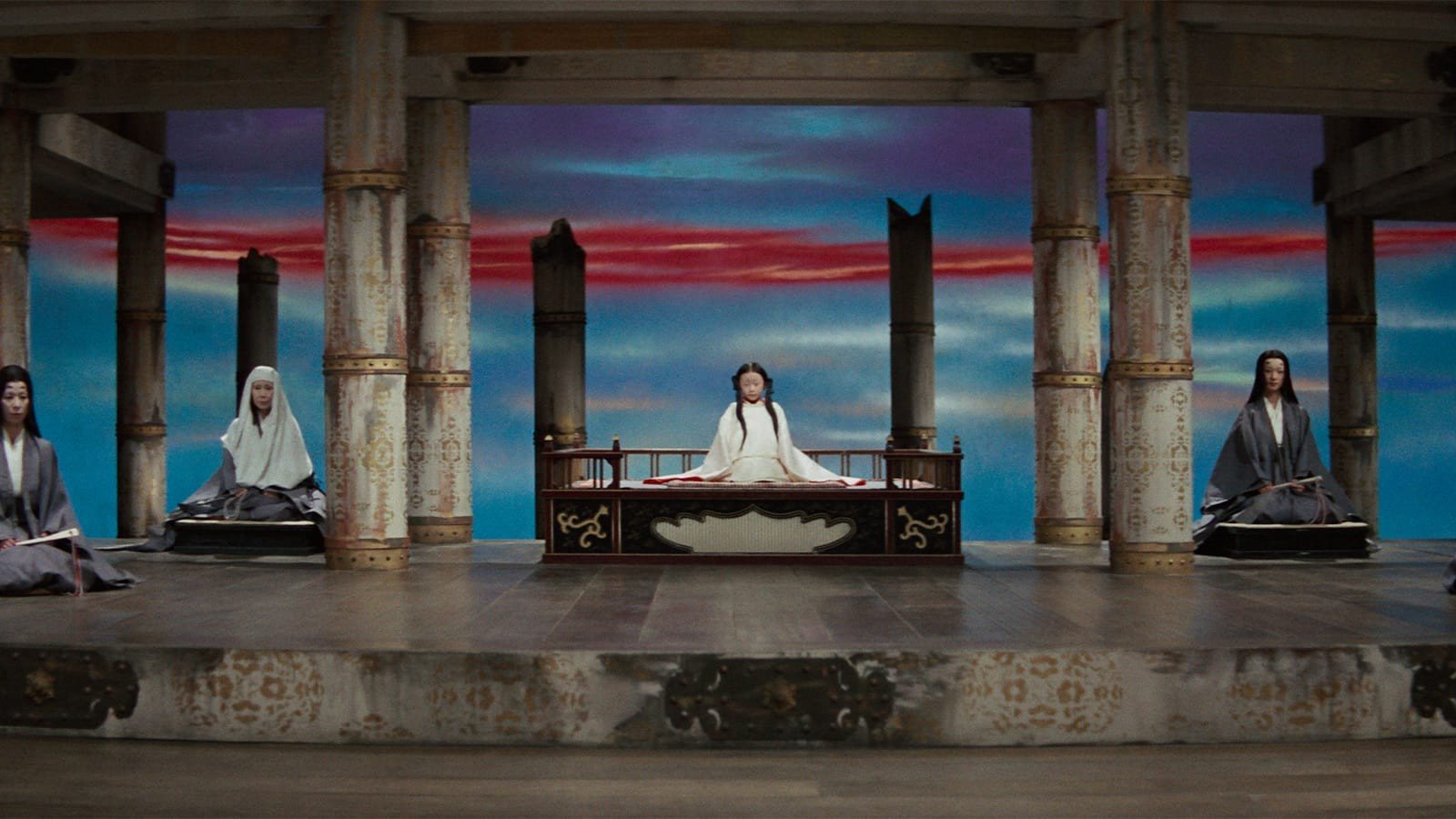
Hearn’s story, set centuries later, begins with the haunted sea. The crabs of Dan-no-ura, he writes, “have human faces on their backs, and are said to be the spirits of the Heiké warriors,” and on dark nights ghost fires hover over the water. “It was in order to appease those dead that the Buddhist temple, Amidaji, was built at Akamagaséki.” At this temple lives Hoichi, a young blind musician famous for chanting the Heike to the biwa, and the battle of Dan-no-ura is his best piece. One summer night, while the priest is away, a samurai in armor comes to summon him to perform for a lord of very high rank who is staying nearby. Hoichi is led to what he takes to be a great mansion, full of the rustle of silk and the voices of court ladies, and when he chants the battle his audience weeps aloud. He is summoned again the next night, and told to say nothing to anyone. When the priest has him followed, Hoichi is found in the rain in the temple cemetery, playing alone among the tombs of the Heike, surrounded by ghost fires. To protect him the priest writes the text of the Heart Sutra over his whole body, which makes him invisible to the dead, but the acolyte forgets his ears. When the samurai comes again, he can see nothing of Hoichi but two ears, and he tears them off to show his lord that he obeyed. Hoichi survives, the story of his wound spreads, and he becomes more famous than ever, as Hoichi the Earless. Hearn found the tale in Gayū kidan, a book of strange stories printed in 1782, and his own copy survives. Setsu remembered that he made his version “from a very short one.”
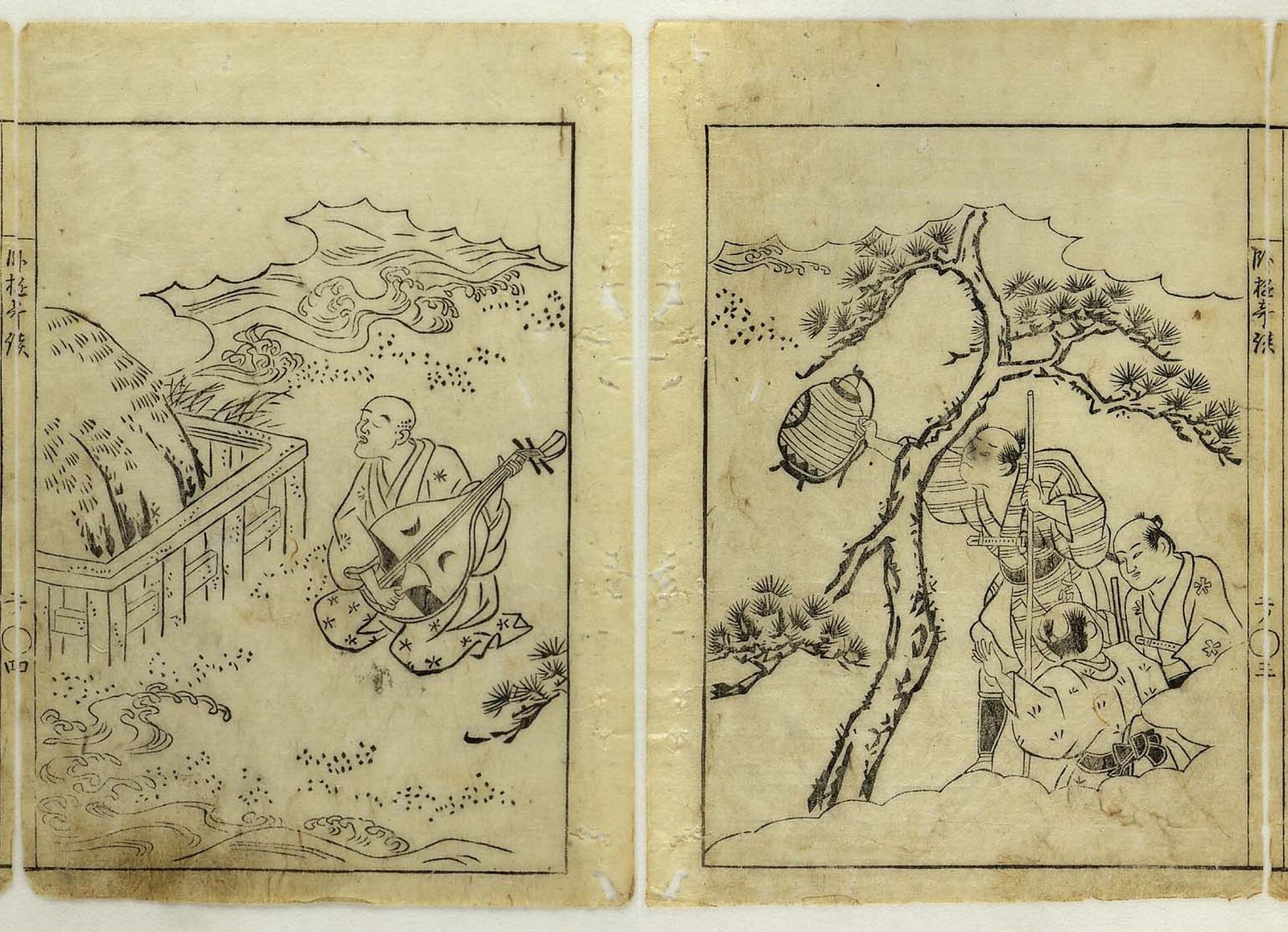
The Heike ghosts are not monsters. What they want is to hear the story of their own defeat told well, in full, again and again. This is close to the historical role of the musicians Hoichi represents. The biwa hōshi who chanted the Heike were blind monk-musicians, and their performances had a religious purpose as well as an artistic one: to console and pacify the spirits of the Taira dead, who were feared as angry ghosts. Royall Tyler, who translated it into English in 2012, writes that the Heike “answers a deep urge to pacify, by telling their story, the threatening spirits of the bitter, defeated Heike dead.”Royall Tyler, introduction to The Tale of the Heike (2012). The Tale of the Heike opens with the bells of impermanence because it is, among other things, a requiem. Hoichi’s art is to give the dead the mourning they did not receive, and the ghosts are the war dead of a nation, asking that the war be remembered properly.
They also show what trauma looks like. Freud wrote Beyond the Pleasure Principle just after the First World War, which, he noted, “gave rise to a great number of illnesses” of the traumatic kind. He was puzzled that the dreams of these patients “have the characteristic of repeatedly bringing the patient back into the situation of his accident, a situation from which he wakes up in another fright.” No wish is fulfilled by such a dream, and from that puzzle he concluded that “there really does exist in the mind a compulsion to repeat which over-rides the pleasure principle,” and went on from there to the death drive. I wrote about the death drive in my essay on boxing. The Heike court is a picture of this compulsion, the dead gathering every night to hear the same battle. But there is a difference between repeating a catastrophe and telling it. Hoichi’s chant gives the event a form, with rhythm, order and a voice, and his listeners weep, which is what mourning requires and repetition alone never achieves. Music does not undo the wound, but it lets it be shared, and that is the beginning of being able to bear it.
Takemitsu knew something about this. Near the end of the war, at fourteen, he was mobilized to work at an army supply base, where a kind officer played the young workers records on a wind-up gramophone with a needle cut from bamboo. One of them was Lucienne Boyer singing “Parlez-moi d’amour,” and Takemitsu later remembered that moment as the birth of his musical consciousness.Alex Ross, “Toward Silence,” The New Yorker, February 5, 2007. The biwa music of Hoichi’s chant in Kwaidan was composed and played by Kinshi Tsuruta, a leading biwa player, and three years later Takemitsu wrote November Steps for her biwa and Katsuya Yokoyama’s shakuhachi with orchestra. The New York Philharmonic, which had commissioned it, gave the premiere under Seiji Ozawa in November 1967.
The Sutra and the Ears
“Hoichi” is the most Buddhist of the four stories, and it rewards a closer Buddhist reading. Its temple is the Amidaji, named for Amida, the Buddha of the Western Paradise, and the Tale of the Heike that Hoichi chants is a Pure Land book from beginning to end. Its opening bells are those of the Gion Shōja, the Jetavana monastery where the Buddha taught, whose bell was said to toll when a monk died, and its flowers are those of the sāla trees that turned white when the Buddha himself died. When Taira no Tokiko takes the child emperor into the sea, she first tells him, in Royall Tyler’s translation, to “face east and say good-bye to the Grand Shrine of Ise; then, trusting Amida to welcome you into his Western Paradise, face west and call his Name.” In one gesture the child takes leave of the kami and turns to the Buddha, and the capital under the waves is the Pure Land. The epic ends with his mother, Kenreimon’in, who was pulled out of the sea by her hair and lived on as a nun in a hermitage at Ōhara. She dies calling the Buddha’s name, and a purple cloud appears in the west. The Heike tells the destruction of a clan and ends with a woman praying for its dead.
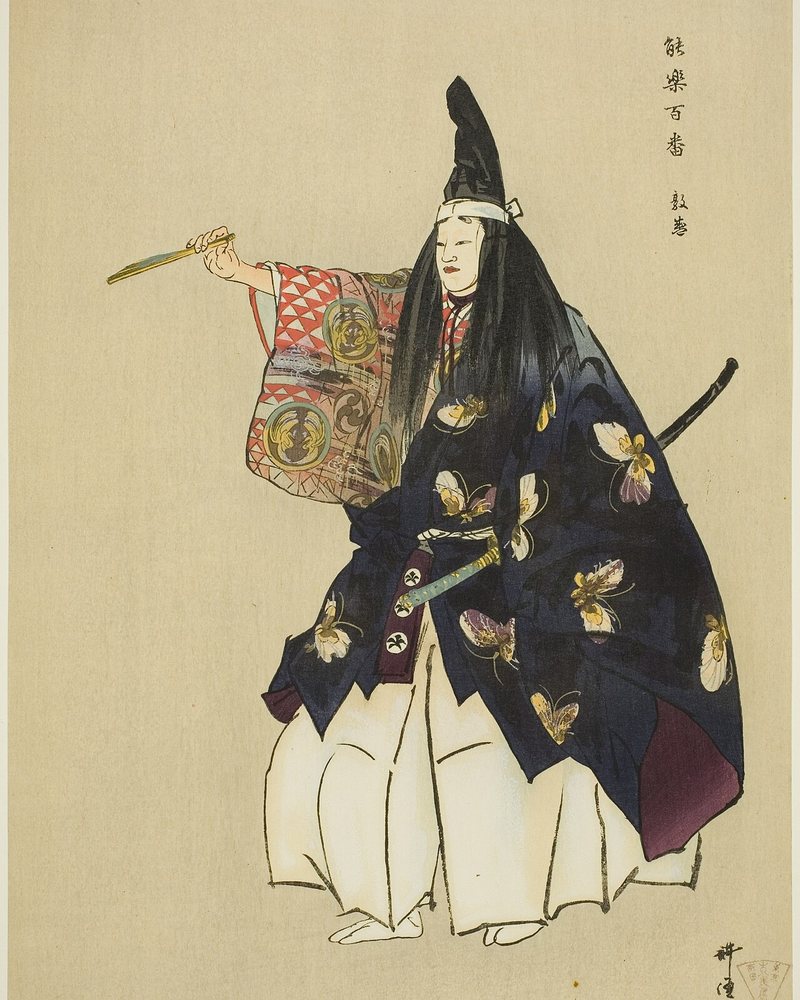
Seen this way, the Heike dead are ghosts in the Buddhist sense, held back by attachment to the battle in which they died. Buddhism even has its own picture of the compulsion Freud described: the realm of the asura, shuradō, where those who die fighting are reborn to fight without end. Noh, which grew up in the same centuries as the recited Heike and took many of its stories from it, has a whole class of plays about such ghosts, the warrior plays. In a typical one, a traveling monk meets a stranger who turns out to be the ghost of a warrior of the Genpei War, suffering in the realm of the asura. The ghost relives his death and asks the monk to pray for him. The best known, Zeami’s Atsumori, adds a twist. The monk is Kumagai Naozane, the warrior who killed Atsumori, a boy of about sixteen, at the battle of Ichi-no-tani, and who in the Heike turned to religion because of that killing. When the ghost recognizes him at the end of the play, he raises his sword, and then, in Arthur Waley’s translation, lowers it:
“There is my enemy,” he cries, and would strike,
But the other is grown gentle
And calling on Buddha’s name
Has obtained salvation for his foe. …
“No, Rensei is not my enemy.
Pray for me again, oh pray for me again.”
This is the Buddhist answer to the Heike ghosts, and it is also a pacifist one. The war ends not in victory but when the killer prays for the man he killed, and the dead man stops counting him as an enemy. Hoichi stands where the monk stands in Noh, between the living and the dead, and what he offers is the same thing in another form. The biwa players who chanted the Heike were blind men with shaven heads and the standing of monks. According to Yoshida Kenkō, writing in the 1330s, the epic was composed by a former official named Yukinaga to be recited by a blind man called Shōbutsu, and the biwa players of his own day still imitated Shōbutsu’s voice.
The sutra the priest writes over Hoichi’s body is the Heart Sutra, the short Perfection of Wisdom text that is chanted every day in Japanese temples, and what it says matters here. Its central line is that form is emptiness and emptiness is form, and a little later it goes through the senses one by one and denies each of them: “There is no eye, ear, nose, tongue, body, and mind,” as Hearn renders it in a note to the story. Written over a body, the text makes the body empty, and so invisible to the dead, who can see only what is still held by attachment. The one part of Hoichi the sutra does not cover is an organ it denies, the ear, and that is the part the ghost finds and takes.
This is where the Buddhist reading and the reading about art meet, I think. Buddhism asks for detachment, and the sutra protects Hoichi by making him, for one night, nobody. But a musician cannot be nobody. His ears are the organs of his art and of his bond with the dead, who come to him because he listens to their story and gives it back to them, and they are the part of him the dead can still reach. Hoichi survives because he is made empty, and he is wounded where he could not be. The living can mourn the dead, but they cannot go and live with them. The wound then makes him famous, and I read the ending as a story about the cost of art made from catastrophe. The artist who sings for the dead is marked by them, and his audience comes partly because of the mark.
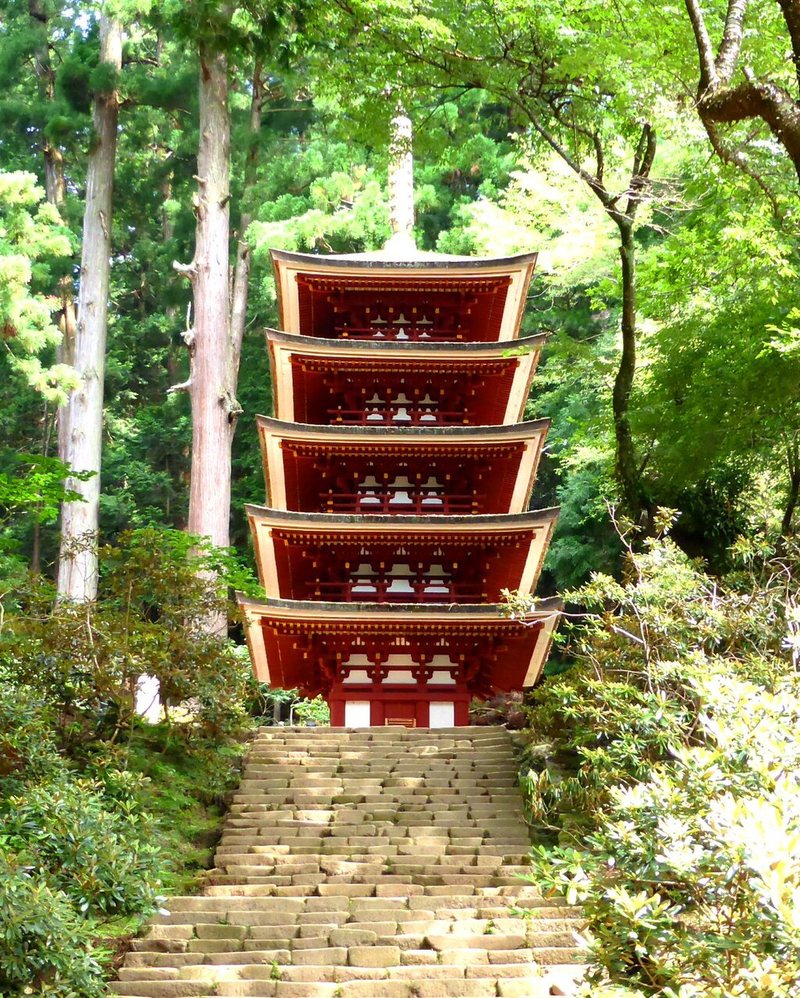
Kobayashi, whose war I come to in the next section, came to this material with an unusual training. At Waseda University he studied philosophy, concentrating on East Asian art under Aizu Yaichi, a poet and scholar of the Buddhist temples and sculpture of Nara, and in 1941 he wrote his graduation thesis on the date of the founding of Murō-ji, a Shingon temple in the mountains of Nara known for its small five-storied pagoda. Aizu hoped he would become a scholar. As far as I can find he was not a practicing Buddhist, and Stephen Prince, whose A Dream of Resistance (2017) is the fullest study of his films in English, finds motifs from both Buddhism and Christianity in them. But Buddhist art was his first subject, and he kept returning to it. For years he tried to film Inoue Yasushi’s novel Tonkō, about the Buddhist scriptures hidden in the caves at Dunhuang; the script was finished, but the project collapsed after a quarrel with the producer, and when he died in 1996 he was preparing a film about his old teacher Aizu. In Kwaidan that first subject shows most in “Hoichi”: in the painted scrolls of Dan-no-ura, in the temple where Hoichi lives with its great seated Buddha, and in the sutra brushed over his face.
The Armor in Harakiri
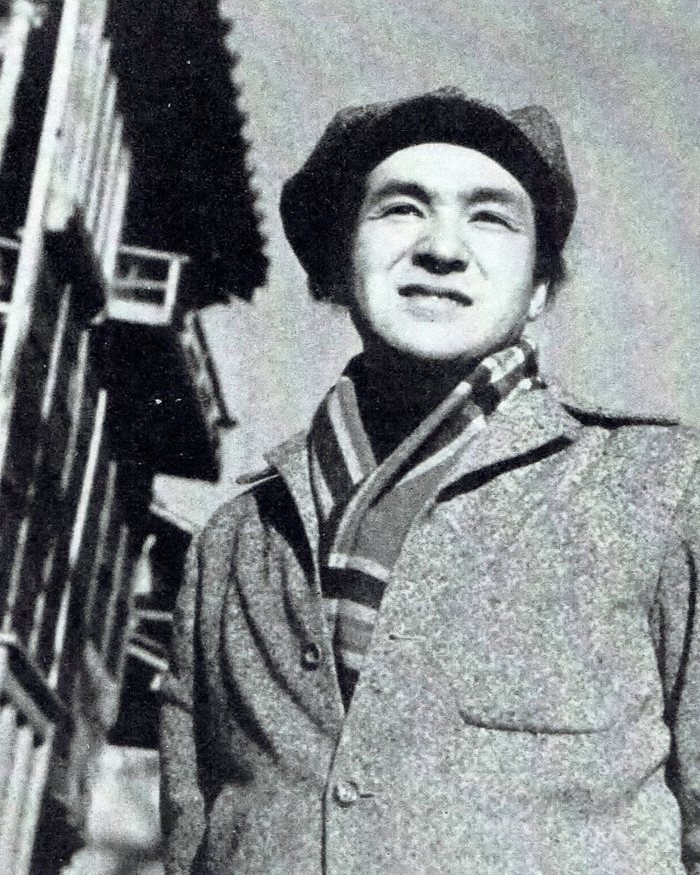
Kobayashi was born in 1916 in Otaru, in Hokkaido, and joined the Shochiku studio in 1941, after Waseda. In January 1942 he was drafted and sent to Manchuria, and later to the island of Miyako in the Ryukyus. He refused promotion above the rank of private, and after the surrender he spent more than a year in an American prisoner-of-war camp at Kadena, on Okinawa, before coming home at the end of 1946. His war became The Human Condition (1959–61), a trilogy more than nine hours long about a pacifist drafted into the Kwantung Army, in which almost everyone with power uses it to crush those without. Late in his life he summed up his work this way:
All of my pictures, from a certain point on, are concerned with resisting entrenched power… I suppose I’ve always challenged authority.
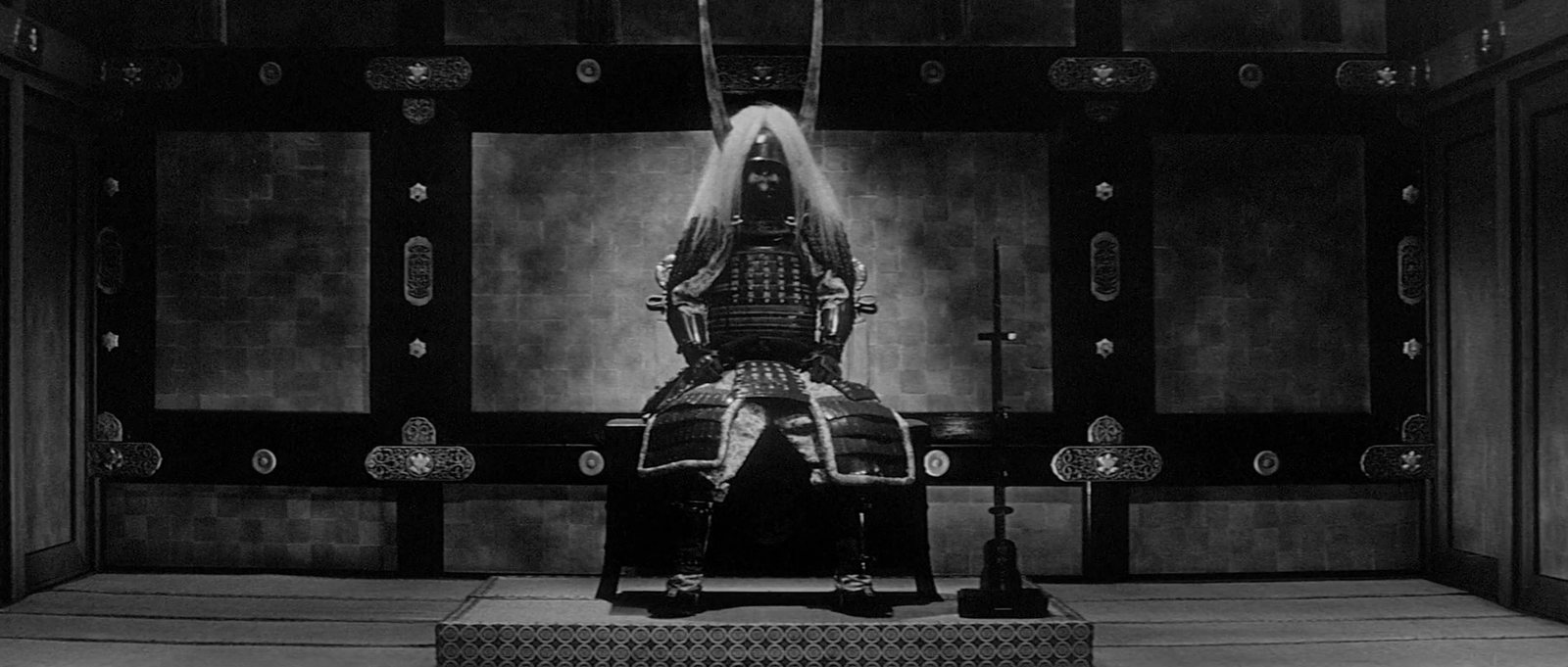
Harakiri (1962) is set in 1630, after the Tokugawa peace had put tens of thousands of samurai out of work. A masterless samurai, Tsugumo Hanshirō, comes to the house of the Iyi clan and asks for permission to commit ritual suicide in their courtyard. The clan’s senior counselor, Saitō Kageyu, tells him about a young rōnin who made the same request a few months earlier, hoping, as many did, to be paid to go away, and whom the clan forced to disembowel himself with the bamboo blade he carried after selling his real sword. Tsugumo then reveals that the young man was his son-in-law. The film opens on the clan’s most treasured possession, the suit of armor of its ancestors, set up in a hall like an altar. In his last fight Tsugumo uses it as a shield and smashes it. At the end it is cleaned and set back on its stand while the clan’s records are written up: Tsugumo is declared to have been insane, every death he caused is attributed to illness, and the shogun commends the house for its conduct. Honor in Harakiri is a shell, polished by men who will kill to keep it intact.
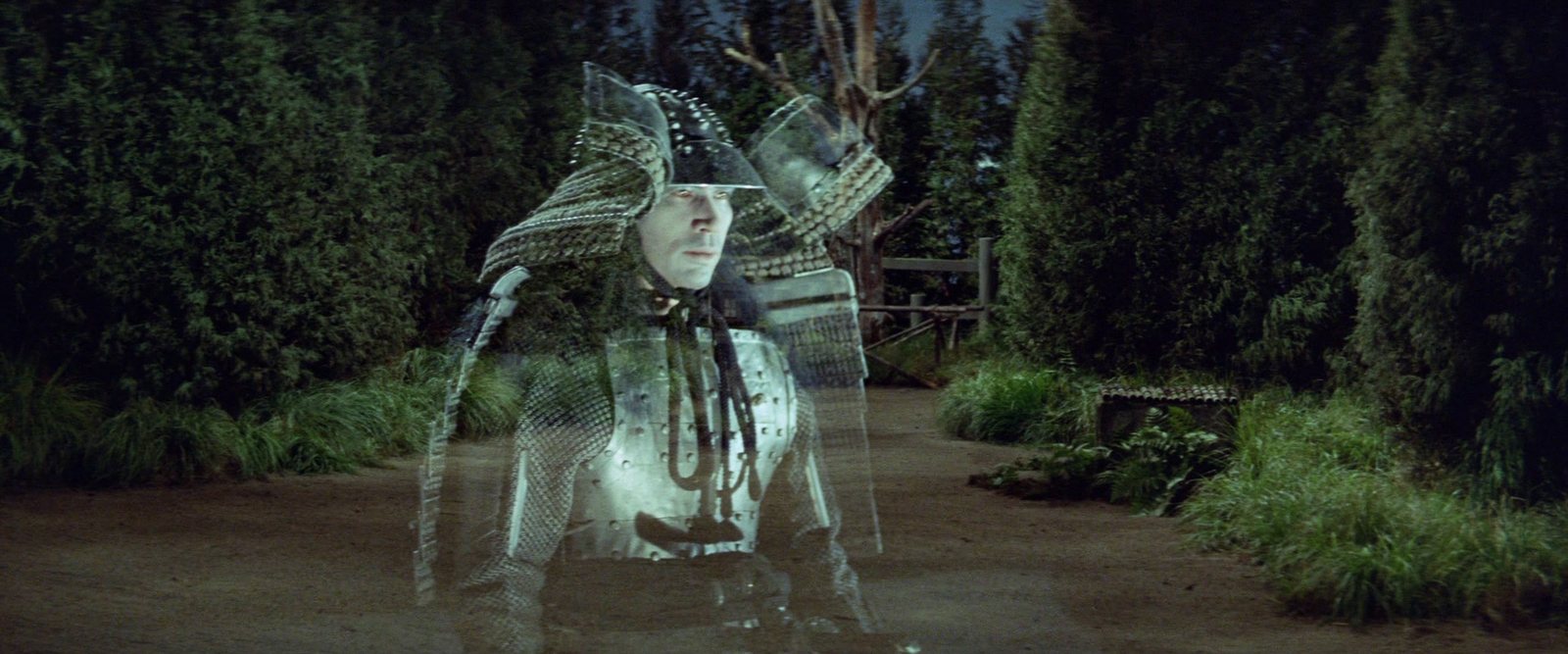
Kwaidan was made two years later with much of the same company. Tatsuya Nakadai, who played Tsugumo, is Minokichi; Rentarō Mikuni, the counselor Saitō, is the samurai of “The Black Hair”; and Tetsurō Tanba, one of the clan’s swordsmen, is the armored ghost who comes for Hoichi. Takemitsu scored both films, and both use the biwa. In “Hoichi” the empty armor of Harakiri has come to life: a suit of armor with a dead man inside, come back from the sea to summon the living.
Both films are about the claims of the dead on the living. In Harakiri the claim is made through the ancestors, in the name of a house whose honor matters more than any living person. In Kwaidan it is made by the war dead, who need to be mourned. Kobayashi’s answer is consistent across the two. The living owe the dead memory and mourning, which Hoichi gives, and they do not owe them obedience, which the Iyi clan demands. Kwaidan has no modern war in it. But it was made nineteen years after the defeat, by a man who had refused to become an officer, and its sympathy is always with the people who pay for the ambitions of houses and clans: the wife left behind for a career, the child emperor carried into the sea, the blind musician who loses his ears to the dead of a war that ended centuries before he was born. The samurai of “The Black Hair” is poor at the start because his lord was ruined, the same misfortune that turns the rōnin of Harakiri into beggars.
In a Cup of Tea
The last story is the shortest and strangest, and it is about storytelling itself. Hearn presents it as one of the fragments in old Japanese story-books that stop without an ending, and he lists the reasons this might happen:
Perhaps the writer was lazy; perhaps he had a quarrel with the publisher; perhaps he was suddenly called away from his little table, and never came back; perhaps death stopped the writing-brush in the very middle of a sentence.
On the fourth day of the first month of 1683, a young attendant named Sekinai, in the train of the lord Nakagawa Sado on his New Year’s visits in Edo, stops at a teahouse in the Hongō district and sees in his cup the face of a stranger, smiling at him. He throws the tea away and pours another cup, and the face is there again. Finally he drinks it. That night, on duty in his lord’s mansion, he is startled by a young stranger who introduces himself as Shikibu Heinai. Sekinai draws and strikes at him, and the stranger slips away through the wall. The next night three men arrive who say they are Heinai’s retainers, come on his behalf, and the story stops.Hearn’s source was the Shin chomonjū, an eighteenth-century collection of strange tales. Hearn ends it with a refusal: “I prefer to let the reader attempt to decide for himself the probable consequence of swallowing a Soul.”
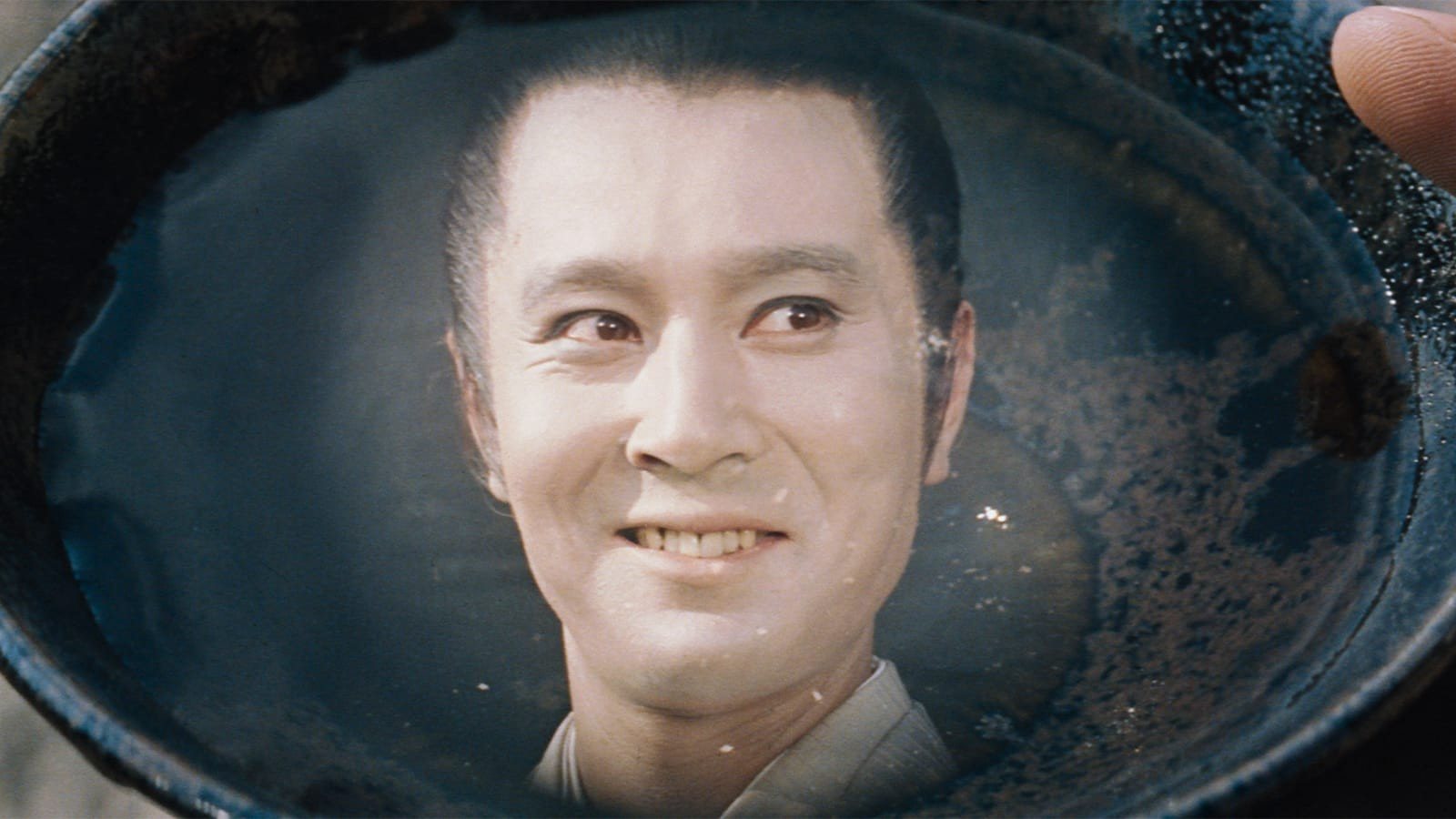
Kobayashi gives the tale a frame. A writer in an old house is working on this very story, and when his publisher comes to call, the writer is nowhere to be found. The lady of the house screams and points at the water jar, and when the publisher looks into it, he sees the writer’s face reflected inside, beckoning to him. The writer who could not finish the story has been taken into it, as Sekinai took a soul into himself with a cup of tea, and Hearn’s list of reasons for an unfinished story has come true in its most literal form: the writer “was suddenly called away from his little table, and never came back.”
Looking back from this story, I noticed that all four are about telling. The samurai of “The Black Hair” tells himself that he can go home. Minokichi destroys his marriage by telling a story he had promised to keep. Hoichi’s telling of a war is a requiem for its dead, and the writer of the last story is consumed by what he tells. In each the story is what passes between the living and the dead, or between the human and the spirit world, and it is never harmless. The stories cost something, and they keep the two worlds in touch. In this sense Kobayashi’s film is itself a long chant over the dead, like Hoichi’s, made by a man who had come back from a war, from tales retold by a foreigner who had made Japan his home.
Sets, Paint and Sound
The way Kwaidan looks is part of its meaning. Kobayashi had trained as a painter, and he shot almost the whole film on sets built inside a former army aircraft hangar in Uji, near Kyoto, where the art director Shigemasa Toda painted skies on backdrops said to be more than two hundred meters long. The budget, planned at about a hundred million yen, roughly tripled. Criterion’s notes call it the most expensive Japanese film made up to then, and it did not earn its cost back, which effectively bankrupted the small company that produced it.Bungei Production Ninjin Club; Toho distributed the film. Geoffrey O’Brien, “Kwaidan: No Way Out,” Criterion Collection, 2015. The colors are those of a painting rather than a photograph: the blue of the blizzard, the burning orange of the field where Minokichi meets O-Yuki, the gold and red of the Heike court under a stormy sky. The stories are staged with the economy of Noh, the ghost court arranged like a chorus on a bare platform. One might expect such artifice to keep the audience at a distance. In a dark theater the effect is the opposite. A realistic film shows you a world you already know how to look at. A painted one asks you to learn its rules, and while you are learning them, you are inside it. In his essay In Praise of Shadows (1933), Jun’ichirō Tanizaki argued that Japanese beauty lives in half-light: “We find beauty not in the thing itself but in the patterns of shadows, the light and the darkness, that one thing against another creates.” Kobayashi’s sets are lit in the same spirit, and they need a large screen in a dark room.
Takemitsu’s score belongs to the same design, and he is credited not for music alone but for “music and sound.” For “The Black Hair” he used processed recordings of green bamboo snapping and of the ice cracking on Lake Suwa, where the pressure ridges on the frozen lake are called omiwatari, the god’s crossing, and are said to be the path of the god of the Suwa shrine walking over the ice to visit the goddess on the other shore. Many of the other effects were made from wood. “I’d ask for a cra-a-a-ck sound,” he recalled, “and they’d split a plank of wood, or rip it apart, or rend it with a knife. Using all these wood sounds, I assembled the track.” Long passages have almost no sound at all, and the sounds that do come seem detached from their sources, so that the world of the film never closes around the viewer the way a realistic soundtrack would. It stays strange.
The film’s influence is easiest to see in horror, the genre it does not quite belong to. Clive Barker said that Kwaidan “was very influential in my teens,” and Ari Aster named it, with Ugetsu and Empire of Passion, among the old Japanese ghost stories behind Hereditary. When Criterion reissued it, the A.V. Club told readers curious about the long-haired women of The Ring and The Grudge that “The Black Hair” was one place to look for their origins.Barker in The Edge (1991); Aster in an interview with Brief Take (2018); Mike D’Angelo in the A.V. Club, October 21, 2015. What these films inherited is mostly the imagery: the hair, the pale face, the slow approach. The patience, and the sense that the spirit is owed something rather than to be defeated, have been harder to pass on.
The stories in Kwaidan were collected by a man who feared they would be lost, and filmed by a man who had seen what his country’s wars did to the living and the dead. What they share, under the ghosts, is a modesty before what we do not control, whether it is time, the winter, the dead of a war or a face at the bottom of a cup. A horror film ends by killing the monster and giving us back our control. Kwaidan ends with the snow, the sea and the dead still there, and asks us to live alongside them.
Stills credited to Janus Films are publicity images for the 2026 restoration of Kwaidan. The other frames from Kwaidan (© Toho) and Harakiri (© Shochiku) are taken from the Criterion Blu-ray editions and reproduced at reduced size for criticism and commentary. The Spirited Away still is one of those Studio Ghibli offers for free use.