The Strong, Silent Type
The screen’s strong, silent man takes antiquity’s language of restraint, from Odysseus’s patience to the Stoics’ few words, while dropping what antiquity demanded with it: that a man speak, feel and live among others. His self-possession turns out to be a performance that always needs someone to watch it and someone to tell it, which is why the camera suits him and why self-help can sell his calm back to men.
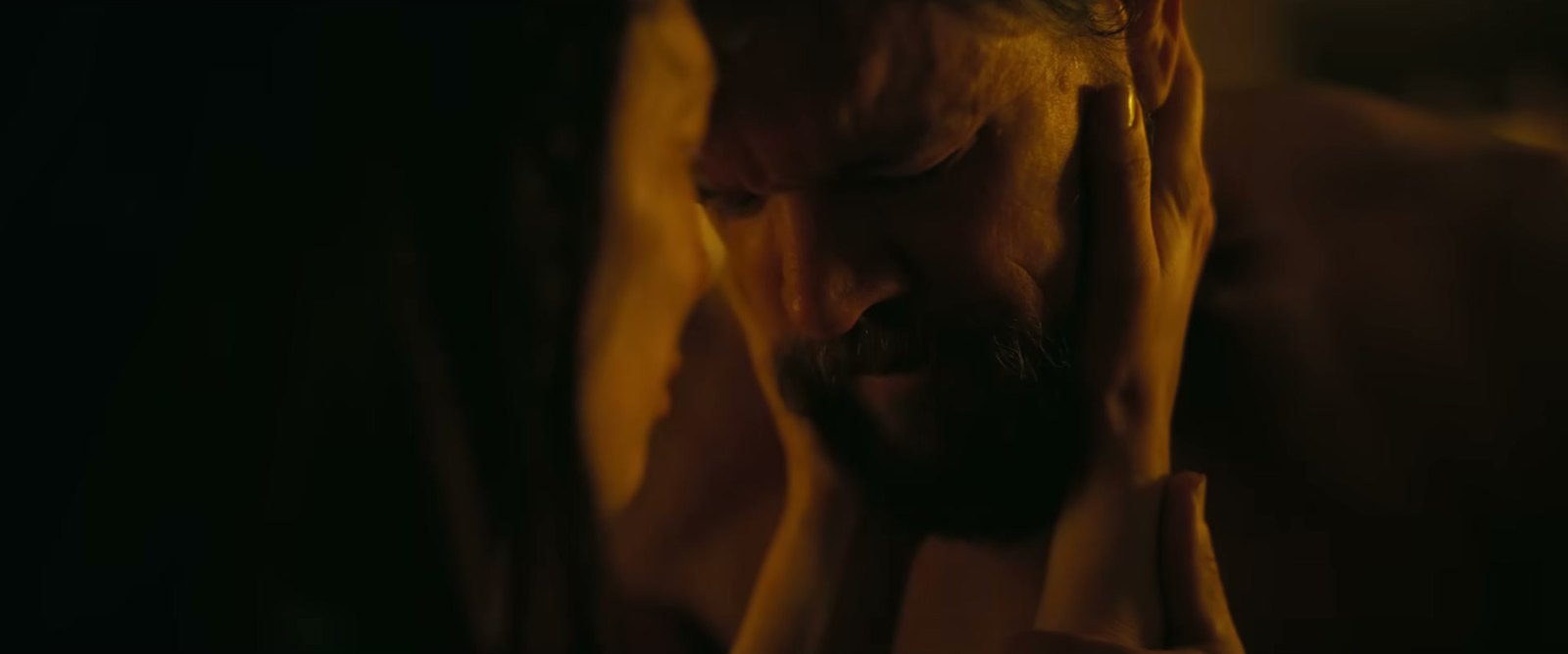
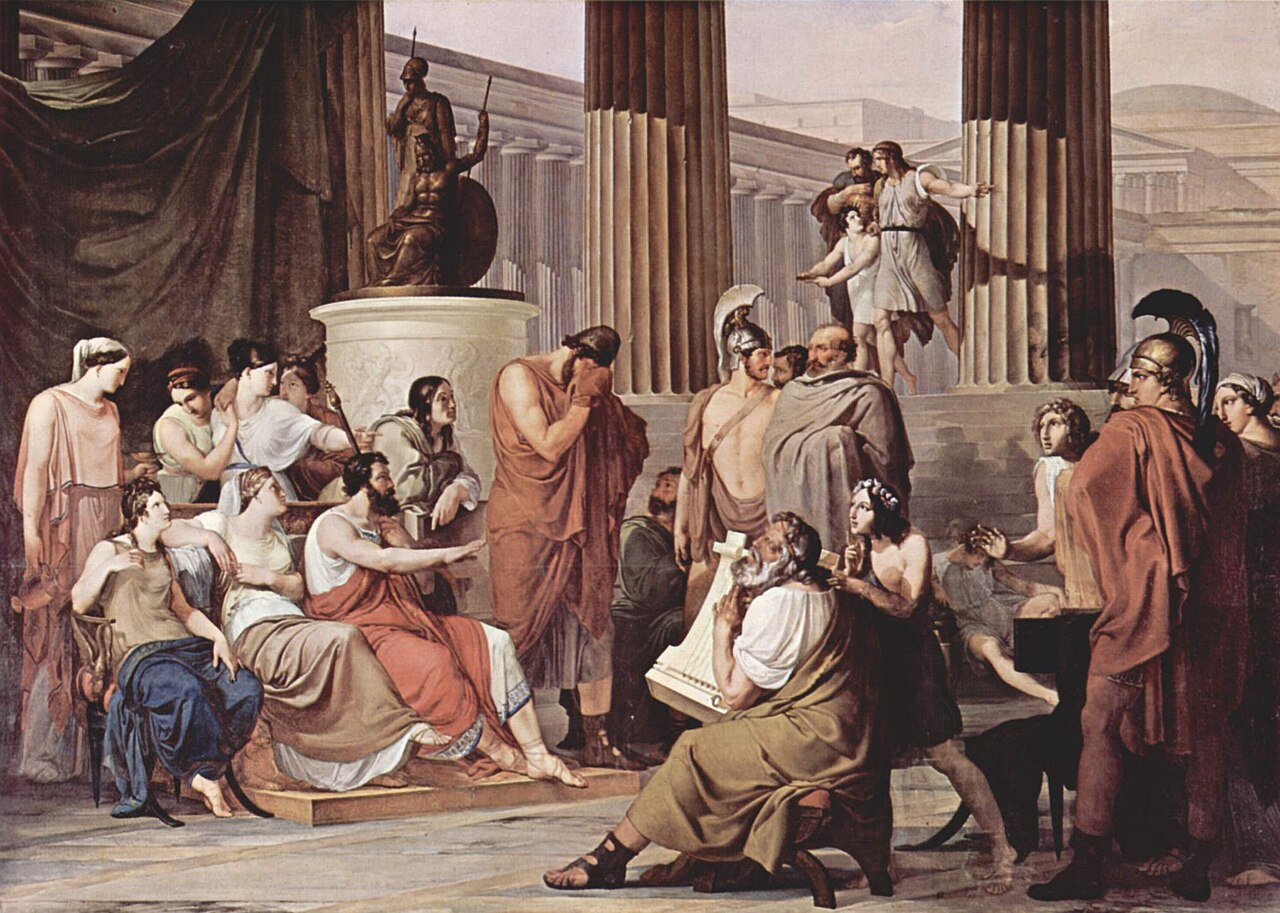
This song the famous minstrel sang; but Odysseus grasped his great purple cloak with his stout hands, and drew it down over his head, and hid his comely face; for he had shame of the Phaeacians as he let fall tears from beneath his eyebrows.
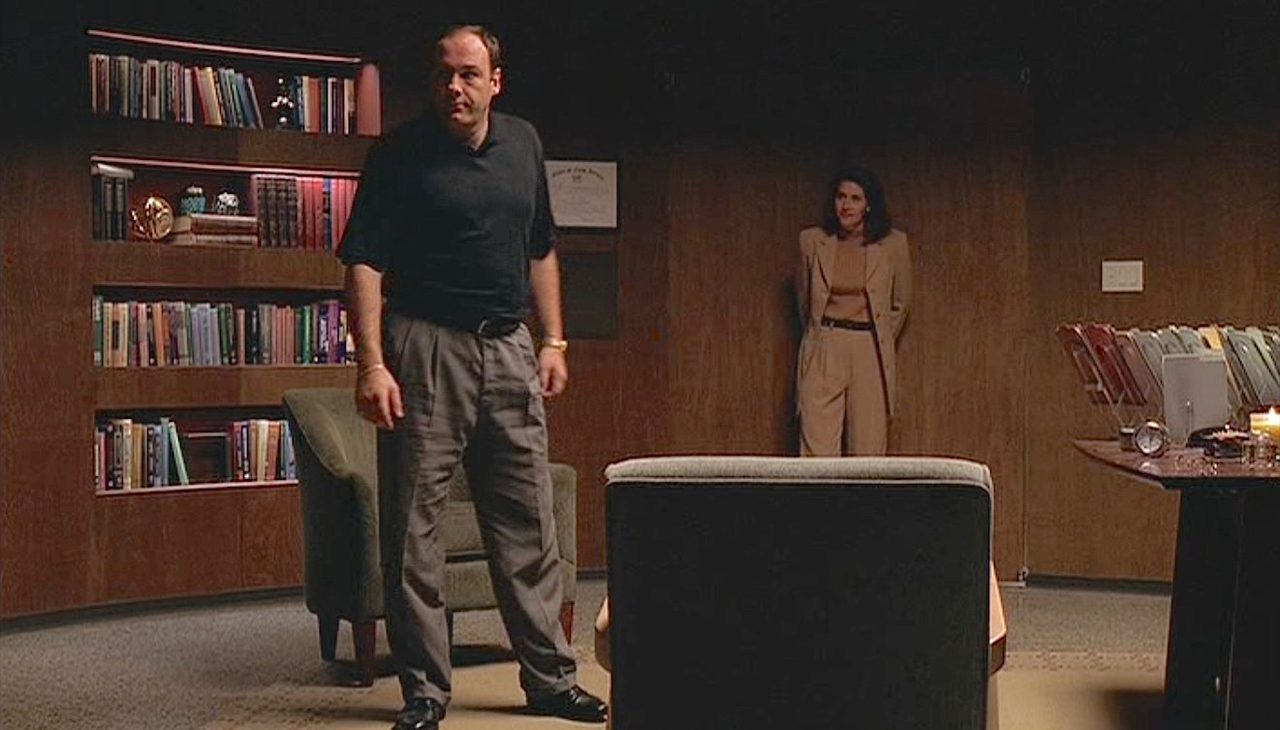
In the first episode of The Sopranos, broadcast in January 1999, a New Jersey mobster who has begun to faint from panic attacks sits in a psychiatrist’s office and, having complained that he “came in at the end” and that “the best is over,” delivers a small elegy for a vanished kind of man: “Whatever happened to Gary Cooper? The strong, silent type. That was an American. He wasn’t in touch with his feelings. He just did what he had to do. See, what they didn’t know is once they got Gary Cooper in touch with his feelings, they wouldn’t be able to shut him up.” The joke is in the speaker, for Tony Soprano mourns the silent man in a therapist’s chair and in a flood of words, and the series, which would later give one of its episodes the title “The Strong, Silent Type,” spends six seasons letting him talk. The figure arrives on television, in other words, already as something lost, remembered by a man who knows he cannot be it.
It was the films of the twentieth century, and above all the Western, that made the strong, silent man a type an audience could recognize in a single shot: a tall man of few words, spoken low and slow, whose competence and whose violence are held in reserve until the last reel, who will not explain himself, and who ends, more often than not, outside the home he has made safe. Robert Warshow, in his essay “The Westerner” of 1954, gave the type its classic description. The Western hero “is a figure of repose,” whose “loneliness is organic, not imposed on him by his situation but belonging to him intimately and testifying to his completeness”; he “imposes himself by the appearance of unshakable control,” and “he can wait”; and when he is asked to explain himself, usually by a woman, he answers that he does what he “has to do,” which is almost word for word the phrase Tony would use of Cooper forty-five years later.
Jane Tompkins, in West of Everything, put the doctrine behind the manner in four words, “Westerns distrust language,” and added that “for the really strong man, language is a snare; it blunts his purpose and diminishes his strength.” The film scholar Sarah Kozloff warns that the silence is partly an effect of contrast, since “the heroes of Westerns are taciturn—except when they are loquacious,” and the hero seems silent because the townsfolk, the villains and the women talk around him, so that the strong, silent man is defined less by muteness than by a choice of what to leave unsaid and by a register in which the little he says is said.
A man who refuses to explain himself is a standing invitation to interpretation, which is why this essay, like an earlier one of mine on samurai films, is an exercise in hermeneutics rather than in film history. The silent hero’s silence can be read as depth, the completeness Warshow saw, or as emptiness, and the question of which it is cannot be settled by the hero, since he will not say. His admirers and his critics alike reach back to antiquity to answer it, to Homer’s Odysseus, to Spartan brevity and above all to the Stoics, whose books are now marketed to men who want to be calm, and so I will set the modern figure beside the ancient sources it claims. My argument is that the strong, silent man borrows antiquity’s grammar of restraint while dropping what antiquity demanded alongside it, which was speech, feeling and fellowship, and that what presents itself as self-possession turns out, on the evidence of the films and their critics, to be a performance that always needs someone to watch it and someone to tell it.
Endure, My Heart
The Greek hero whom the strong, silent man most resembles is Odysseus, whom Homer calls “much-enduring,” and the resemblance lies in a silence that is a strategy rather than a refusal. When Odysseus returns to Ithaca after twenty years, disguised as a beggar, he must sit in his own hall and watch the suitors who are courting his wife and eating his house bare, and when the maids slip out at night to the suitors’ beds his heart growls within him like a dog standing over her pups, and he strikes his breast and says, “Endure, my heart; a worse thing even than this didst thou once endure.” The endurance is not the end of the story but its precondition, for two books later the beggar strings the great bow and kills every suitor in the hall, and the shape of that story, insult swallowed in silence and then repaid in one long outburst of violence, is the shape of countless films since, from Gladiator to John Wick, and Christopher Nolan’s film of the poem, released this summer with Matt Damon as Odysseus, has just brought the patient hero himself back to the screen.
The poem, however, refuses to make its hero a man without words or tears, for Odysseus is also Homer’s great talker, who tells the story of his own wanderings at a king’s table over four books of the poem. At that same table, before he has said who he is, he draws his purple cloak over his face when the bard sings of Troy, as in the lines at the head of this essay, because he is ashamed to let his hosts see him weep. When the bard sings again, of the fall of the city, Homer likens the tears the hero hides to those of a woman who clings to her husband as he dies in front of their city, while the enemy beats her back and shoulders with spears and leads her away into slavery, so that the sacker of cities is compared to a woman of a sacked one. And when Odysseus at last reveals himself to Telemachus, “he kissed his son, and from his cheeks let fall a tear to earth, but before he ever steadfastly held them back,” and father and son wail together “more vehemently than birds” whose young have been taken from the nest. The silence of Odysseus is a disguise worn on enemy ground, and it comes off when he is among his own.
If any Greeks made a public virtue of saying little, it was the Spartans, who have given English its word for the manner, since “laconic” comes from Laconia, their country. Plutarch says that the lawgiver Lycurgus contrived “that the general habit of silence should make the boys sententious and correct in their answers,” and he records the saying of a Spartan named Archidamidas, “He who knows how, knows also when to speak.” The most famous example is a single word. When Philip of Macedon wrote to the Spartans, “If I invade Laconia, I shall turn you out,” they wrote back, “If.” Spartan speech, Plutarch says, “is the fruit of much silence,” and the laconic reply is a weapon that gains its force from what it leaves out, which is exactly the force of the Virginian’s most famous line, as we will see.
Aristotle’s portrait of the great-souled man, the person who claims much because he deserves much, supplies the bearing of the type with uncanny precision. He is “not a gossip,” he is “least of all men given to lamentation or the asking of favours,” and “a slow step is thought proper to the proud man, a deep voice, and a level utterance,” so that one might take the passage for a description of Gary Cooper. But the same chapter of the Nicomachean Ethics forbids the sealed interior that the films would later prize, for the great-souled man “must also be open in his hate and in his love (for to conceal one’s feelings, i.e. to care less for truth than for what people will think, is a coward’s part).” And Aristotle’s brave man feels fear and pain, since “death and wounds will be painful to the brave man and against his will,” so that a hero who feels nothing in the face of death would, by his account, be not brave but reckless. The Greeks, in short, offered the modern type a patient silence and a laconic wit, a deep voice and a level utterance, but they set all of these inside a culture that expected a man to speak and that let even its most cunning hero weep.
What the Stoics Asked of Speech
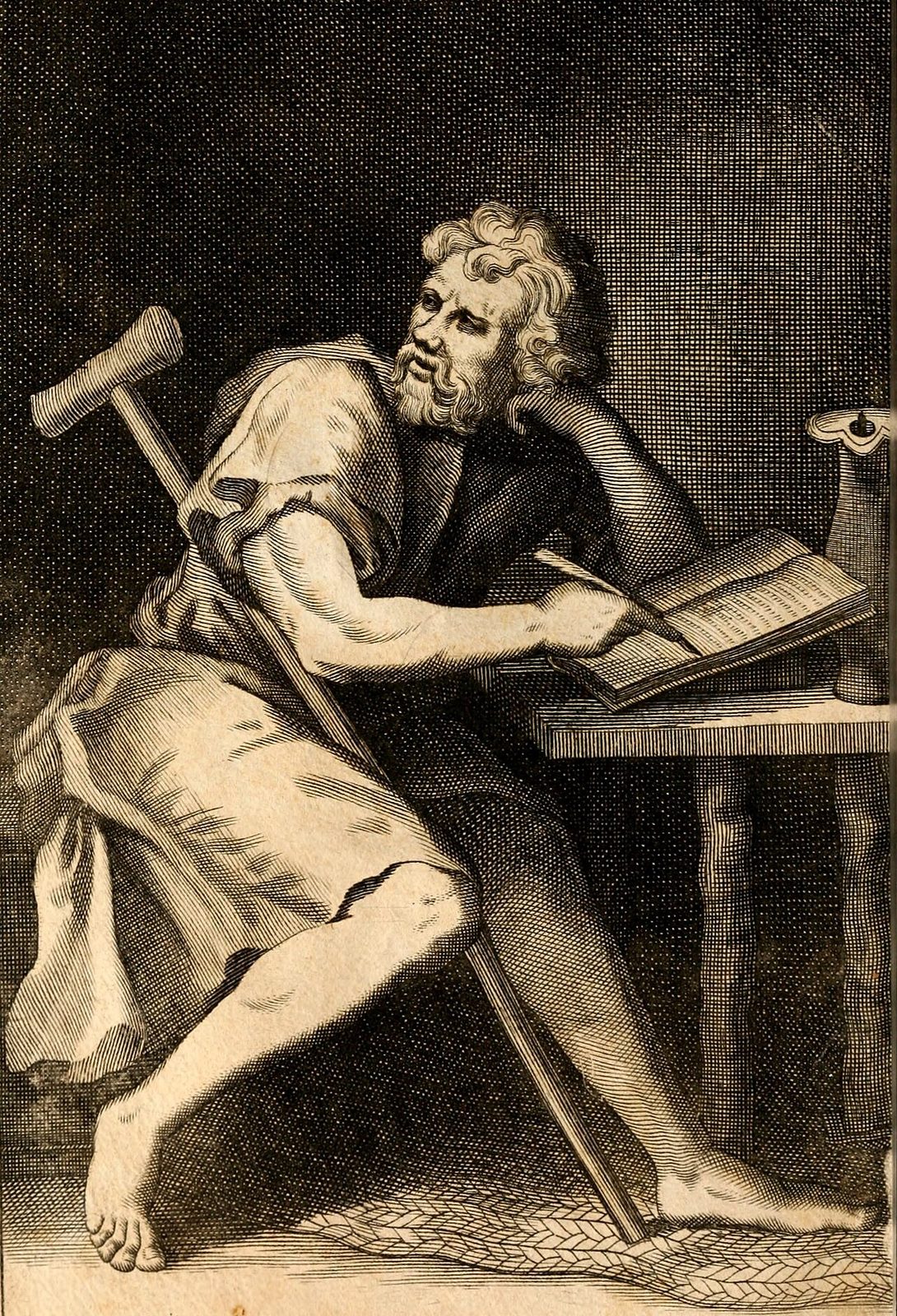
Of all the ancient schools it is the Stoics who are most often claimed for the strong, silent man, and with some reason, for the Stoic texts contain the most direct warrant for him anywhere in antiquity. Epictetus, a former slave who taught in Greece in the early second century, advised his students, “let silence be the general rule, or let only what is necessary be said, and in few words,” and named the subjects to avoid, which were “gladiators, … horse-races, … athletes, … eating or drinking … and especially not about men, as blaming them or praising them.” His description of the student who is making progress could serve as the biography of Eastwood’s Man with No Name: such a person “says nothing about himself as if he were somebody or knew something; … if a man censures him, he makes no defence.” And his whole ethic could be compressed, his students remembered, into two words that the Roman writer Aulus Gellius preserved as anechou kai apechou, “bear and forbear.”
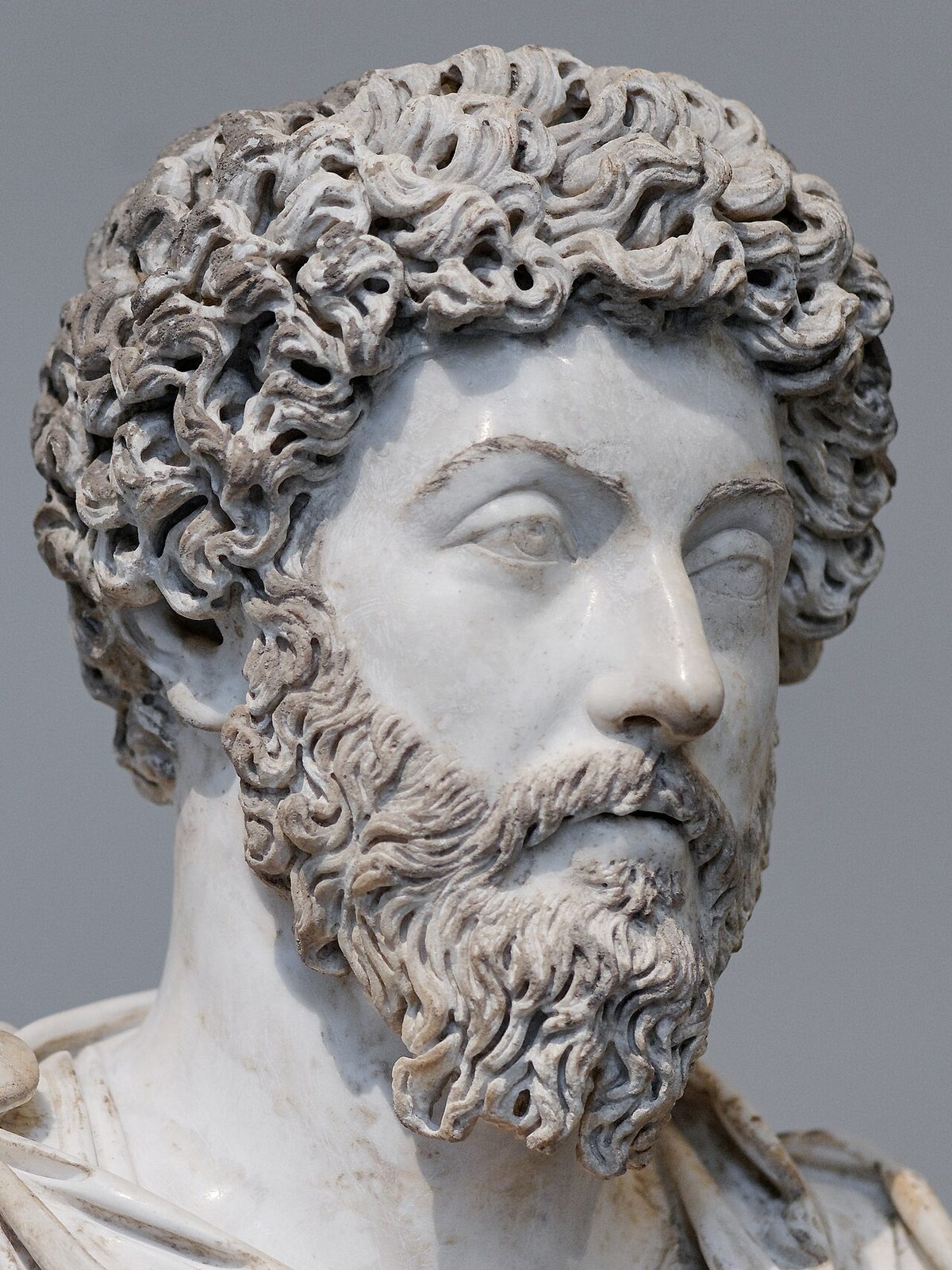
Marcus Aurelius, the emperor who wrote down his own Stoic exercises in a notebook, gave the ethic its most quoted motto, “No longer talk at all about the kind of man that a good man ought to be, but be such.” He compared the good man to a vine that bears its grapes and “does not call out for others to come and see, but he goes on to another act,” and to a promontory “against which the waves continually break, but it stands firm and tames the fury of the water around it.” Seneca, the statesman and tutor of Nero, wrote to his friend Lucilius that “philosophy teaches us to act, not to speak,” and the three of them together seem to have written the creed of the screen hero centuries before the screen.
Rome had its own saint of taciturnity in the younger Cato, the Stoic senator who later chose suicide rather than accept Caesar’s mercy. Plutarch tells how, as a boy, Cato was held out of an upper window by a visitor who wanted his support and threatened to drop him, and he “said not a word,” and how, as a young man, he answered those who blamed his silence by saying, “Only let them not blame my life. I will begin to speak when I am not going to say what were better off unsaid.” Yet the same Cato, once he entered public life, “often spoke all day without getting tired,” and his silence was a reserve of force kept for the forum, not a refusal of language.
Read more closely, the Stoic texts ask of speech what Cato’s life shows, which is not silence but agreement between words and life. Seneca’s rule in another letter is “let us say what we feel, and feel what we say; let speech harmonize with life,” and a hero who feels much and says nothing fails the first half of it. Epictetus, consoling a friend, permits exactly what the films forbid: “do not be unwilling to show him sympathy, and even … to lament with him. But take care that you do not lament internally also.” The Stoic may weep on the outside so long as he is calm within, while the movie hero is calm on the outside and grieving within, which is the Stoic formula turned precisely inside out. The deeds that Epictetus wants instead of words are domestic and civic deeds, not feats of arms, and when he imagines the philosopher proving his art the way a carpenter proves his, by showing his work, the work he names is to “marry, beget children, do the office of a citizen, endure abuse, bear with an unreasonable brother.” And Marcus, who had more reason than any man alive to perform his self-command, thanked his teacher for showing him how not to display himself “as a man who practises much discipline,” and warned that a good disposition “is invincible if it be genuine, and not an affected smile and acting a part.”
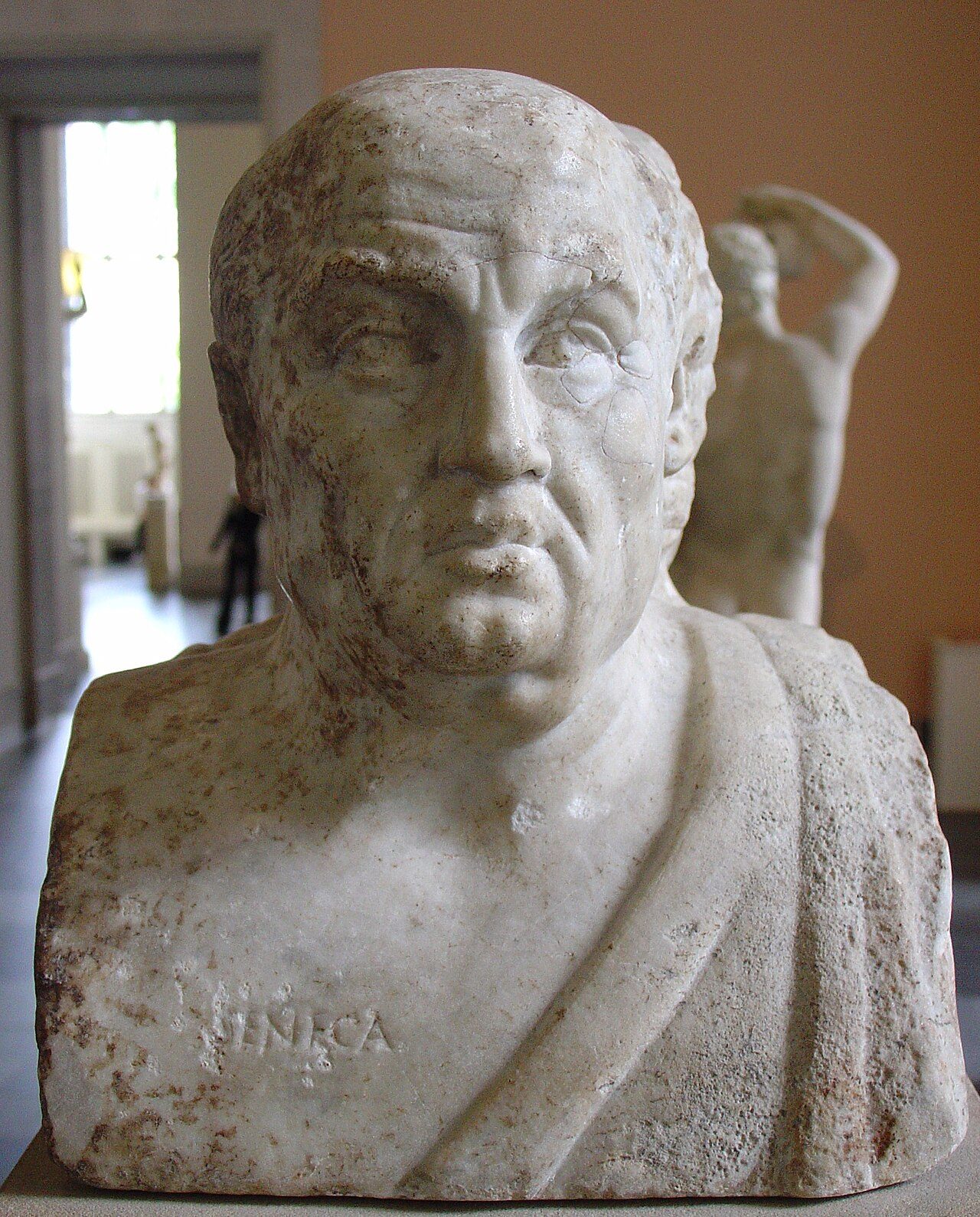
Seneca is plainest of all on grief, writing that to keep “your countenance unmoved at the very funeral ceremony … would mean lack of feeling rather than virtue,” and advising, on the death of a friend, “Let not the eyes be dry when we have lost a friend, nor let them overflow. We may weep, but we must not wail.” He confesses that he himself wept for a friend “excessively,” and he notes, in a sentence that explains a great deal, that Roman custom laid down periods of mourning for women but that “in the case of men, no rules are laid down, because to mourn at all is not regarded as honourable.” The dry-eyed man was a Roman custom, which Seneca recorded, not a Stoic doctrine, which he questioned. Modern scholars agree that the Stoic sage was meant to be free of passions that rest on false judgements, not of feeling as such, and the Stanford Encyclopedia of Philosophy puts it bluntly: the Stoic account of the “good feelings” of the virtuous person “belies the caricature of the Sage as an unfeeling robot.”
Where, then, does the image of the Stoic as the man who grits his teeth and endures come from? The philosopher John Sellars traces it to the Renaissance, to the Flemish humanist Justus Lipsius, whose book On Constancy of 1584 offered Stoicism as armour against the miseries of a continent at war, and he insists that this image “is nowhere to be found in the Discourses of Epictetus.” He quotes Richard Sorabji’s summary of the ancient doctrine, that Stoicism “is not about gritting your teeth but seeing things differently so that you don’t need to.” The screen’s stoic, with a small s, is therefore the heir of Roman custom and of an early modern reading more than of the Stoic texts, and it matters for what follows that Gregory Hays, whose translation of Marcus is among the most widely read today, has observed that “Stoicism was not just a philosophy for men, but for elite men,” addressed to senators and emperors who had others to do their bidding.
From Cooper to Eastwood
When the cinema took up this inheritance, its founding scene was a speech act about speech. In Wister’s novel a card player named Trampas insults the Virginian with an obscenity the book does not print, and the Virginian, his pistol out and his hand lying on the table “holding it unaimed,” answers, “When you call me that, SMILE,” drawling “a very little more than usual, so that there was almost a space between each word.” The line is a Spartan reply in cowboy dress, an ultimatum whose force lies in what it does not say. Gary Cooper spoke it in the film of 1929, one of the first sound Westerns, as “If you wanna call me that—smile,” and it made him the face of the type for the next thirty years.
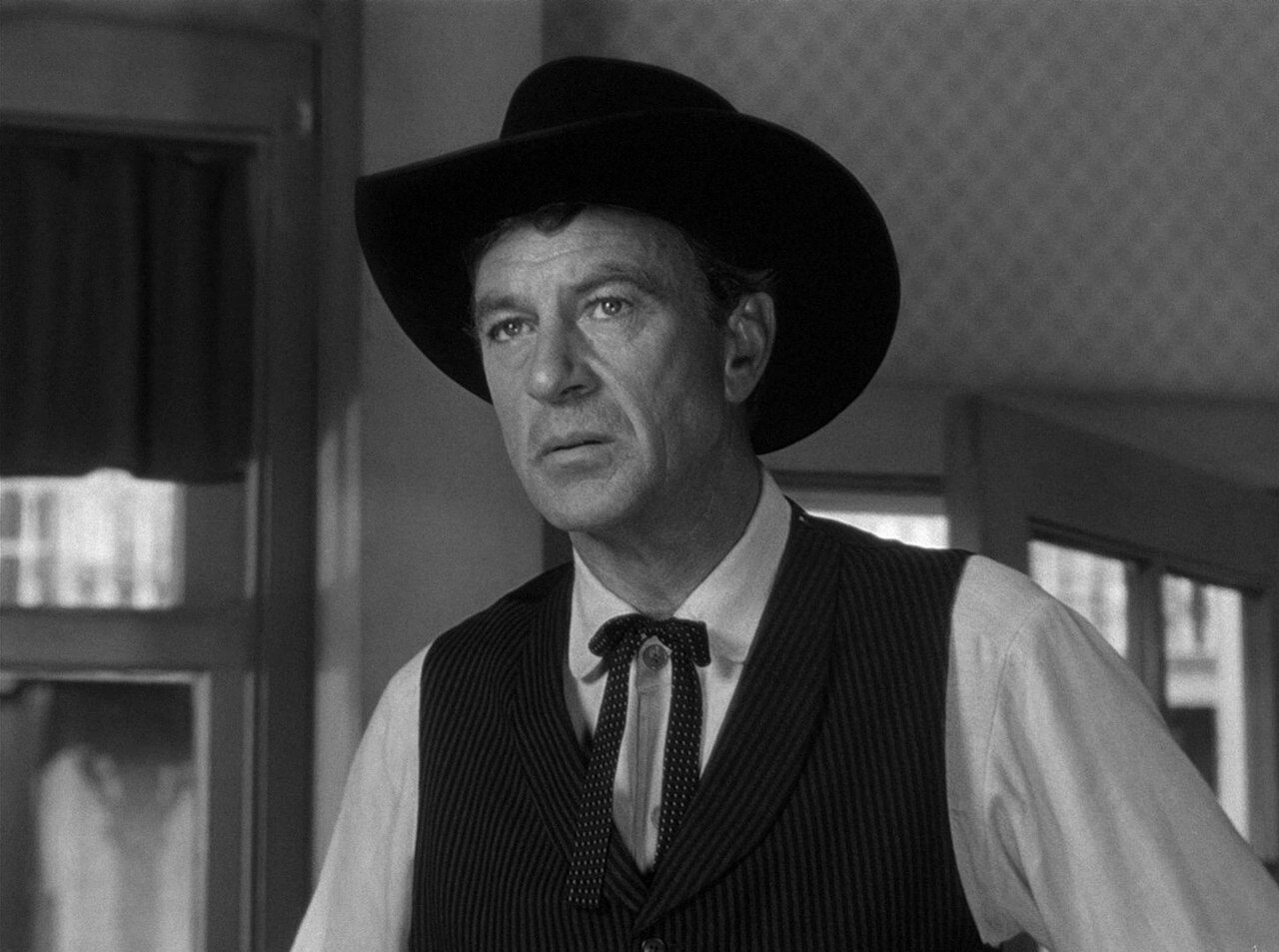
In the 1950s Cooper’s reserve became a duty that cannot be explained, for in High Noon (1952) his marshal Will Kane, abandoned by the town he has protected, is asked by his new wife why he will not simply leave, and can only answer, “I’ve got to. That’s the whole thing,” and when the gunfight is over he throws his marshal’s star in the dirt and leaves town with his wife, letting the gesture speak for him.
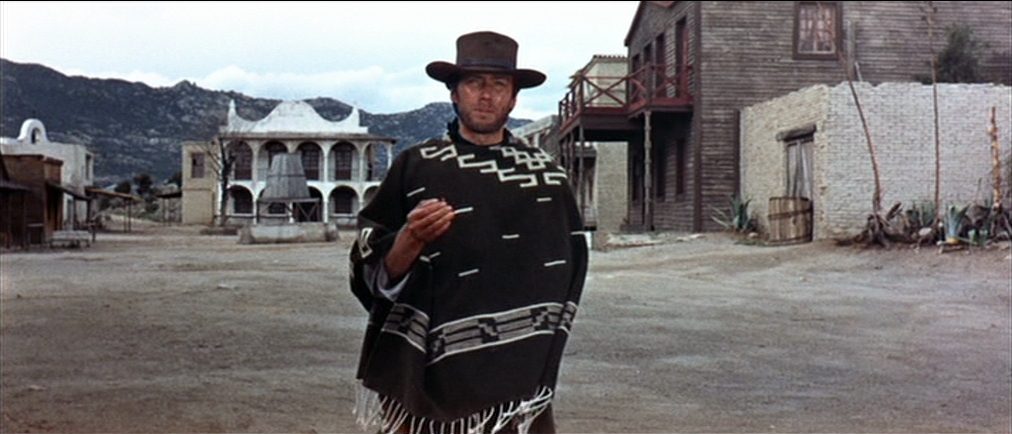
In the 1960s Sergio Leone and Clint Eastwood made silence an explicit strategy of mystery, and Eastwood later explained that in the Italian Westerns he asked for his lines to be cut, because “the more the character would get into expository scenes and start explaining things, the more it would dissipate the mystery of the character, or the strength of the character.” The silence of the Man with No Name, as Eastwood’s character came to be called, was in other words authored, a choice made by an actor who understood that an audience will fill an empty face with meaning. Eastwood’s own late Western gave that face a past, for in Unforgiven (1992), which he also directed, he played an old killer whose silence covers a conscience, and who tells a young gunman shaken by his first killing, “It’s a hell of a thing, killing a man,” and then, “We all have it coming, Kid.” Across these films the silence moves from reserve to mystery to wound, and what the hero keeps silent about is always one of three things, the violence he is capable of, the past he will not tell, and the tenderness he cannot show.
Echoes in Eternity
The film that put Stoicism itself on screen, and that I take to be the hinge between the ancient sources and the modern cult, is Ridley Scott’s Gladiator (2000). Its first act is set in the camp of Marcus Aurelius on the Danube, where an old emperor played by Richard Harris confides to his general Maximus a political ideal that can only be spoken quietly, “There was once a dream that was Rome. You could only whisper it. Anything more than a whisper and it would vanish,” while his son Commodus recalls a letter in which his father listed “the four chief virtues,” “wisdom, justice, fortitude and temperance,” and admits, “I knew I had none of them. But I have other virtues, Father. Ambition….” Commodus murders his father, orders the death of Maximus and has his wife and son killed, and the rest of the film follows Maximus, a man of few words and terrible competence, as he rises through the arenas as a slave until he can face the emperor and announce himself: “father to a murdered son, husband to a murdered wife … and I will have my vengeance … in this life or the next.”
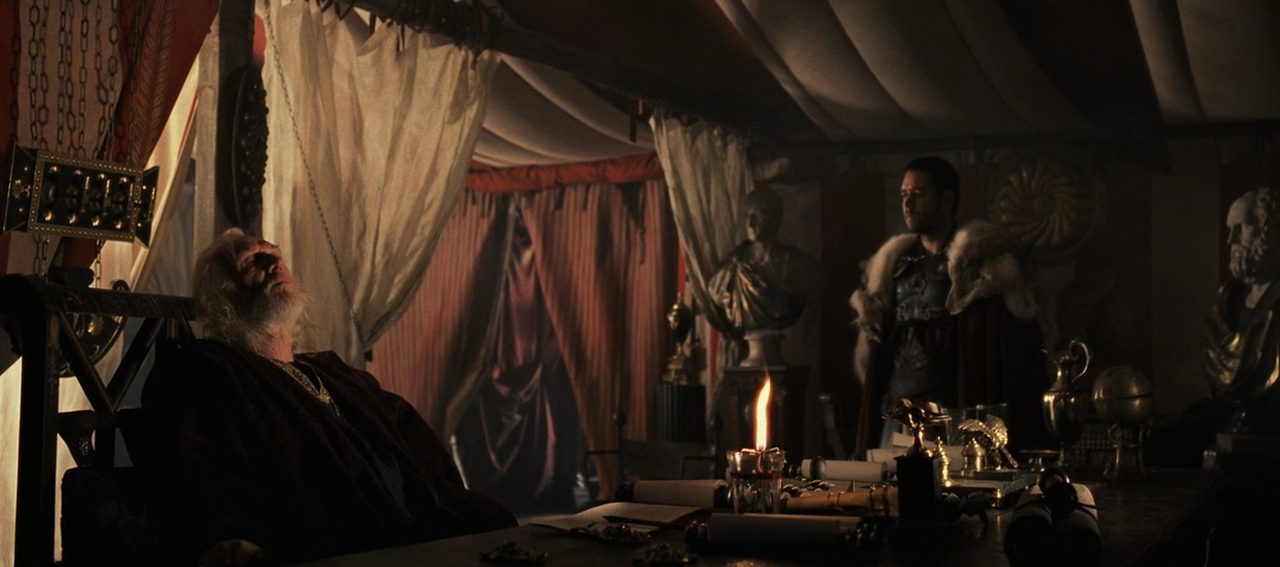
The film’s most famous line, the battle cry that Maximus gives his cavalry, “What we do in life echoes in eternity,” is often quoted as Marcus Aurelius, and it appears nowhere in the Meditations. The only echo in Marcus says the opposite: “Soon, very soon, thou wilt be ashes, or a skeleton, and either a name or not even a name; but name is sound and echo.” John Sellars, answering a colleague who had read Maximus as the faithful heir of Marcus’s Stoicism, replied that “it is his passionate attachment to particulars and his desire for revenge when they are taken from him that makes Maximus decidedly un-Stoic.” The film divides Stoicism between a whispering sage and a silent avenger, and the avenger, who carries the story, is Stoic only in the sense Lipsius gave the word, the sense of endurance.
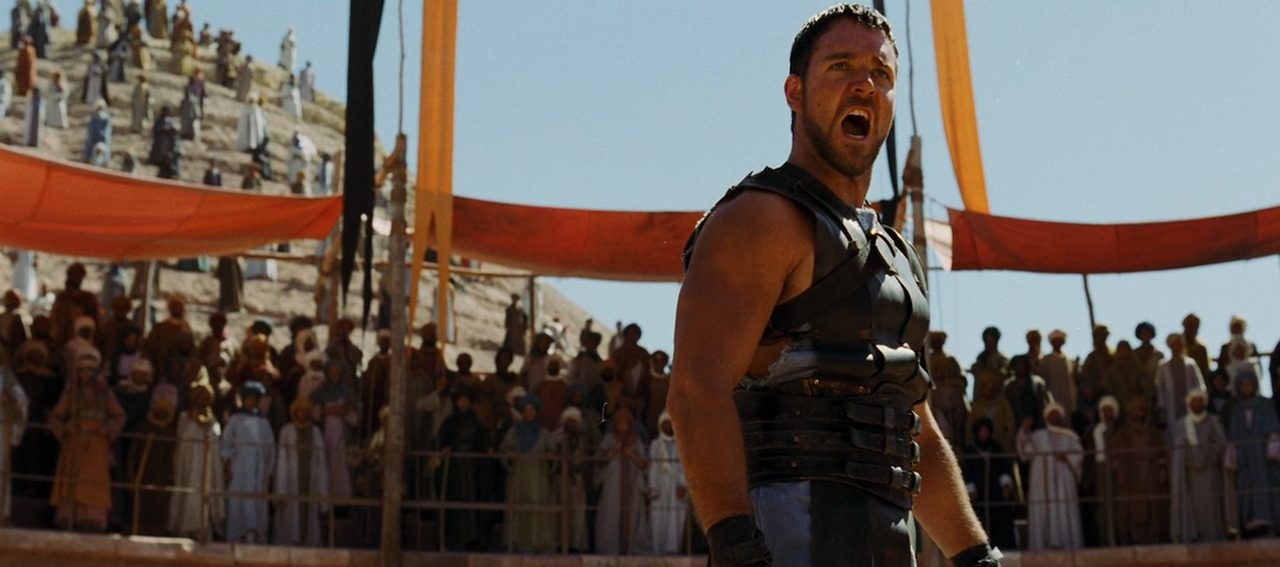
There is a further irony in the arena itself, for Seneca, describing the spectacle most worthy of the gods’ attention, chose “a brave man matched with evil fortune,” and gave as his example Cato, “still standing upright amid the ruins of the commonwealth.” Stoic endurance was already, in Seneca, something to be watched, and in Gladiator the watchers are a Roman crowd and a cinema audience, so that the camera sits in the seat Seneca reserved for the gods.
No critic I have found credits Gladiator with the Stoic revival, but the dates are suggestive. Gregory Hays credits Tom Wolfe’s novel A Man in Full (1998), in which a prisoner is sent a book of Stoic philosophy by mistake and is transformed by reading Epictetus, with having “really brought Stoicism to the attention of the American public,” and he recalls that his own translation of the Meditations, published in 2002, was catalogued by his publisher’s publicist under “Philosophy/Business.” Gladiator falls between the two, and the self-help wave that followed a decade later would take its Stoicism less from Epictetus than from the image the film had made popular, a silent man enduring the arena.
The Lion and the Fox
The best-known modern defender of manliness, the Harvard political philosopher Harvey Mansfield, defines it in his book Manliness (2006) as “confidence in the face of risk,” and he makes a surprising claim about Stoicism. “When we hear someone called ‘stoic,’” he writes, “it is another word for ’tough’ … let us venture to say that Stoicism is the philosophy of manliness.” But it is manliness of a particular kind, aloof and passive, and Mansfield’s description of Epictetus’s Stoic is not entirely admiring: he is “completely irresponsible: don’t get involved is the lesson … He does not urge others on or upbraid them, let alone boast or draw attention to himself. Silence is his rule.” Mansfield prefers the loud manliness of Theodore Roosevelt, who “openly departs from the strong, silent manly type who disdains talk and especially men who talk,” and he adds a remark that goes to the heart of this essay: “Perhaps the silent type needs to have his silence noticed — spoken of — by someone else, someone who gives the interpretation and asserts the significance. The drama of manliness needs to be dramatized by a poet.” Martha Nussbaum, reviewing the book, found in it “a John Wayne of the intellect” and called it “slipshod about facts,” and Mansfield’s account is better taken as one side of an argument than as a settled view, but his point about the poet stands whichever side one takes.
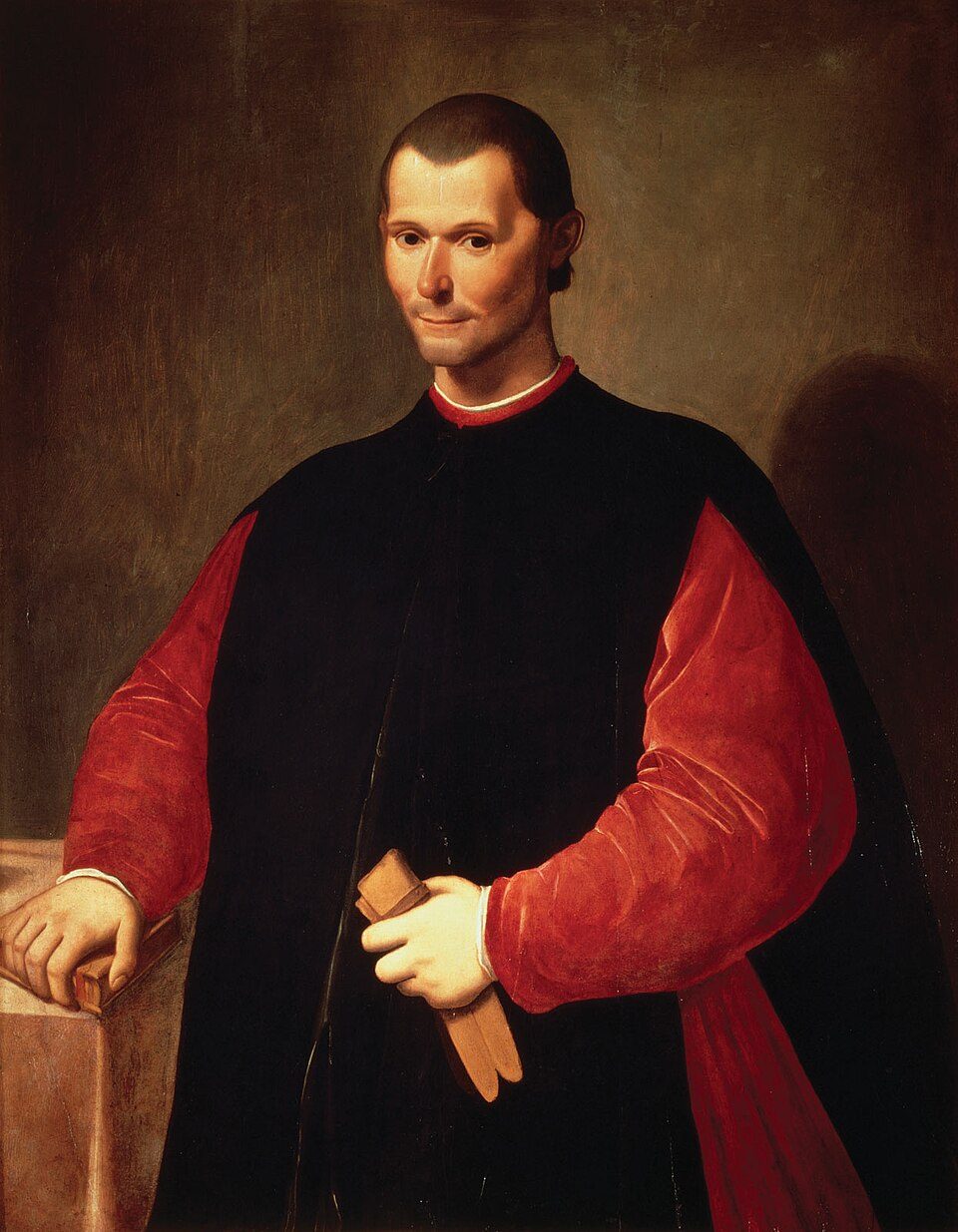
Mansfield is also the leading American translator of Machiavelli, a writer Tony Soprano knows secondhand, for “most of the guys that I know, they read Prince Machiavelli,” he tells his psychiatrist, and “I had Carmela go and get the Cliff Notes once.” Machiavelli supplies the counter-voice that the Stoic ideal needs, and in the eighteenth chapter of The Prince he says that a ruler must imitate two beasts, since “one needs to be a fox to recognize snares and a lion to frighten the wolves. Those who stay simply with the lion do not understand this.” Read beside Homer, the fox is Odysseus, the man of many wiles, and the strong, silent hero of the films wants to be the lion while living out the fox’s revenge plot. The same chapter overturns the Stoic ideal of being what one is, for “everyone sees how you appear, few touch what you are,” and a ruler need only appear to have the virtues, which is also all that a camera can record of the screen hero, whose stillness is shown to us and never explained.
It is tempting to make Machiavelli simply the man of action against the man of endurance, and Mansfield himself writes that Machiavelli “was no Stoic nobly but passively resigned to the limits of politics,” adding that the Stoic is “a byword for inflexibility,” who in politics “is more than willing to lose since in truth he loses nothing.” But Mansfield also denies that Machiavelli’s word for excellence, virtù, means manliness, for it “must also have room for womanly endurance, irony, and passivity.” The ancient word behind it does mean manliness. Cicero explains that “the name ‘virtue’ comes from vir, a man, and courage is the peculiar distinction of a man: and this virtue has two principal duties, to despise death and pain,” so that the Roman root of manliness is endurance, and the modern word for goodness began as a word for the capacity to bear pain without complaint.
Wound and Sovereignty
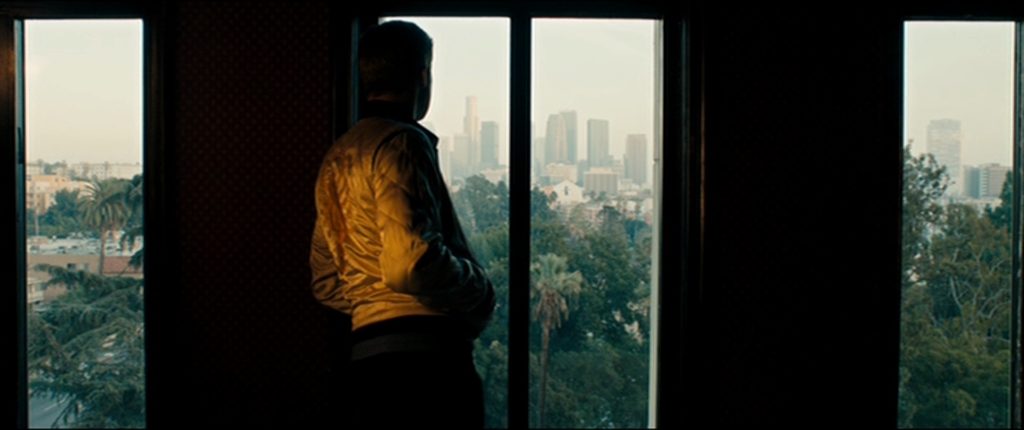
After 1990 the silent man splits in two, and in one branch his silence is a wound, the sign of a grief or a guilt too large to speak, while in the other it is pure sovereignty, the calm of a man who needs nothing and no one. Nicolas Winding Refn’s Drive (2011) belongs to the first, and it was cut toward silence by design, for Refn has said that he “just kept taking out dialogue and dialogue and dialogue,” reducing the script from eighty-one pages to “probably 60,” after Ryan Gosling proposed that the Driver should not talk “unless he’s asked something specific.” Refn told Gosling to “keep it all inside,” gave him a satin jacket with a scorpion on the back that “gave him a sense of armor,” and described the character as “the hopelessly romantic knight, but he’s also completely psychotic.” Critics divided along the line this essay has been following, for J. Hoberman saw “a chivalrous loner,” while A. O. Scott found the film “a prisoner of its own emptiness, substituting moods for emotions.”
The John Wick films carry the economy further, for according to a count reported by the Wall Street Journal, Keanu Reeves speaks some 380 words in the whole of the fourth film, and what the silence hides is stated in the first one, where Wick explains that “when Helen died, I lost everything,” and that the puppy his dying wife left him, which a gangster’s son kills, was “an opportunity to grieve unalone,” so that in this branch the Stoic endurance of the old Westerns has been bent toward Odyssean revenge.
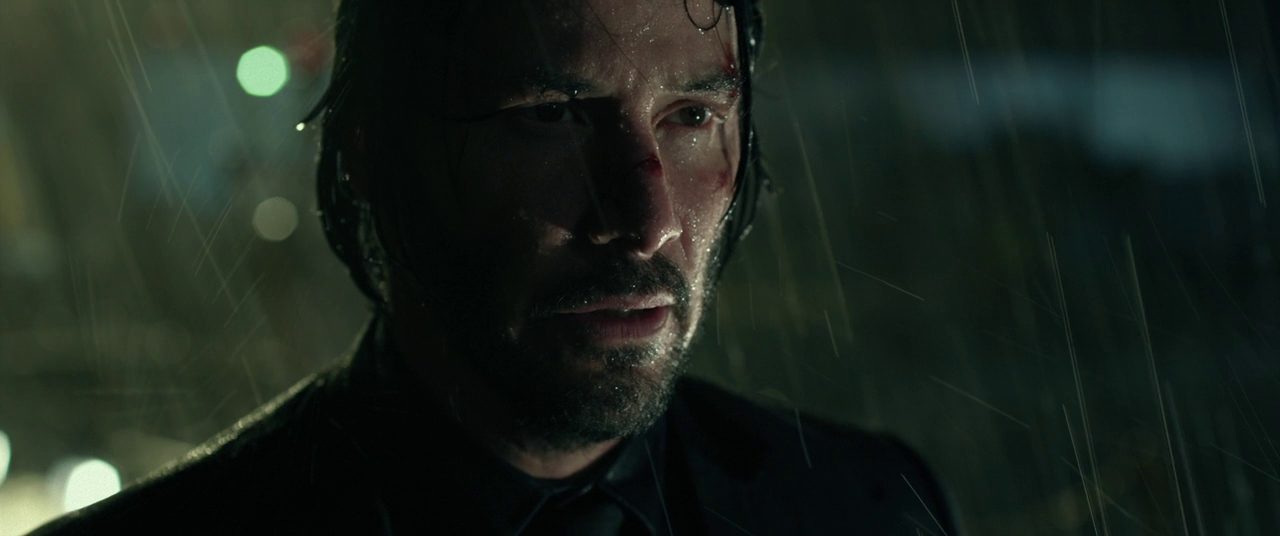
The second branch is best represented by Lee Child’s Jack Reacher, the drifter of some thirty novels, two films and a television series, whose catchphrase, as the critic Christopher Tayler noted, is “Reacher said nothing.” Child was “determined to avoid the hero-as-self-aware-damaged-person paradigm,” and he has been candid about what his hero is for: “The character does not exist. It’s just a way of mediating the wants of the reader.” Reacher’s silence hides nothing, and he is the purest modern case of the sovereign man, needing no home and no one, at ease in every fight.
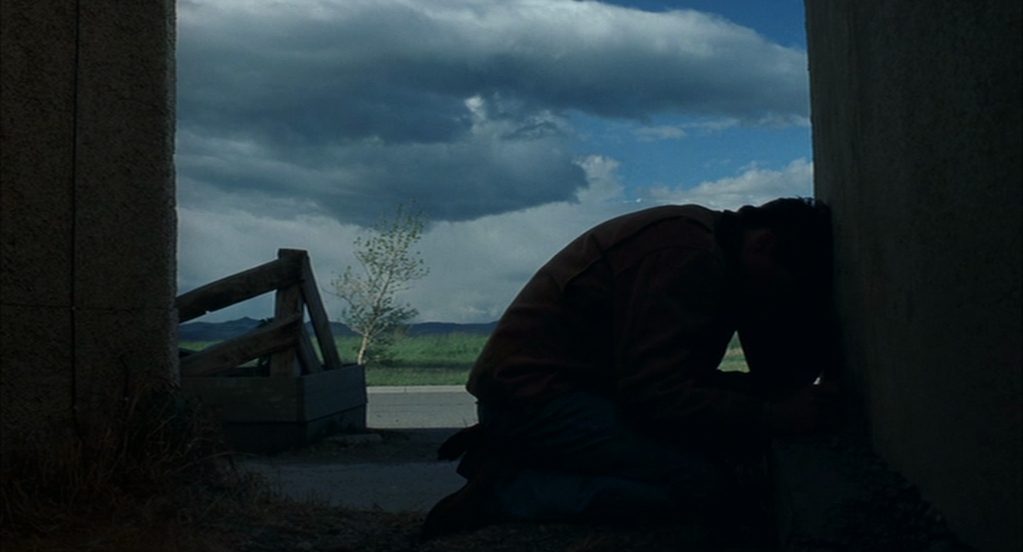
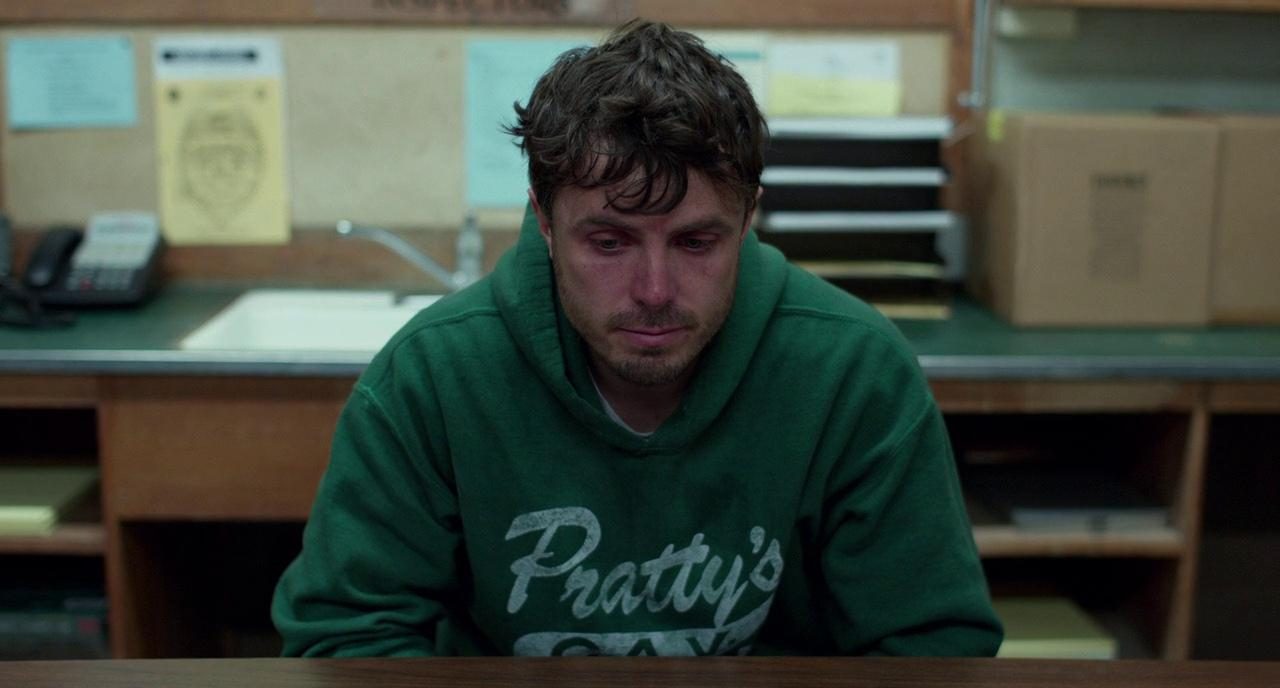
Other films of the period make the silence itself their subject and show who pays for it, as in Brokeback Mountain (2005), where Ennis Del Mar cannot speak his love for another man, and Heath Ledger, who played him, said that “my mouth became a clenched fist and the words became part of the battle”; Roger Ebert wrote that “when he was taught by his father to hate homosexuals, Ennis was taught to hate his own feelings.” In Manchester by the Sea (2016) a man destroyed by the death of his children can tell his nephew only, “I can’t beat it. I can’t beat it. I’m sorry.” Television, with its seasons of screen time, is the medium most able to make the silent man talk, and David Chase has said that therapists reported “a huge upsurge in male clientele” after The Sopranos.
Calm for Sale
The modern Stoic revival has a founder in the marketing writer Ryan Holiday, whose The Obstacle Is the Way (2014) and The Daily Stoic (2016) grew into a newsletter, a podcast and a shop. In 2020 Mother Jones reported “a memento mori medallion for 245,” and the Daily Stoic’s website now invites its readers to “Join 900,000+ other Stoics.” Holiday’s own definition of his subject, given to Sports Illustrated in 2015, is unusually frank: “It’s not a set of ethics or principles. It’s a collection of spiritual exercises designed to help people through the difficulty of life. To focus on managing emotion; specifically, non-helpful emotion.” The reduction had begun earlier, in psychotherapy, when the founders of cognitive therapy took as their motto Epictetus’s sentence that “men are disturbed not by things, but by the views which they take of things.”
The critics have been severe, and Gregory Hays argues that “Stoicism teaches its adherents how to accept without complaint their place in a large institution—the universe, a corporation, the Roman Empire,” and ends his survey of the revival with a sentence borrowed from Brecht: “‘Unhappy is the land in need of heroes,’ said Brecht’s Galileo; unhappy too, perhaps, the society that produces Stoics.” He also raises “a disquieting prospect” about the online men’s movements that have adopted Marcus Aurelius, “not that Stoicism has been distorted or abused by its modern proponents, but precisely that it has not.” The philosopher Carlos Fraenkel argues that “the practical part of Stoicism … doesn’t work without the outdated metaphysical underpinning,” the belief in a rational, providential cosmos that modern readers leave out. The defence deserves a hearing too. Vice Admiral James Stockdale, shot down over Vietnam and held as a prisoner of war for more than seven years, credited Epictetus with his survival, chanting to himself “control fear, control guilt” under interrogation, yet he records that “I never tapped or mentioned Stoicism once. But some sharp guys read the signs in my actions,” and his first rule for his fellow prisoners was communal, “Unity over Self.” The classicist A. A. Long, a leading scholar of the Stoics, has said that “‘masculine stoicism’ is really a modern perversion.”
The most telling evidence, however, comes from the Stoic texts themselves, for Epictetus told his students, “On no occasion call yourself a philosopher, and do not speak much among the uninstructed about theorems … but do that which follows from them,” and he gave them the image of the sheep, which “do not vomit up their grass and show to the shepherds how much they have eaten; but … they produce externally wool and milk.” Marcus Aurelius wrote his Meditations for no one but himself. A Stoicism that is announced daily to nine hundred thousand subscribers is, by these standards, a contradiction, and the Daily Stoic itself once quoted Epictetus’s passage on the sheep in order to praise leaders who “aren’t on social media marketing themselves,” adding admiringly that “somehow even their posture—ramrod straight—tells you they are firm and full of conviction.” The virtue has become a visible bearing, a posture that tells.
No critic I have found calls the modern image of Stoic calm a fetish, but I think the word is the right one, and three classic accounts of the fetish show why. For Marx, the commodity is “a definite social relation between men, that assumes, in their eyes, the fantastic form of a relation between things,” and value turns every product into “a social hieroglyphic”; the Stoic ethic was social through and through, as Marcus says in a line the revival rarely quotes, “That which is not good for the swarm, neither is it good for the bee,” and it now returns to its owner as a thing, a medallion or a morning email. For Freud, the fetish is a substitute that lets a man keep believing in something he knows to be missing, and the calm face, or the coin in the pocket, stands in for the parts of Stoicism that have been lost, its providence, its community and its good feelings, while allowing the owner to disavow the loss. And for the film theorist Laura Mulvey, the camera’s fetishistic look “builds up the physical beauty of the object, transforming it into something satisfying in itself”; Steve Neale, extending her argument to male stars, observed that the look at a man’s body “must be motivated in some other way, its erotic component repressed,” and that the beatings and wounds inflicted on the Western heroes he studied serve both to show and to disguise that look. The impassive male body of Maximus in the arena, or of the Driver in his armour of satin, is offered to be looked at under cover of a revenge story, as something satisfying in itself.
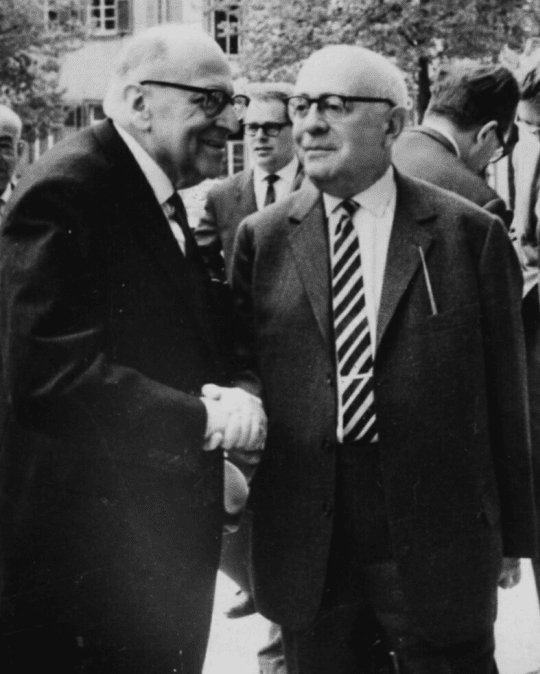
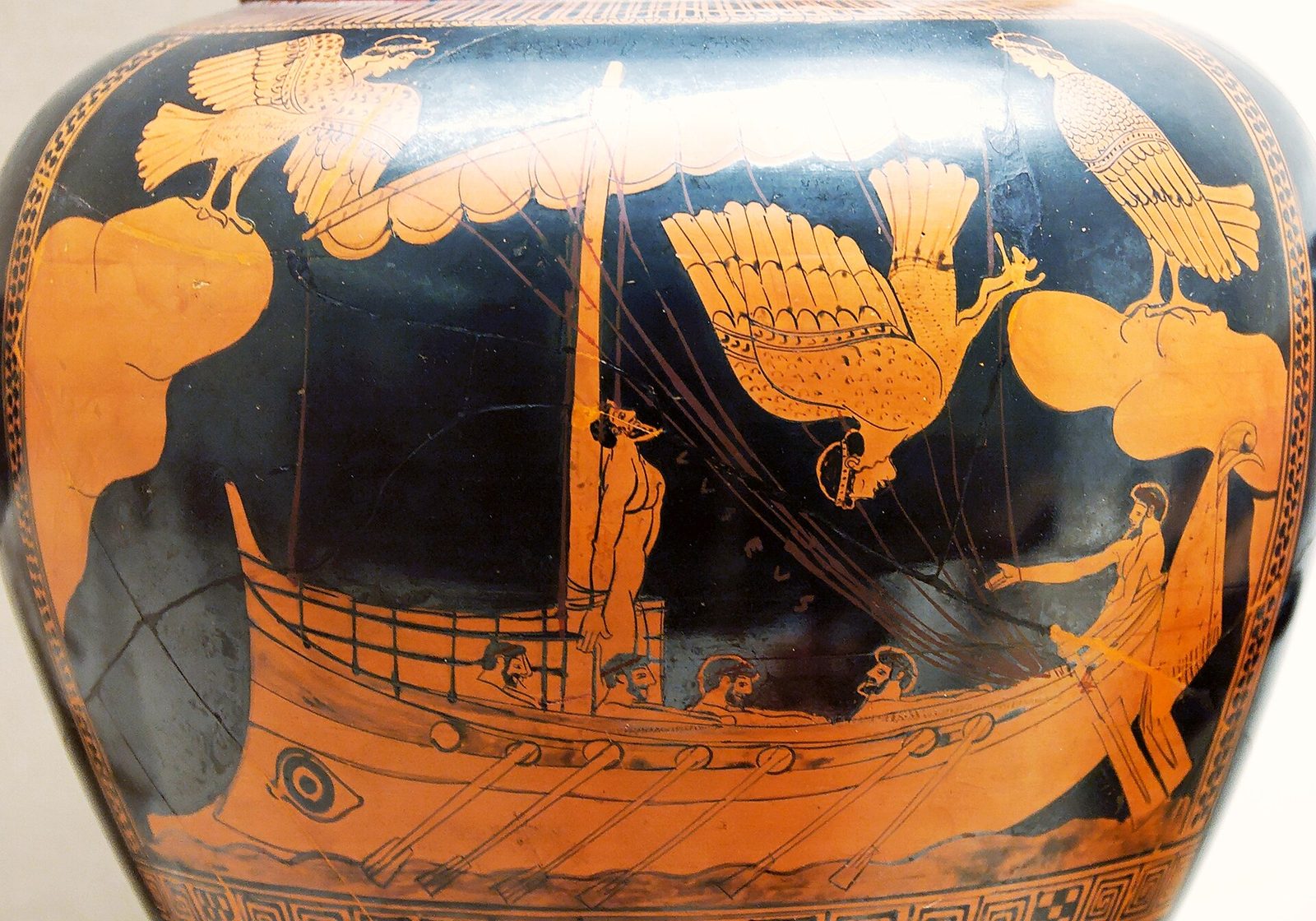
The thinker who joins these threads most directly to antiquity is Theodor Adorno, who with Max Horkheimer wrote Dialectic of Enlightenment during the Second World War, and whose reading of the Odyssey makes Odysseus the first modern self. In their account Odysseus survives by mastering his own nature, and the emblem of that mastery is the episode of the Sirens, in which he has himself bound to the mast so that he can hear their song without yielding to it, while his oarsmen, their ears stopped with wax, “must doggedly sublimate in additional effort the drive that impels to diversion. And so they become practical,” and he “listens, but while bound impotently to the mast.” From this they draw a sentence that could stand over the whole history of the strong, silent man: “The history of civilization is the history of the introversion of sacrifice. In other words: the history of renunciation. Everyone who practises renunciation gives away more of his life than is given back to him.” They read “Endure, my heart” as a man who “‘punishes’ the heart by forcing it to be patient,” and they add that “striking one’s breast became later a gesture of triumph: the victor shows thus that his victory is always won against his own nature”; of Odysseus among the suitors they write, “his patience is perseverance … Justice is restrained revenge,” and those last four words could stand as the plot of every revenge film. On Stoicism they were blunter, calling it “the bourgeois philosophy,” which “makes it easier for the privileged, confronted with the suffering of others, to steel themselves to their own threats,” and observing that apathy appears at those moments of history when the fortunate few become “aware of their own impotence.” Self-help Stoicism, read in their light, asks its customer to be Odysseus at the mast and the oarsmen at once, to hear the song of a better life while rowing harder, and Hays’s unhappy society that produces Stoics is not far from their age of apathy.
The Price of Silence
The critics who have written most seriously about the strong, silent man hold both readings of him at once. Warshow, who admired the Westerner’s restraint, also wrote that “in Western movies, men have the deeper wisdom and the women are children,” and then conceded that “if we actually had to confront the question it might turn out that the woman who refuses to understand him is right as often as she is wrong.” Tompkins found that the hero’s silence “establishes dominance at the same time as it protects the silent one from inspection and possible criticism,” that “men’s silence in Westerns is the counterpart of women’s silence; that is, it is the silence of an interior self who has stopped trying to speak,” and that “men would rather die than talk, because talking might bring up their own unprocessed pain,” and she was honest enough about her own pleasure in the films to write, “I want these things and I don’t want them.”
These accounts also suggest why the type appeals so strongly to men, although no one, as far as I can find, has studied male viewers of these heroes directly. Mulvey wrote that the male spectator identifies with the hero as a “more perfect, more complete, more powerful ideal ego,” and Warshow, more plainly, that boys watch Westerns to learn “how a man might look when he shoots or is shot.” There is also the wish to be understood without having to speak, which the films grant their heroes again and again, in the woman or the child who reads the silent man correctly, and which they extend to every viewer, who is let in on what the hero will not say.
Social scientists put a name to the cost as early as 1971, when Jack Balswick and Charles Peek described “the inexpressive male” and a “‘John Wayne Neurosis’ which stresses the strong, silent, and two-fisted male as the 100 percent American he-man.” The therapist Terrence Real wrote that “’the strong silent type’ remains the ideal for men. Real men — men like Clint Eastwood or Arnold Schwarzenegger — are laconic bullet biters,” and that “this impassive quality of traditional masculinity blends into the demeanor of depression,” although the research on what psychologists call normative male alexithymia, a learned difficulty in putting feelings into words, finds that the difference between men and women is real but small.
Adorno, in a lecture of 1966 on what education should learn from Auschwitz, attacked the ideal of hardness in terms that bear directly on the screen hero: “The idea that virility consists in the maximum degree of endurance long ago became a screen-image for masochism that, as psychology has demonstrated, aligns itself all too easily with sadism,” and “whoever is hard with himself earns the right to be hard with others as well and avenges himself for the pain whose manifestations he was not allowed to show and had to repress.” His remedy was an idea, he said, “in no wise unfamiliar to philosophy: that anxiety must not be repressed.” Seneca had already seen the trap from the other side, writing that the man who grieves with courage is called “undutiful and savage-hearted,” and the man who breaks down “womanish and weak,” so that there is no way to mourn that custom will approve. The films themselves have always known what the silence costs, and their most memorable images are of its price: Ennis Del Mar with his forehead pressed to an alley wall, Maximus dying in the sand of the arena, a man in Manchester who can only say that he cannot beat it.
Homecoming
Looking back over the ancient sources and the modern films together, I am struck by how rarely the strong, silent man stands alone. Odysseus hides his tears under his cloak from a hall full of strangers, and the poet tells us of them all the same; Seneca’s Cato stands upright amid the ruins as a spectacle for the gods; Mansfield’s silent type “needs to have his silence noticed — spoken of — by someone else”; the Daily Stoic admires a posture that “tells you” what the man within believes; and Machiavelli reminds the prince that “everyone sees how you appear.” The silence of the type is never self-sufficient but always seen and always narrated, and an ideal of perfect self-possession turns out to depend, at every point, on an audience. That is why the film camera suits him so well, and why the self-help industry could sell him back to men as a bearing to adopt rather than a life to live.
There is an older and kinder reading of silence in the Stoic tradition, which the Roman teacher Musonius Rufus put in a single sentence, that “the greatest admiration gives rise, not to words, but to silence.” In his view silence belongs first to the audience, to those who watch a good act and find nothing adequate to say, rather than to the man who performs it. If the strong, silent type has a lasting claim on us, it may be this one, that the best of these films leave their viewers silent at the end, watching a marshal’s star fall into the dirt or a gladiator die in the sand.
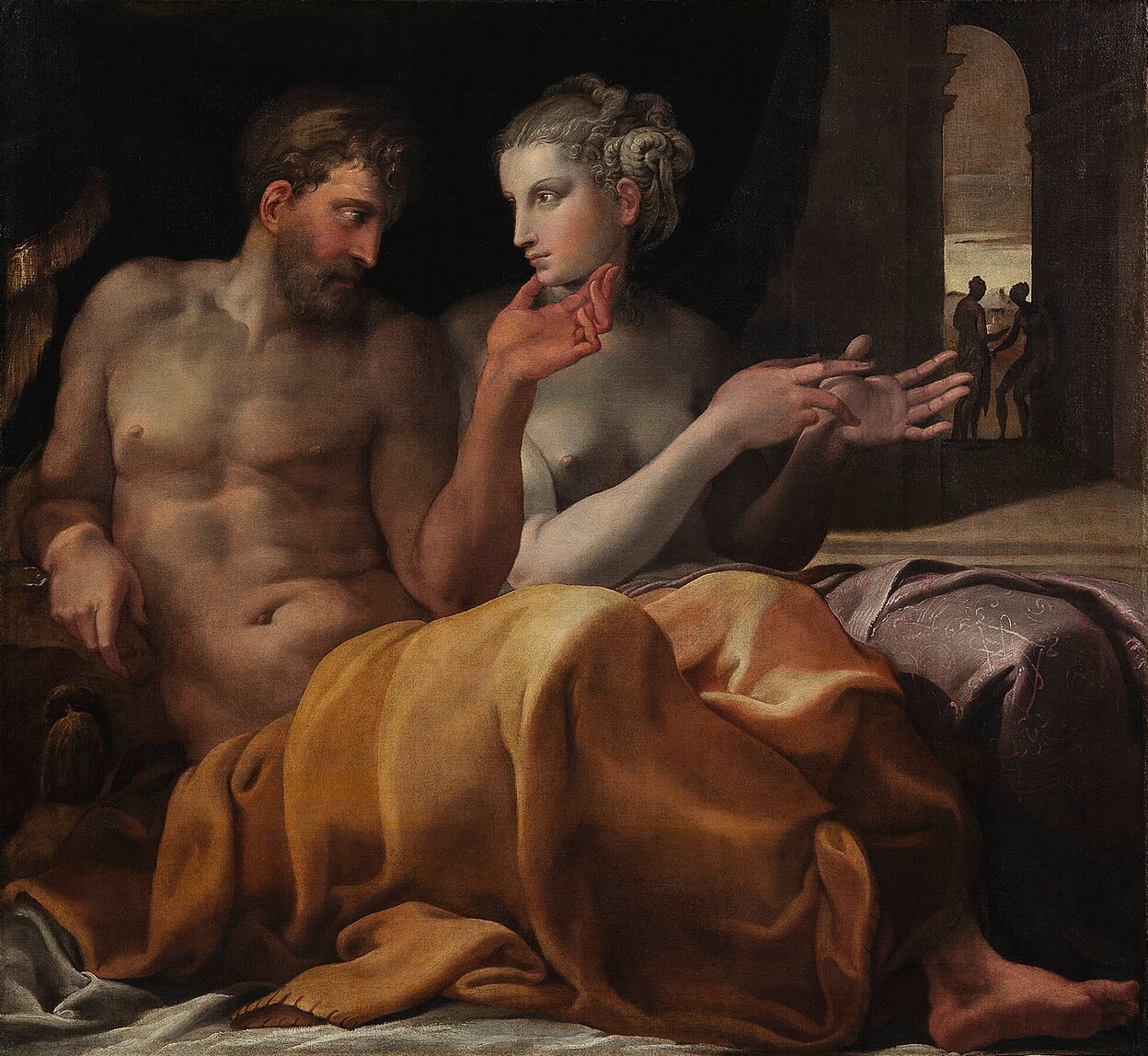
But the poem in which the patient hero first appears does not end in silence, for when Odysseus has killed the suitors, and Penelope has tested him with the secret of the bed he built with his own hands and known him at last, Athena holds back the dawn to lengthen their night, and “when the two had had their fill of the joy of love, they took delight in tales, speaking each to the other.” She tells him what she endured among the suitors, and he tells her all that he suffered and all that he made others suffer, beginning with the first battle of his voyage home, and “she was glad to listen, nor did sweet sleep fall upon her eyelids, till he had told all the tale.” The man who swallowed every insult in silence among his enemies talks through the night with the one he loves, and that, more than any feat with the bow, is what the screen hero cannot do: to come home, and to say what his deeds have meant to someone who wants to hear it.
Homer and Plutarch are quoted in the translations of A. T. Murray and Bernadotte Perrin, Aristotle in W. D. Ross’s, Plutarch’s On Talkativeness in W. C. Helmbold’s, Epictetus and Marcus Aurelius in George Long’s, Aulus Gellius and Musonius in J. C. Rolfe’s, Seneca’s letters in R. M. Gummere’s and On Providence in Aubrey Stewart’s, Cicero in C. D. Yonge’s, Machiavelli in Harvey Mansfield’s, Marx in Samuel Moore and Edward Aveling’s, Dialectic of Enlightenment in John Cumming’s and “Education after Auschwitz” in Henry W. Pickford’s. Film and television dialogue is quoted from the works’ subtitles.
Frames from The Sopranos (© HBO), The Odyssey (© Universal Pictures, from the official trailer), A Fistful of Dollars (© Jolly Film and MGM), Gladiator (© DreamWorks and Universal), Drive (© FilmDistrict and Bold Films), John Wick (© Lionsgate), Brokeback Mountain (© Focus Features) and Manchester by the Sea (© Amazon Studios) are reproduced at reduced size for criticism and commentary; their copyrights belong to their owners. The photograph of the Seneca herm (by Calidius) is shared under CC BY-SA 3.0, that of the bust of Marcus Aurelius (© Marie-Lan Nguyen) under CC BY 2.5, and that of Horkheimer and Adorno (by Jeremy J. Shapiro) under CC BY-SA 3.0. The other images are in the public domain.