Reflection on my First Boxing Bout - A Warrior's Journey
What I learned from losing my first boxing match: sacrifice, the question of why, a sunrise on a trail, and fighting as a spiritual practice.

There’s something to be learned from a rainstorm. When meeting with a sudden shower, you try not to get wet and run quickly along the road. By doing such things as passing under the eaves of houses, you still get wet. When you are resolved from the beginning, you will not be perplexed, though you will still get the same soaking. This understanding extends to all things.
Sacrifice
This year I have been both a college athlete and a PhD researcher in computer science. Either one is hard enough, and being both at once has made this the most challenging year of my life so far. My research involved several projects at once, with long coding and debugging sessions every day and the usual struggle with ideas. I was a teaching assistant responsible for about eighty students, leading a two-hour discussion section every Friday morning, and I gave advice on careers and graduate school to undergraduates who asked for it. Meanwhile I trained every day. Strength and conditioning started around 5:30 in the morning, with a run of at least five miles, sprints, and set after set of calisthenics, and four days a week I trained boxing technique on top of that. In the three weeks before the bout I did hard sparring, and I prepared mentally and physically for the fight, which meant cutting weight and restricting my diet.
At that level of intensity I had almost no social life, no comfort food, or rather no comfort at all. I fought fatigue and self-doubt, on a path that many of my peers did not understand and some openly criticized.
All this commitment and hard work, or what I would rather call sacrifice, ended in a loss. Even though in the photograph I am the one in the blue tank with my hand raised, I lost in the end, and that day it broke me. I was in tears after the match, not because I was afraid or hurt, but because I felt I had let down the people cheering for me. I questioned all the commitment and sacrifice. All those days and nights of effort, all that risk of being punched in the face and having my brain rattled, and it came to this? I did not quit during the fight and I never gave up, but the burden of the loss saddened me deeply and made me question everything about this difficult path.
Today I am sitting down to reflect on it. Philosophizing is usually pointless in the middle of a fight, as I will explain later in this essay, but if you take a loss without reflecting on it, you never grow. So I must regroup and rekindle my fighting spirit.
What does not kill me makes me stronger.
The word I chose for this section’s title, sacrifice, originally means the slaughter of an animal or the surrender of a possession as an offering to a divine figure. What was I sacrificing for? I used the word naturally, but what does it entail? Answering that question might explain why I pursue this hard and often discouraging path.
The Question of Why
He who has a why to live for can bear almost any how.
When you face a major setback, you may want to give up. Losing a fight is one, and losing it in front of close friends and classmates is a serious blow to morale. In that moment, when all your efforts seem to have failed you, something has to keep you in the game. That something is the why. We all need a reason to hang on and keep fighting, or else what is the point of it all? Right after the fight I was broken, and I could not grasp my why. If a person has no why, there is no point in going on, and pushed to its extreme this leads to the absurd that Camus confronted when he opened The Myth of Sisyphus with the question of suicide.
I kept a strenuous training routine and a strict diet in the weeks leading up to the fight, losing fifteen pounds in three weeks while keeping up with all my duties at school. Every morning at five or earlier, while it was still dark, I forced myself out of bed, ate a banana, and went to do cardio and conditioning until failure, knowing exactly how demanding the day ahead would be, or, put simply, that it was going to suck. Yet I was too busy to think about why. During training there was only the coach’s “keep going,” which pushed me through by instinct, without any deeper reason. Perhaps a reason was not even necessary, or it seemed too obvious to state: you take up a sport, and the goal is to win.
It may sound strange to want a more fundamental reason than that, but this is a trait of mine. I have always craved something fundamental, and since I enjoy philosophy, I questioned the root reason for fighting. Of course you want to win when you play a sport. But at my age, near the end of my twenties, what is the point of a sport I will never make a career of, in which I can hardly imagine reaching the top, whether regionals or nationals?
At the end of a boxing match, if you win, you take home a trophy, a medal or a belt. So when my coach asked me, “How much do you want it, Fred?”, I first thought of those trophies, and thinking about them made me less motivated, not more. There had to be something higher. Yes, we are gladiators in the ring, fighting for personal glory, but what is the point of it all? It was clearly not the belt I wanted. When I first joined the boxing club on campus, the coaches told us newcomers that boxing could be an outlet. That may be true for casual boxers. But we were now real fighters, competing in the ring under high pressure and high demands, and there had to be more to it than that. If you only want an outlet, you hit the bags. Why bother getting punched in the face, assuming you are not a masochist, which I am not?
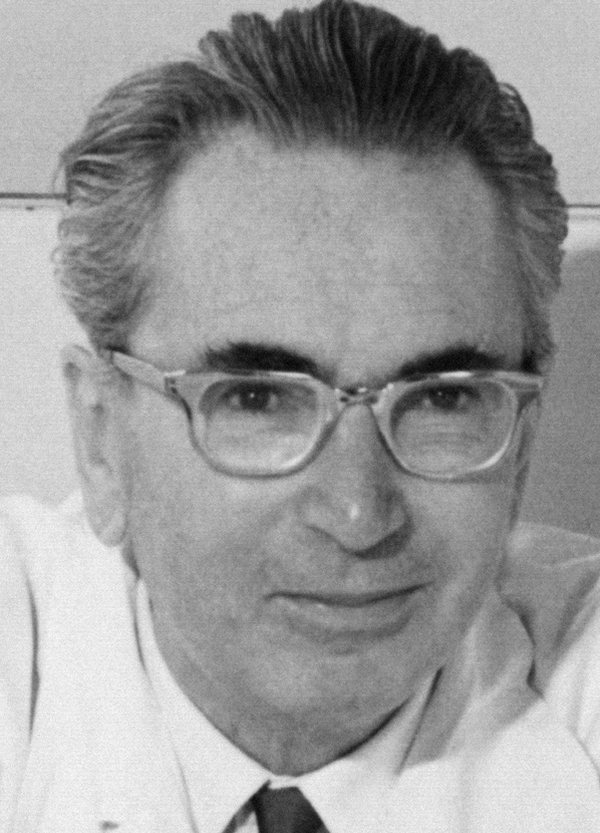
Viktor Frankl, who quoted Nietzsche’s line about the why and the how, knew far more about endurance than any athlete. In Man’s Search for Meaning (1946) he described his years as a prisoner in Auschwitz and other camps, and observed that the prisoners who held on to something to live for, a person waiting for them or a task left unfinished, were more likely to endure what destroyed others. He also wrote something that explains why thinking about the belt left me cold. In the preface to a later edition he warned his readers not to aim at success, because the more you make it a target, the more you miss it. Success, like happiness, cannot be pursued, he wrote; it must ensue, as the unintended side effect of dedication to something greater than oneself. A trophy is the kind of success that cannot be aimed at directly. Whatever my why was, it had to be something the trophy would follow from, not the trophy itself.
People also say that fighting is for broken people dealing with their trauma, a point made strongly in Sam Sheridan’s book The Fighter’s Mind, and this is partly true. Looking through the history of boxing and MMA, you can see that many fighters with troubled childhoods have used fighting to work through their trauma. I had some traumatic experiences as a teenager, especially of rejection, loneliness and being bullied, but when I hear other fighters’ stories and upbringings, my trauma is nothing in comparison, since I at least had a loving family to support me. Still, I believe deep down that this is one of the reasons I am drawn to the sport, though not the main one.
Lost in this search for reasons, my memory went back to the week before the fight, and I began to glimpse the main reason, in the moment when I felt calmest, on a morning run on the Getty trails.
Spirituality in Fighting
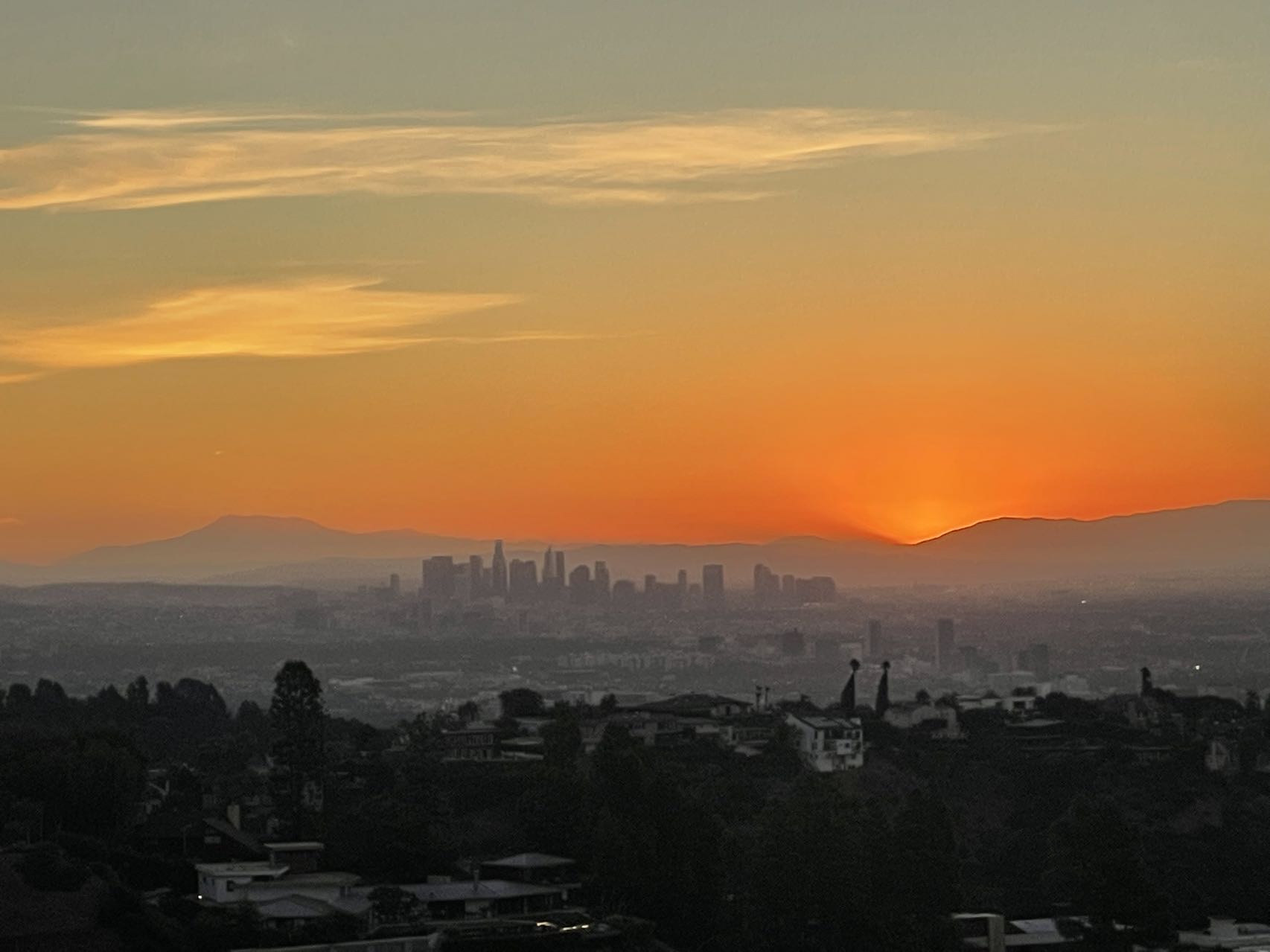
In the week before the fight, instead of my usual sprints and conditioning, I tried to prepare myself mentally. The fight was close, so I did not have time, as I do now, to reflect on the why. In Breathe, the autobiography of the Brazilian jiu-jitsu legend Rickson Gracie, Rickson recalls going to the mountains to connect with the spirit of the samurai before he first fought in Japan, so I thought I would try going to the mountains too.Rickson Gracie with Peter Maguire, Breathe: A Life in Flow, 2021. The closest ones to campus are the Getty trails, a beautiful mountain trail beside the 405 freeway, across from the Getty Center. I decided to give it a try, in case I found something there, and looking back now, I think that is where I found my enlightenment.
On the Wednesday morning before the fight, at around five, I left my apartment and jogged to the Getty trails. It was still dark, but the four-mile jog to the trailhead meant that the sun would be rising by the time I got there. On the way I listened to Gustav Mahler’s Tenth Symphony instead of my usual mix of hip-hop and rock. I was calm and relaxed, and I felt light as I ran. At zone 2 pace, with classical music, this is the moment runners describe as the runner’s high. If you have never tried it, you should; it is exhilarating.
When I reached the trailhead and jogged up the steep slopes to the top, I watched the sun rise from the hilltop, a rare sight for me. In the weeks before, I had done my strength and conditioning in the gym, a closed space, but now, alone in the semi-wilderness, I saw the crimson sun rise above the hills of Los Angeles, and for the first time in a long while I had an almost religious, and certainly spiritual, experience. I stopped to admire the beauty of nature. Once the sun was up and the whole hillside was lit, I walked further along the trail and saw a little white cross leaning on the ground among the wild grass, with the sun above it to the right.
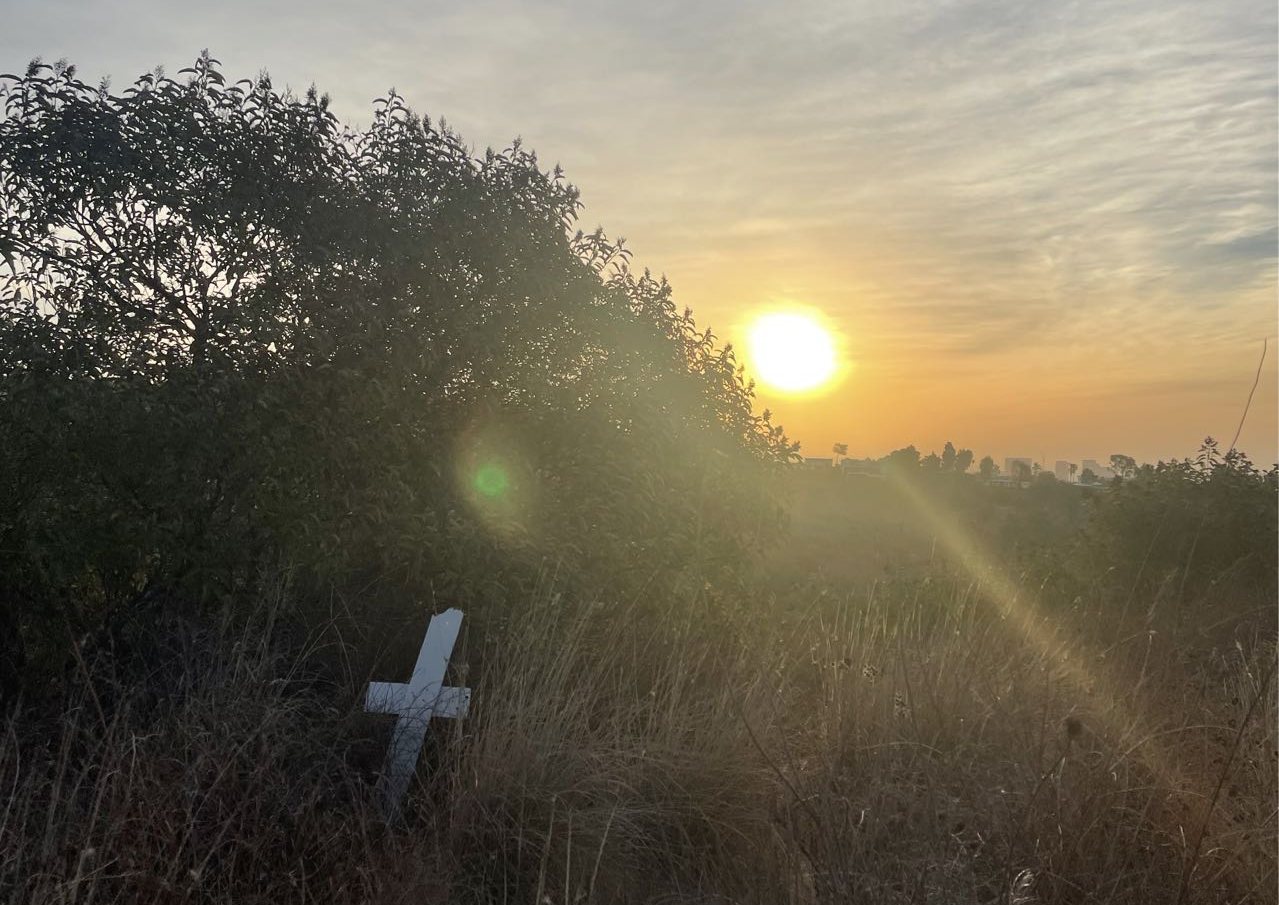
I could not help standing still, as the Adagio of Mahler’s Tenth played, and despite my lack of any religious background I looked at the cross, folded my hands, and, without any pretext, began to pray. I prayed for God to give me strength, courage and wisdom, not only for this fight but for the road ahead. It had been a very hard year, and for a moment I took refuge in that peace. My mind went completely empty and I began to shadow box, practicing my boxing moves alone against an imagined opponent, and it felt more like dancing than boxing. I was completely relaxed and in the flow, and I felt at one with the wind, the sun and the smell of the grass. A butterfly landed on a branch near me and stayed perfectly still, almost as if it were watching me shadow box.
Reflecting on this now, I can say the following:
Fighting for me is spiritual
Of course, when you fight another person rather than shadow box, especially in a ring in front of a crowd, there is the substantial danger of being punched in the face, of injury and of knockouts. But I am sure there is a great deal of overlap, especially for those who compete at a higher level. Experienced fighters like to say that they “read their opponents” and “stay in the flow,” so there may be connections here that I have yet to discover because my skills are still limited. If so, then the ring is not just a place of competition but an altar. The fighters sacrifice part of their physical well-being, along with their whole heart and spirit, and in exchange they reach a temporary, elevated state of mind that non-fighters may never experience. Seen this way, fighting becomes spiritual, even religious, and sacrifice is exactly the right word.
The historian Johan Huizinga made a similar observation in Homo Ludens (1938), his study of play. Play, he argued, always happens inside a space marked off from ordinary life, and he listed “the arena, the card-table, the magic circle, the temple, the stage” among such spaces. Formally, he thought, a ground consecrated for ritual cannot be distinguished from a ground marked off for play: both are temporary worlds inside the ordinary one, set apart for an act with its own rules. The roped square of a boxing ring is one of the plainest examples I know. When the bell rings, ordinary rules are suspended and different ones take their place, and when it rings again, the fighters embrace. It is not strange that the ring can feel like an altar, since in Huizinga’s sense it is built on the same plan.
So I ask myself again: why? Why are you willing to sacrifice so much for fighting? And I answer:
I am a warrior, fighting for me is spiritual, and I fight to get closer to the Way.
This may sound mystical, perhaps with a flavor of Eastern philosophy. When my coaches asked me “How much do you want it?”, I was baffled, but when I ask myself why, I say: because I want to understand and experience the Way, to master it, and to be in the flow. That is my ultimate goal, not trophies but an elevated state of flow, which is possible only through consistent hard work, dedication and sacrifice, and through the improvement of skill and the accumulation of experience, until you can be relaxed and heightened at once, even under great pressure, like Muhammad Ali.
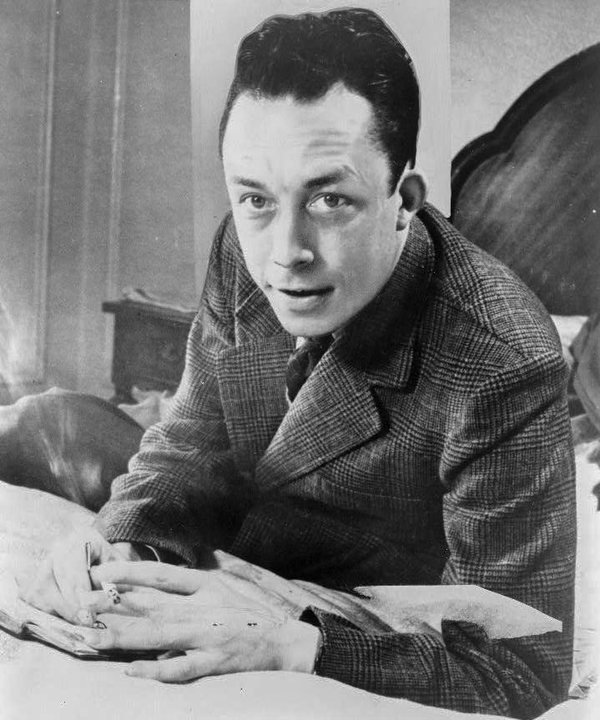
Camus, who raised the question of the absurd in the first place, ended The Myth of Sisyphus with an answer that fits this better than I expected. Sisyphus is condemned to push a boulder up a mountain forever, only to watch it roll back down each time. Camus asks us to look at him on the way back down, when he is conscious of his fate and walks toward the boulder anyway. “The struggle itself toward the heights is enough to fill a man’s heart,” Camus concludes. “One must imagine Sisyphus happy.” The five o’clock runs in the dark were my boulder, and the loss sent it rolling back down. If the why lies in the struggle itself, then the loss did not take it away.
Being in the Moment
Speaking of the Way, I must quote two more passages from Hagakure, the book of the samurai dictated by Yamamoto Tsunetomo:
The way of the Samurai is one of immediacy.
It is bad when one thing becomes two. One should not look for anything else in the Way of the Samurai. It is the same for anything that is called a Way. Therefore, it is inconsistent to hear something of the Way of Confucius or the Way of the Buddha, and say that this is the Way of the Samurai. If one understands things in this manner, he should be able to hear about all Ways and be more and more in accord with his own.
I tend to overthink, and this may be a common pitfall for people who take pride in their “intellectual work.” I paid dearly for it in boxing, where I usually fight more experienced and faster-reacting opponents, and I think it is one of the main reasons I lost my first match. During the fight my opponent kept charging at me with nonstop punches, while I tried to work out techniques to keep him at a distance. If I had followed the basic principles of throwing jabs, moving my head and moving around the ring, or simply matched or exceeded his intensity, I would have done much better. Instead my mind was cluttered with possibilities, and the clutter turned into inaction.
In boxing, as in many martial arts, thinking must be fast and reactions immediate, without hesitation, or you pay dearly. This is very different from the intellectual work we usually do at school, which makes it good practice for me. I can almost hear Musashi shouting at me, “Don’t think, fool, just strike!” It was not fear that held me back. After being punched many times, confusion takes over from fear, and it becomes a contest of will alone. When it is time to stand and trade, you must commit fully, but not rigidly; you must commit in the flow. The opponent is the surging wave in the ocean, and you must adapt to the ocean at different levels. I remember this from Georges St-Pierre’s book The Way of the Fight.
Having come to this realization, I now understand more clearly why I fight and how I should improve. I am a warrior, and I will keep fighting. It is now in my nature.
I first wrote this reflection in November 2024 and revised and expanded it in October 2026. I later wrote more about why anyone would choose to fight in The Philosophy of Boxing.