Illusions and Illusions
The Diamond Sutra cuts through illusion twice: once through the forms a mind takes to be solid, beginning with itself, and once more through the illusion of having seen through them.
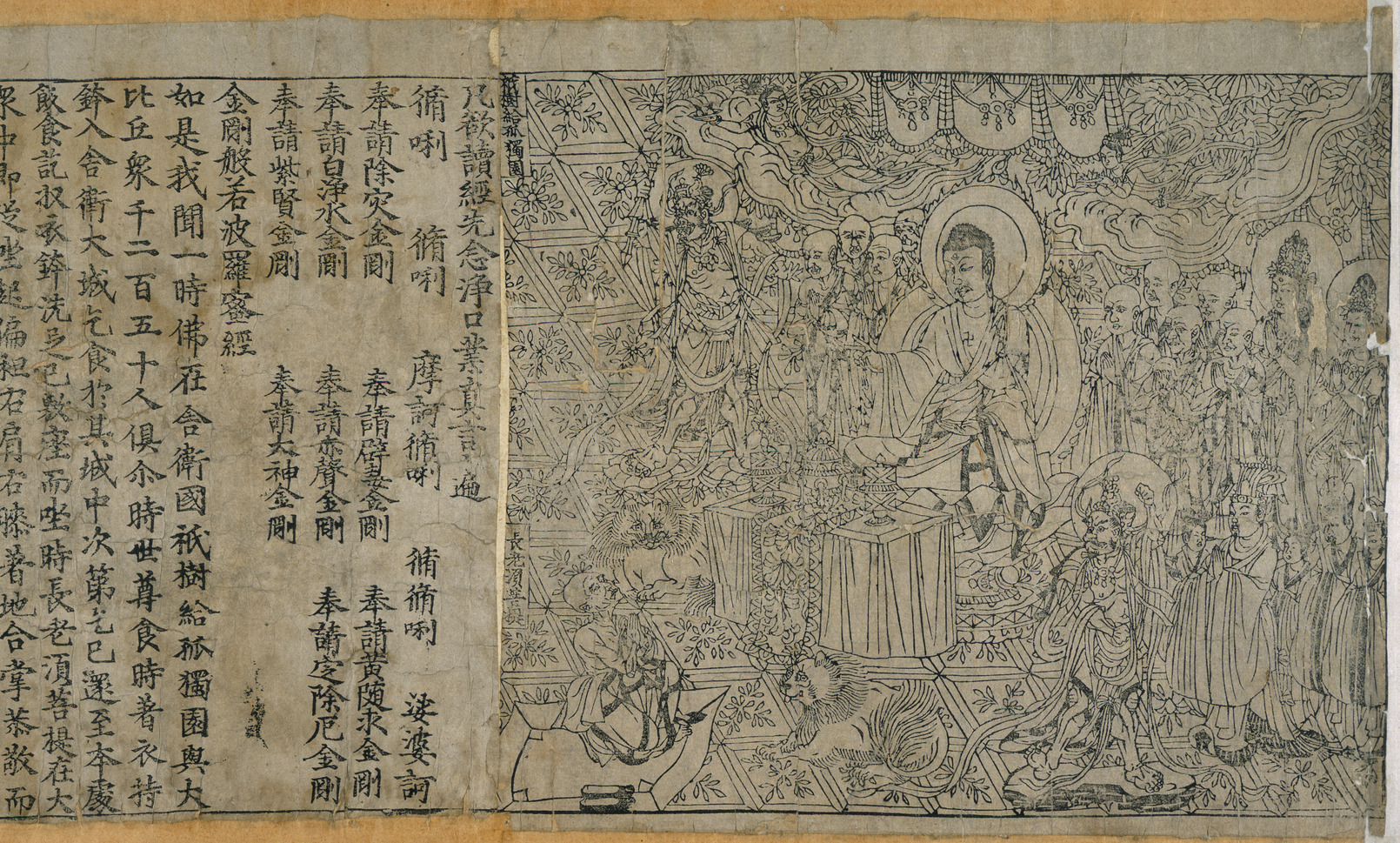
知我說法,如筏喻者,法尚應捨,何況非法。
Know that my teaching is like a raft: even the teaching must be let go, how much more what is not the teaching.
The Diamond Sutra takes its name from the hardest thing its translators knew, for its Chinese title, 金剛般若波羅蜜經, calls its wisdom a diamond, which the Tang commentator Zongmi explained as the hardest and sharpest of things: 無物可能壞之,而能碎壞萬物, “nothing can break it, and it can shatter all things.” What this diamond cuts is illusion, and it cuts twice, first through the forms a mind takes to be solid, beginning with the mind itself, and then through what the first cut leaves behind, the conviction that one has seen through illusion and now holds the truth. That is the sense of the title, illusion and the illusion of having overcome it, and both are nowhere easier to recognize than in love, where the mind forms its most cherished images of all and where the question of what lies beyond them matters most.
The First Illusion
Early in the sutra the Buddha asks whether he can be recognized by the marks of his body, and when his disciple answers that he cannot, he gives the sentence on which the whole text turns: 凡所有相,皆是虛妄, “all that has form is illusory.” The word for form, 相, means the look of a thing, the outline by which the mind recognizes it, and the sentence does not say that nothing is there, only that the outline we hold is not what is there. To recognize a cup as a cup or a face as a face is harmless, but illusion begins when the mind takes the outline it has drawn for the thing itself, and the first thing it draws in this way is itself. The sutra returns again and again to four such notions, 我相、人相、眾生相、壽者相, of a self, a person, a living being and a life that lasts, and the self is the root of them, since before I take anything else for a fixed thing I have taken myself for one, an outline so familiar that it hardly feels like an idea at all, though it is assembled, like every form, out of passing sensations, memories and wishes.
Why the mind draws such outlines, and holds them so tightly, the Heart Sutra suggests when it says that a mind without hindrance 無有恐怖,遠離顛倒夢想, “has no fear, and is far from upside-down dreams.” What the mind fears is the passing of whatever it holds, and its outlines are a defense against that passing, since a fixed self and a fixed world can be counted on while the things themselves, which never stop changing, cannot, and the dream is upside down because it takes what passes for what lasts. Such an illusion is not a mistake about a fact that better information could correct but a habit of seeing as old as the self, and so the sutra does not argue against it but asks us to look differently.
Like Dew, Like Lightning
The sutra asks this in the verse with which it ends, which many Chinese readers know by heart: 一切有為法,如夢幻泡影,如露亦如電,應作如是觀, “all things that come into being are like a dream, an illusion, a bubble, a shadow, like dew and like lightning; so you should view them.” Every image in the list appears fully and does not last, and the weight falls on the last phrase, 應作如是觀, “so you should view them,” for the sutra does not ask us to deny the dew or the lightning, only to see them as dew and as lightning. The cut is made not in the world but in the way we look at it, and what falls away is not the thing but the conviction that it is the fixed outline we drew.
The Second Illusion
If all things are like a dream, then so is the sutra, and so is the clear-eyed person who has learned to see the world as dew, and the sutra knows it, for it calls its own teaching a raft, 知我說法,如筏喻者, “know that my teaching is like a raft,” which is for crossing a river and not for carrying once the other shore is reached, so that 法尚應捨,何況非法, “even the teaching must be let go, how much more what is not the teaching.” One should hold neither to the teaching nor to its denial, it says, since whoever holds to either is still holding, and so the diamond must also cut the hand that holds it. That is why the sutra keeps naming a thing, denying the name and giving it back, even with the very notion it began by cutting: 世尊說我見……即非我見……是名我見, “what the World-Honored One calls the view of a self is not the view of a self; that is what is called the view of a self.”
The Chan tradition told the same lesson as a story about two verses, in which Shenxiu, the senior disciple of the Fifth Patriarch, Hongren, wrote on a corridor wall that 身是菩提樹,心如明鏡臺,時時勤拂拭,莫使有塵埃, “the body is the tree of awakening, the mind is like a bright mirror on its stand; wipe it diligently at all times, and let no dust gather on it,” and Huineng, a young man who pounded rice in the monastery and could not read, had a reply written beside it that most Chinese readers know by heart: 菩提本無樹,明鏡亦非臺,本來無一物,何處惹塵埃, “awakening has no tree, the bright mirror has no stand; from the beginning there is not a single thing, so where could dust collect?” The dust is the first illusion, the forms the mind takes for solid, while the polished mirror, the pure mind that remains once the dust is gone, is the second, and it is subtler because it looks like the opposite of illusion. Huineng’s answer can harden in its turn, and the tradition knew this too, for the oldest manuscript of the story, found at Dunhuang, gives his third line differently, 佛性常清淨, “the nature of awakening is always pure,” and when someone later asked the master Huangbo whether “not a single thing” meant that nothing was the answer, he replied, 無亦不是, “nothing isn’t it either.”
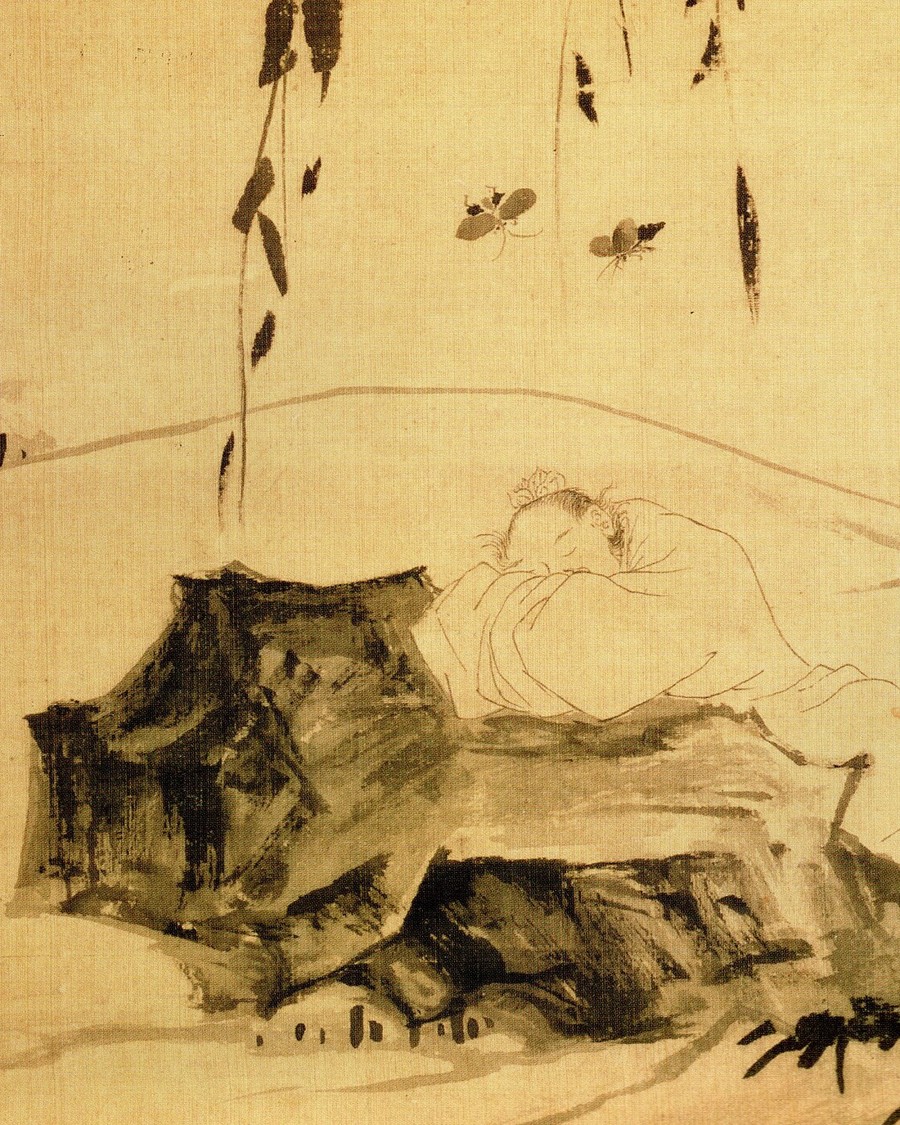
Zhuangzi had found the same trap more than a thousand years earlier, in a passage where one of his speakers says that 且有大覺,而後知此其大夢也,而愚者自以為覺, “only after a great awakening do we know that this was a great dream, while the fools believe themselves already awake,” and then turns the diagnosis on himself, 予謂女夢,亦夢也, “and when I say that you are dreaming, I am dreaming too.” No one stands outside the dream to report on it, not even the one who names it, and the second illusion is the belief that one does.
Nowhere is the second illusion easier to recognize than in love, where it even has a name of its own. Infatuation is the first illusion in its purest form, since the lover takes the shape he has drawn of the beloved for the beloved herself and is dazzled by a form. Disillusionment, which comes after, feels like waking up, and the disillusioned lover says, with the authority of someone who has seen through, that she was only an ordinary person after all, or that love itself was only a projection. But the ordinary person and the projection are also forms, drawn as quickly and held as tightly as the first, and the lover who is sure that he has finally seen her as she is has only exchanged one outline for another, a sadder one that he trusts because it is sad, so that he becomes Zhuangzi’s fool, who believes himself awake.
The images do not stop there, for the lover who has been disillusioned once may resolve never to be dazzled again, and learn to love from a careful distance, expecting little and guarding much, in the belief that he has at last grown wise about love. He has built Shenxiu’s mirror out of his own wariness, keeping his heart free of dust by keeping it closed, and he mistakes its cleanness for clarity. Even the conclusion that love is nothing but illusion, which can feel like the final cut, is one more form, and Huangbo’s answer reaches it as surely as it reached the monk who thought that “not a single thing” was the answer: nothing isn’t it either. Image follows image, the dazzled, the disappointed, the wary and the wise, and it can begin to seem that clarity in love is simply out of reach, as though the lover were condemned to pass from one picture of the beloved to the next without ever meeting her.
A Mind That Dwells Nowhere
If every conclusion hardens into a new form, it might seem safest to conclude nothing and hold nothing, but the sutra closes that door too, with its most often quoted line, which says that one should give rise to a mind that dwells neither on sights nor on sounds, scents, tastes, touch or thoughts, 應無所住而生其心, “a mind that dwells nowhere.” The mind is not told to stop arising or to arise empty, only to arise without settling, the way a bird crosses the sky and leaves no road behind it, so that seeing, loving and thinking go on as fully as before while nothing seen, loved or thought is made into a place to stay.
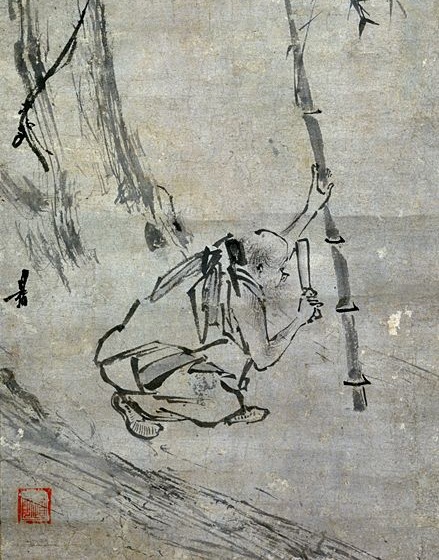
In the version of the Platform Sutra that most readers know, this is the line on which Huineng awoke when Hongren explained the sutra to him at night, though the Dunhuang manuscript says only that he awoke on hearing it explained, and a mind that dwells nowhere answers both illusions at once, settling neither on the dust nor on the mirror, nor on an emptiness that could be settled on in their place.
This is why the Chan teachers spoke of awakening as a moment rather than a possession: 前念迷即凡夫,後念悟即佛, says the Platform Sutra, “the thought before, deluded, is an ordinary person; the thought after, awakened, is a Buddha,” and the line cuts both ways, since the next thought can fall back into dreaming. Illusion is not abolished once and for all, the way an error is corrected, but arises again with every form the mind draws, and freedom is the repeated and unremarkable act of seeing each form as a form while it is there.
Yet the sutra’s sentence about forms does not stop at illusion but goes on, 若見諸相非相,則見如來, “if you see forms as no-forms, then you see the Thus-Come,” and the name 如來, the sutra’s word for one who is fully awake, says in its two characters what is seen: the one who comes 如, thus, just as it comes. Truth, in this sentence, is not a last and correct picture reached at the end of all the false ones but something that comes into view through the “not,” when a form is seen as a form, and this is the only way the lover’s question can be answered. He will never hold a final and true picture of the beloved, because she is not the kind of thing a picture could hold, changing as she does and always more than any outline he draws of her, but he can come to see each picture as a picture, the dazzled one and the disappointed one alike, and in the moment that he does, she is no longer hidden behind it.
To love with a mind that dwells nowhere is therefore not to love less, and it is not the careful distance of the wary lover, who has only settled somewhere else. The lover still draws pictures of her, because a mind cannot help drawing, but he holds them loosely enough for her to correct them, the way a sketch is held up beside a face, and when she surprises him, as she will, the surprise is not a betrayal of his picture but the sign that he is with her rather than with it. When he sees her as the sutra asks, like dew and like lightning, he does not love her less either, since what he loves is then what she actually is, someone who changes and will one day be gone, and not a fixed outline that could neither change nor die and so could never have answered his love at all.
What such a love wants for the beloved, if it wants anything, is only that she be, and in an earlier essay, on the ontology of love, I followed a Latin saying that Heidegger attributed to Augustine and called the deepest interpretation of love, amo, volo ut sis, “I love: I will that you be,” which he glossed by calling love “letting-be.” The sutra reaches the same place from the other side, for Heidegger came to it by asking what it means for something to be, and the sutra by cutting away every form the mind would put in place of what is, and both arrive at a love that does not demand, since a love that settles on no picture of the beloved leaves her free to be what she is, including what the lover never expected. This is easy to mistake for a duty to help her grow, but a lover who sets out to make the beloved into a better version of herself has only drawn one more picture, the picture of who she ought to become, and he holds it with a mind that lives in her future rather than with her. Letting-be does not steer but holds her possibilities open and leaves the choosing to her, and growth, when it comes, comes out of that freedom rather than out of any plan for her, so that it is not the aim of such a love but what happens in its light.
Nor is the letting-be one-sided, because the lover is also a form that he has drawn, the self that was the first illusion of all, and a love that lets the beloved be must also let the lover be changed by her, without guarding the picture of himself that he brought to their meeting. Two people who love in this way neither stand still for each other nor hold each other still, since each is free to become what he or she is becoming, and each lets the other’s becoming surprise and change them, which is how they remain together without either of them having to remain the same.
The sutra has a line about the mind that reads, in the end, like a question put to every lover, 過去心不可得,現在心不可得,未來心不可得, “the past mind cannot be grasped, the present mind cannot be grasped, the future mind cannot be grasped,” and so the lover cannot meet the beloved with the past mind, which holds the dazzling picture of who she was when he first saw her, nor with the future mind, which holds the picture of who he hopes or fears she will become, nor even with the present mind, if he tries to seize this moment and keep it, since none of the three can be held. What remains is a mind that dwells nowhere and meets her each time as she comes, and that, rather than any last and true picture, is the clarity love is given, never achieved once and for all but found again, as the Platform Sutra says of every awakening, with the next thought, while the world and the beloved in it go on appearing as the sutra says they do, like a dream and an illusion, like a bubble and a shadow, like dew and like lightning, asking of us only that we view them so.
All translations are my own. All images are in the public domain.