The Ontology of Love
What is this thing, love, that it binds two creatures to each other in life and in death? More fundamentally, what is being-in-love, and how is it related to being-in-the-world?
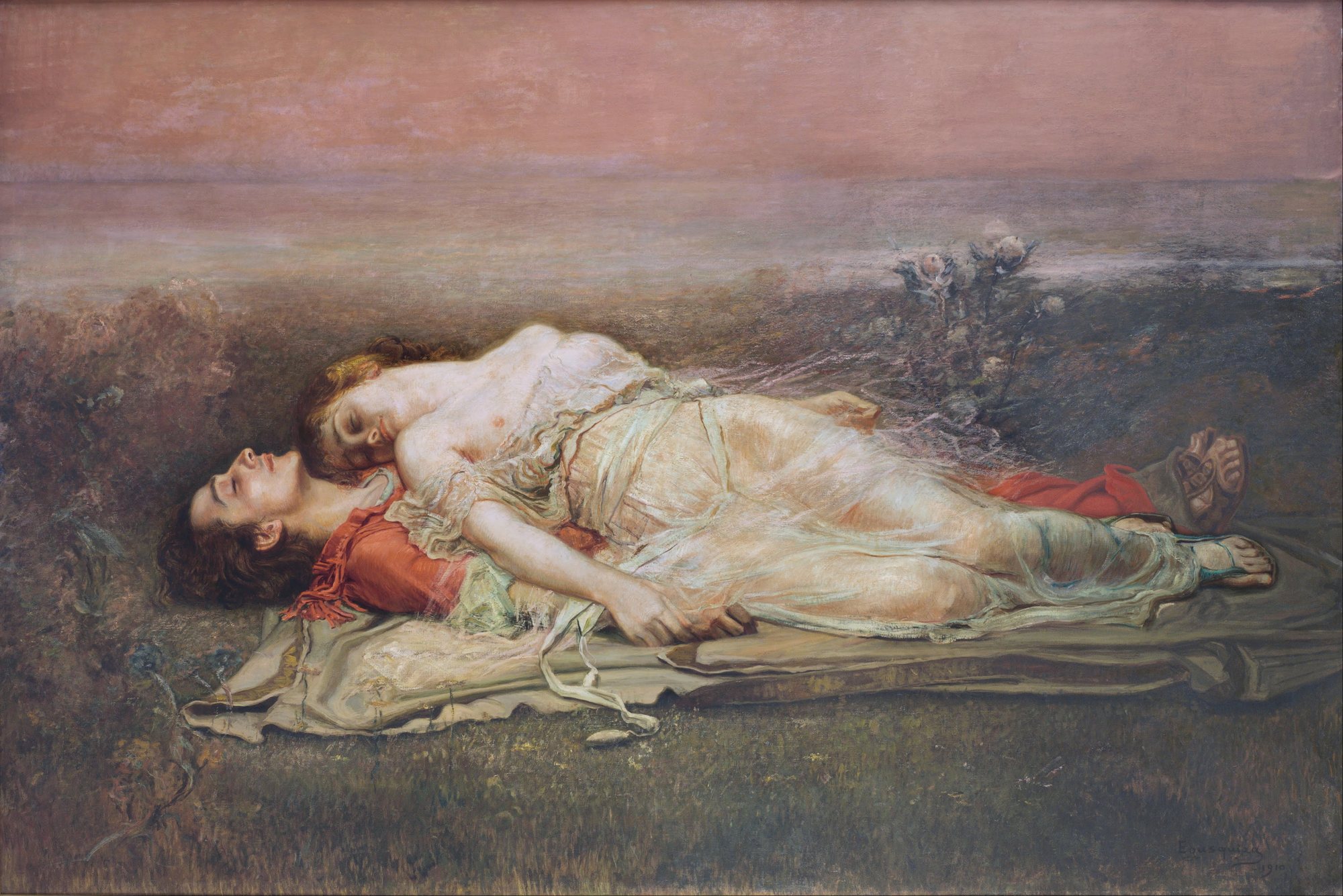
To be in love is to be pressed into one’s ownmost existence.
In 1205, when a sixteen-year-old named Yuan Haowen (元好問) was on his way to sit the civil examinations, he met a man who trapped wild geese. The man told him that he had caught one that morning and killed it, and that its mate, although it had slipped the net, would not fly away but kept crying and could not bring itself to leave, until in the end it threw itself to the ground and died. The boy bought both birds and buried them together, and then he wrote a song that begins with a question Chinese readers still know by heart:
問世間,情是何物,直教生死相許。
I ask the world: what is this thing, love, that it makes two creatures pledge each other their lives and their deaths?Yuan Haowen 元好問, 〈摸魚兒·雁丘詞〉. Its preface tells the story: 「乙丑歲,赴試并州,道逢捕雁者云:『今旦獲一雁,殺之矣。其脫網者悲鳴不能去,竟自投於地而死。』」
The boy is surely grieving, but what strikes him more than the grief is that he cannot make sense of what he has seen, and it is telling that he does not ask why the goose died, or whether it was foolish, or how it must have felt. He asks what the thing is, 是何物, as though love were an object somewhere in the world that he might find and name. Yet in the same breath he answers with something that is not an object at all, for 直教生死相許 says that whatever love is, it is what makes two creatures stake their lives and their deaths on each other. The goose did not die of a wound but because the one it loved was no longer there, and a world without its mate was no longer a world it could go on living in. Love, in this answer, is not one more object among the things of the world but the way a world holds together for someone, and the way, when the beloved is gone, it falls apart.
We have many answers to the question of what love is, but most of them answer a different question. Neuroscience can show which parts of the brain wake when a lover sees a photograph of the beloved, biology can explain why animals that bond in pairs leave more offspring, and Schopenhauer, in 1844, gave the philosopher’s version of the same kind of answer when he called lovers the instruments of the species, which uses their rapture to bring the next generation into being. Each of these treats love as something that happens inside a creature that already exists, an event with causes and effects, whereas Yuan Haowen’s answer points elsewhere, since the goose’s love was not an event inside a goose but the very way the goose existed, so wholly that when its mate was gone it could no longer be. To ask about love in this sense is to ask not what love is made of but what it is to be in love: what kind of existence it is, how the world shows itself to someone who loves, and what becomes of the lover’s own being when the beloved is taken away. Philosophers call such a question ontological, because it does not ask for a definition, as a dictionary does, but for what it means for something to be, and in what way it is, and the next section says where that question comes from and how Heidegger gave it new life.
This essay tries to answer Yuan Haowen’s question in that sense, and my claim is that love is a way of being in the world, and that being-in-love is, in a sense, the most fundamental and the most authentic way a human being can be in the world at all. Yearning, the German Sehnsucht, the Chinese 思, is the form love takes in beings who are finite, divided and mortal, who must love across distances they cannot close and within a time that runs out, and that is why love and death are never far apart.
The way runs through Heidegger and Plato, through Chinese poetry and the Buddha’s teaching, and into the night of Wagner’s Tristan und Isolde, and from there it turns to a recent horror film, Curry Barker’s Obsession, which tells the story of a love potion in reverse and raises the question of whether we love another person or an image of our own making. It ends with Hegel and Žižek, with the philosopher Simon May’s idea of love as a home, and with the place where East and West meet.
Being-in-Love
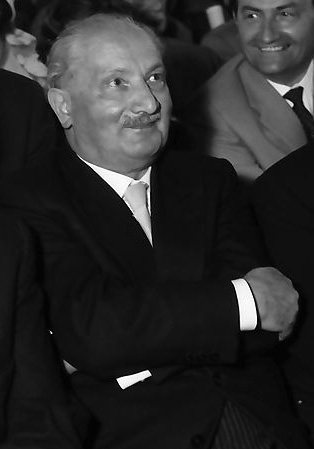
Aristotle described what we now call ontology as “a science which investigates being as being” and called it first philosophy, and more than two thousand years later Martin Heidegger brought the question back to life with a distinction that is easy to state but difficult to keep hold of: “The Being of entities ‘is’ not itself an entity.” We can study a person as psychologists do and learn a great deal about a being without ever asking what it means for it to be, and Heidegger called the first kind of inquiry “ontic” and the second “ontological.” The human being, which he called Dasein, being-there, is the entity for whom the ontological question matters, because it is “an entity for which, in its Being, that Being is an issue.” In these terms the brain scans of lovers are ontic, while the ontological question is a different one: what kind of being is being in love, how is the world for someone who loves, and how is that person in it?
Heidegger’s answer to the question of what human beings are was that they are in the world, and he took great care with the little word “in,” because we are not in the world the way water is in a glass. Following the grammar back, he connects bin, “am,” with bei, “alongside,” so that “I am” means “I reside or dwell alongside the world, as that which is familiar to me,” and to be, for a human being, is to dwell beside what one cherishes. At the root of being-in-the-world, in the preposition itself, there seems to lie a love that the book never names.
Two years before the book appeared, Heidegger had named that love in a letter, when in May 1925 he wrote to Hannah Arendt, then his student and his lover, that “being in love” means “being pressed into one’s ownmost existence,” in der Liebe sein = in die eigenste Existenz gedrängt sein. “Ownmost” is the very superlative that Being and Time would reserve for death, Dasein’s “ownmost possibility, non-relational, certain and as such indefinite, not to be outstripped,” and so, between the letter and the book, the ownmost passed from what binds us to another to what each of us must face alone.
Yet he did not forget love entirely, for in the 1929 lecture “What Is Metaphysics?” he asked how the whole of what is can be revealed to us and answered that it is revealed in moods: profound boredom, “drifting here and there in the abysses of our existence like a muffling fog,” draws all things together into “a remarkable indifference,” and then, for a moment, he turns to love:
Another possibility of such revelation is concealed in our joy in the presence of the Dasein, and not simply of the person, of a human being whom we love.
Joy at the beloved’s very existence, not at her qualities but at the plain fact that she is there, reveals the whole, so that the street, the weather and the stranger on the train are suddenly lit from within, and the world seems to be there for the first time, as if it had been waiting all along to be noticed. But Heidegger adds that such moods conceal the nothing he is looking for, which only anxiety reveals, and so he leaves that lit world behind and follows anxiety into the dark.
Late in life, in seminars he gave to psychiatrists in the 1960s, Heidegger returned to the question and insisted that care is not a gloomy feeling but the structure of existence itself, which, rightly understood, “is never distinguishable from ‘love.’” Then he wrote what reads like a promissory note: “One can even expect that the essential determination of love, which looks for a guideline in the fundamental-ontological determination of Da-sein, will be deeper and more comprehensive than the one seeing love as something higher than care.” He never paid it in full, but he had already left one sentence toward it, for in 1960 he called a saying he attributed to Augustine, amo, volo ut sis, “I love: I will that you be,” “probably the deepest interpretation of what love is,” and glossed it: “Love is letting-be, in the deeper sense in which it calls forth the essence.”Heidegger, speech for Ludwig von Ficker’s eightieth birthday, 1960: “Wohl die tiefste Deutung dessen, was Liebe ist, steht bei Augustinus in dem Wort, das lautet: »amo volo ut sis«, ich liebe, das heißt, ich will, daß das Geliebte sei, was es ist. Liebe ist das Seinlassen in dem tieferen Sinn, demgemäß es das Wesen hervorruft.” I will come back to that saying at the end, because it draws the line between love and the wish to be loved.
This, then, is what I mean by an ontology of love, and it goes one step further than Heidegger went: if being-in-the-world means dwelling beside what one cherishes, then being-in-love is not a feeling that happens to someone who already exists but a way of existing, and, in a sense, the most fundamental way in which a human being is in the world. Heidegger began his analysis with the hammer in the workshop and ended it with death, yet before any of us picked up a tool or learned that we would die, we were held, and the world first came to us as a face bent over us. Care, use, anxiety and resolve are therefore all ways of being in a world that love had already opened. When we fall in love as adults, that world is opened a second time, which is why everything seems new, or, as the philosopher Alain Badiou puts it, “Love is always the possibility of being present at the birth of the world”; and Heidegger himself, in a footnote to Being and Time, quoted Augustine: non intratur in veritatem, nisi per charitatem, “one does not enter into truth except through love.”
Eros, the Between
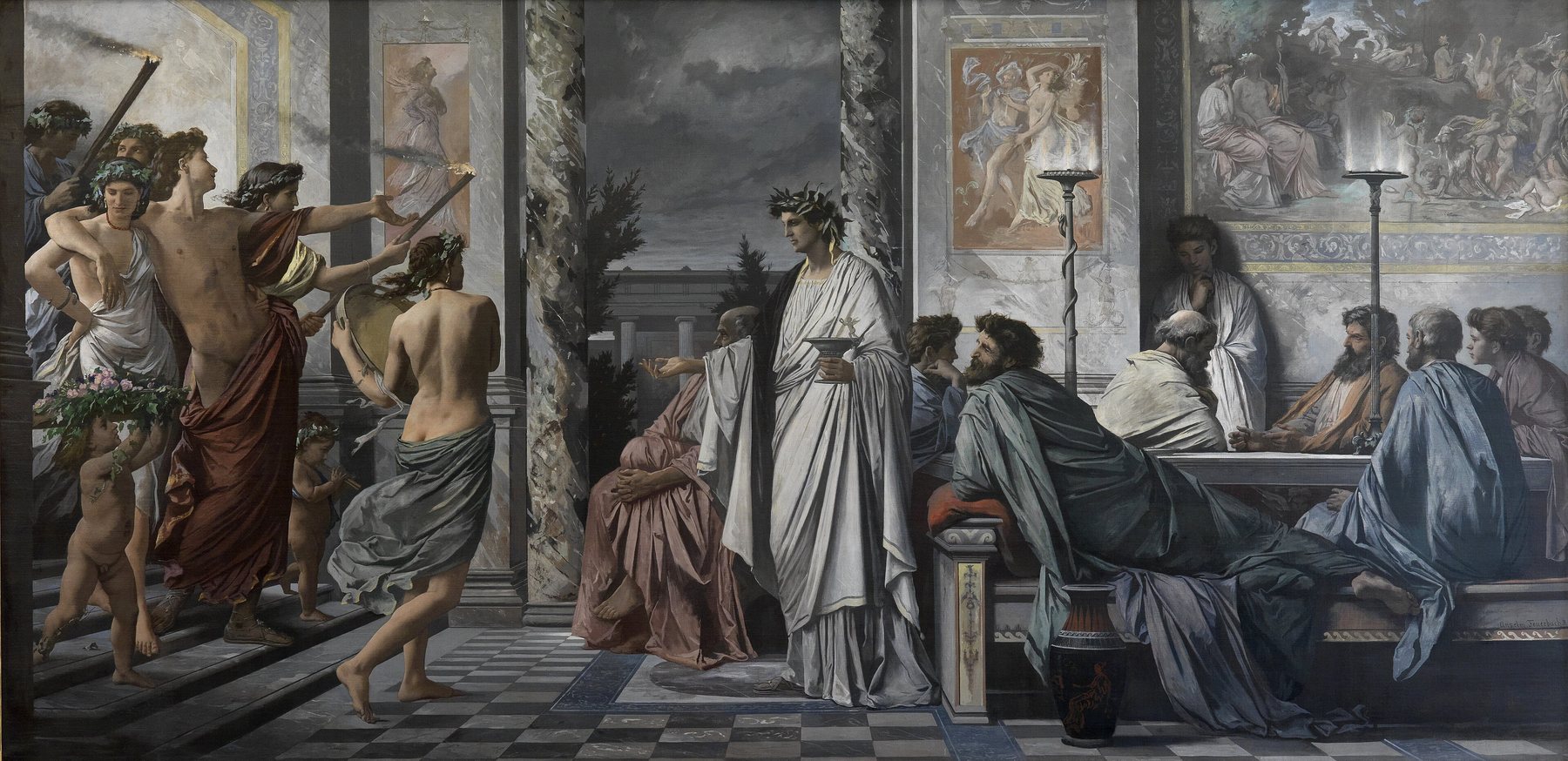
Heidegger asked what kind of being belongs to a creature that is always already in a world, and more than two thousand years before him, at a drinking party in the house of the tragic poet Agathon, the guests of Plato’s Symposium asked the same kind of question of love. They took turns praising Eros, and although their speeches sound at first like opinions about a god, what they really answer is how a lover exists and what kind of being love itself has. Three of their answers matter for everything that follows, because they describe three ways of being in love: toward death, toward fusion, and as a between.
The first answer belongs to Phaedrus, who calls Eros among the most ancient of the gods, “and as most venerable, he is the cause of all our highest blessings,” and who says what the West would never forget: “only such as are in love will consent to die for others; not merely men will do it, but women too.” Alcestis died for her husband and the gods sent her soul back from Hades; Achilles died for his lover Patroclus and was sent to the Isles of the Blest; but Orpheus, who tried to bring his wife back by entering Hades alive, was given only a phantom, because he lacked the spirit to die for love. “A lover, filled as he is with a god, surpasses his favorite in divinity,” and so to be in love, in this first answer, is to be possessed by a god who asks for death and repays it with immortality, and the lovers who die for love are its martyrs. It is this god whom Isolde, many centuries later, will call by a medieval name.
The second answer belongs to Aristophanes, whose view of love sounds surprisingly modern, for he tells how human beings were once round until Zeus cut them in half, so that each of us is “but a tally of a man,” forever searching for its other half. When two halves find each other they cannot say what they want, because the soul is “wishing for something else that it cannot express, only divining and darkly hinting,” and so Aristophanes asks us to suppose that the smith god Hephaestus stood over a pair of lovers and offered this:
I am ready to fuse and weld you together in a single piece, that from being two you may be made one; that so long as you live, the pair of you, being as one, may share a single life; and that when you die you may also in Hades yonder be one instead of two, having shared a single death.
“No one on hearing this, we are sure, would demur to it,” Aristophanes says, and here is the first Liebestod in Western literature, offered by a god as the fulfillment of every lover’s wish, together with the definition that every theory of love as lack has repeated ever since: “we were entire; and the craving and pursuit of that entirety is called Love.” To be in love, in this second answer, is to exist as half of a lost whole, longing to be welded back into one.
Socrates seems at first to agree, for he gets Agathon to admit that whoever desires, desires “something they have not or are not or lack,” but then he tells what he learned from the priestess Diotima, and in her telling the lack turns into something else. Eros, she says, is not a god but a daimon, a spirit “midway between” gods and mortals, the son of Resource and Poverty, Poros and Penia, so that like his mother he is “shoeless and homeless” and “ever dwells with want,” while like his father he goes “scheming for all that is beautiful and good.” His work is to bind gods and mortals together, so that, as the Greek says, “the All is bound together with itself,” and here love is described not as a feeling inside a person but as a way of being: Eros exists between, as Dasein exists in, and what he is cannot be told apart from what he joins. Diotima rejects Aristophanes outright, since love is “neither for half nor for whole” unless it is good: love “loves good to be one’s own for ever,” and because mortals cannot have anything forever, love becomes “begetting on a beautiful thing by means of both the body and the soul,” the begetting of children, poems and laws, which is the only immortality a mortal can have. To be in love, in this third answer, is to stand between lack and plenty, between the mortal and the divine, and to reach beyond one’s own death without denying it.
Of the three, the quarrel between the second and the third, love as lack and love as being, has been the history of the subject ever since, and six centuries later the Neo-Platonist Plotinus took Diotima’s side most daringly when he said that in the One “the longing and the being are the same.” The rest of this essay keeps returning to the dinner in Agathon’s house: Phaedrus’s martyrs and Aristophanes’ smithy return in the night of Tristan, Diotima’s poor and homeless Eros in Lacan’s formula for love and in the question of whether love is a home, and her daimon that binds the All in the place where East and West meet.
The Thirst and the Lotus
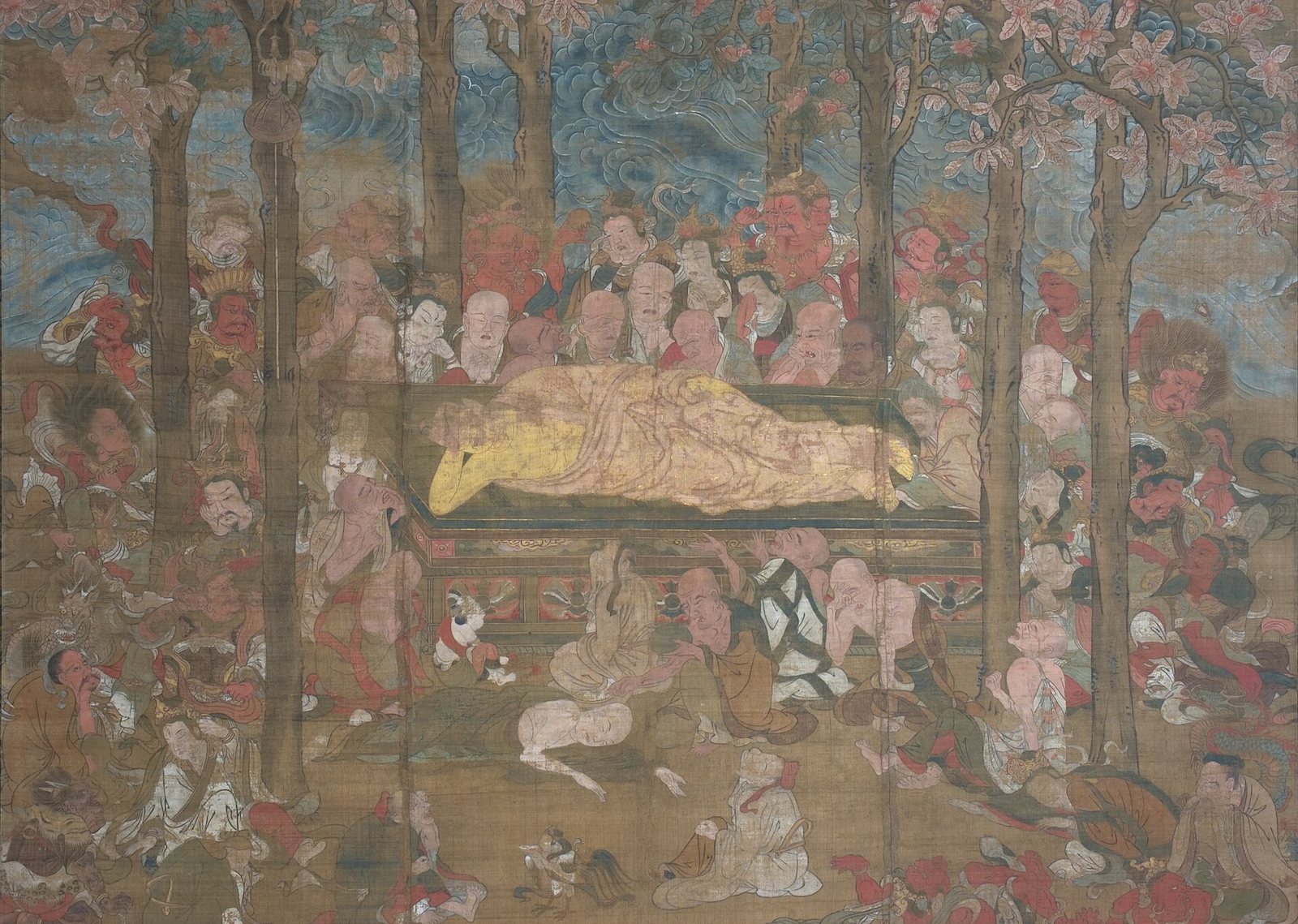
Diotima’s daimon binds the All together, and the oldest Eastern answer to Yuan Haowen’s question, which came from India with the Buddha, agrees that love begets being, although it draws from that same structure the darkest of conclusions. In the chain of dependent origination, 十二因緣, the twelve links by which suffering arises, love is the eighth link and being the tenth: feeling conditions craving, 受緣愛; craving conditions grasping, and grasping conditions becoming, 愛緣取,取緣有; becoming conditions birth, and birth old age and death. In the Chinese words of the chain, then, love, 愛, is the cause of being, 有, and being is the cause of death. The Buddha saw what Diotima saw, that love is what binds a creature to existence, but where she found in it the only immortality a mortal can have, he found the thirst that keeps us bound to suffering, a thought that Schopenhauer would bring into Western philosophy two thousand years later. The Heart Sutra describes the mind set free of that thirst: 心無罣礙,無罣礙故,無有恐怖,遠離顛倒夢想, “the mind has no hindrance; having no hindrance, it has no fear, and is far from upside-down dreams.” The Buddhist answer is not that love is false but that love, as thirst, keeps the wheel of becoming turning while everything it loves is passing away, and whether there is another love, one that does not thirst, is a question the tradition took as seriously as Plato did, and one I will come back to.
Yet the Chinese poets, who read the Buddha’s teaching in their own language, kept writing of love as a longing worth a whole life, and in the ninth century the Tang poet Li Shangyin gave that longing its most exact and most aching image:
春蠶到死絲方盡,蠟炬成灰淚始乾。
“The spring silkworm spins until it dies, and only then is its silk used up; the candle’s tears dry only when it has burned to ash.” The silk, 絲, sounds like 思, longing, and so the line says that longing ends only in death, that a heart in love spins itself out as the silkworm does and weeps as the candle weeps, until there is nothing left of it to spin or to burn. Where the Buddha sees in such longing a thirst to be quenched, the poet sees the very shape of a life, for to long is how a finite creature loves, and its longing lasts exactly as long as the creature does.
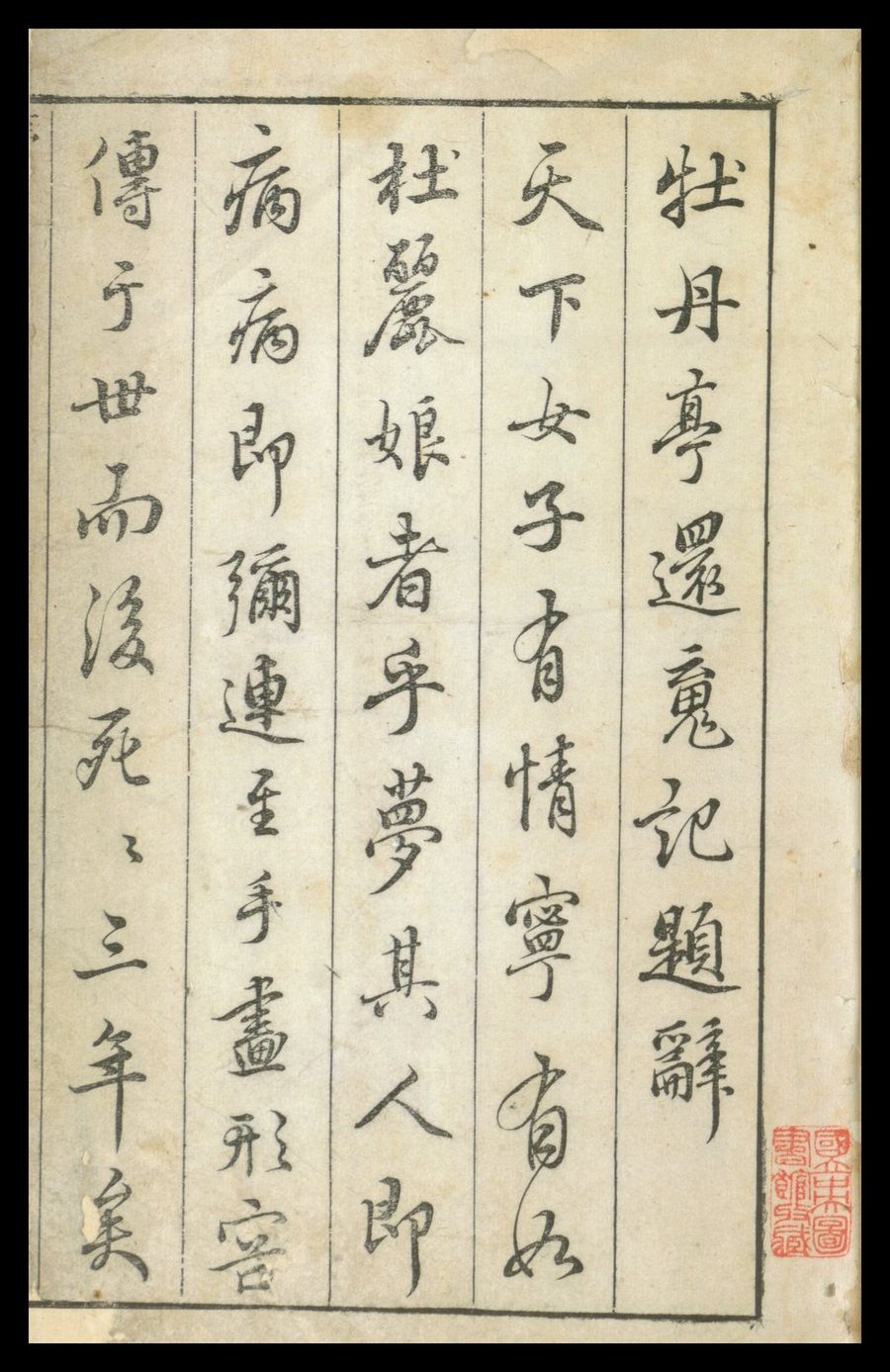
Seven centuries later the playwright Tang Xianzu went further, when in 1598 he wrote The Peony Pavilion, in which a girl dies of longing for a lover she has met only in a dream and is brought back to life by his love, and in its preface he wrote the most often quoted sentences about qing 情, love or feeling:
情不知所起,一往而深。生者可以死,死可以生。生而不可與死,死而不可復生者,皆非情之至也。
“Love is of source unknown, yet it grows ever deeper. The living may die of it, by its power the dead live again. Love is not love at its fullest if one who lives is unwilling to die for it, or if it cannot restore to life one who has so died.” Love here passes through death in both directions, and Tang closed the preface with a challenge to the Neo-Confucian philosophers, who taught that feeling must be governed by li 理, principle or reason: 第云理之所必無,安知情之所必有邪, “They say only that reason holds this cannot be. How do they know that feeling holds it must be?” The same quarrel reached him from the Buddhist side as well, for in the 1590s the Chan monk Zibo Zhenke wrote to him that 理明則情消, “when principle is clear, feeling dissolves,” and Tang answered that 情有者理必無, “where feeling is, principle must be absent.” Tang’s challenge is also an ontological claim, since it says that feeling knows something principle cannot, much as Heidegger held that joy in the beloved’s presence reveals the whole of what is before any theory can grasp it, and it sets up an opposition we will meet again in Wagner, where it is called night and day.
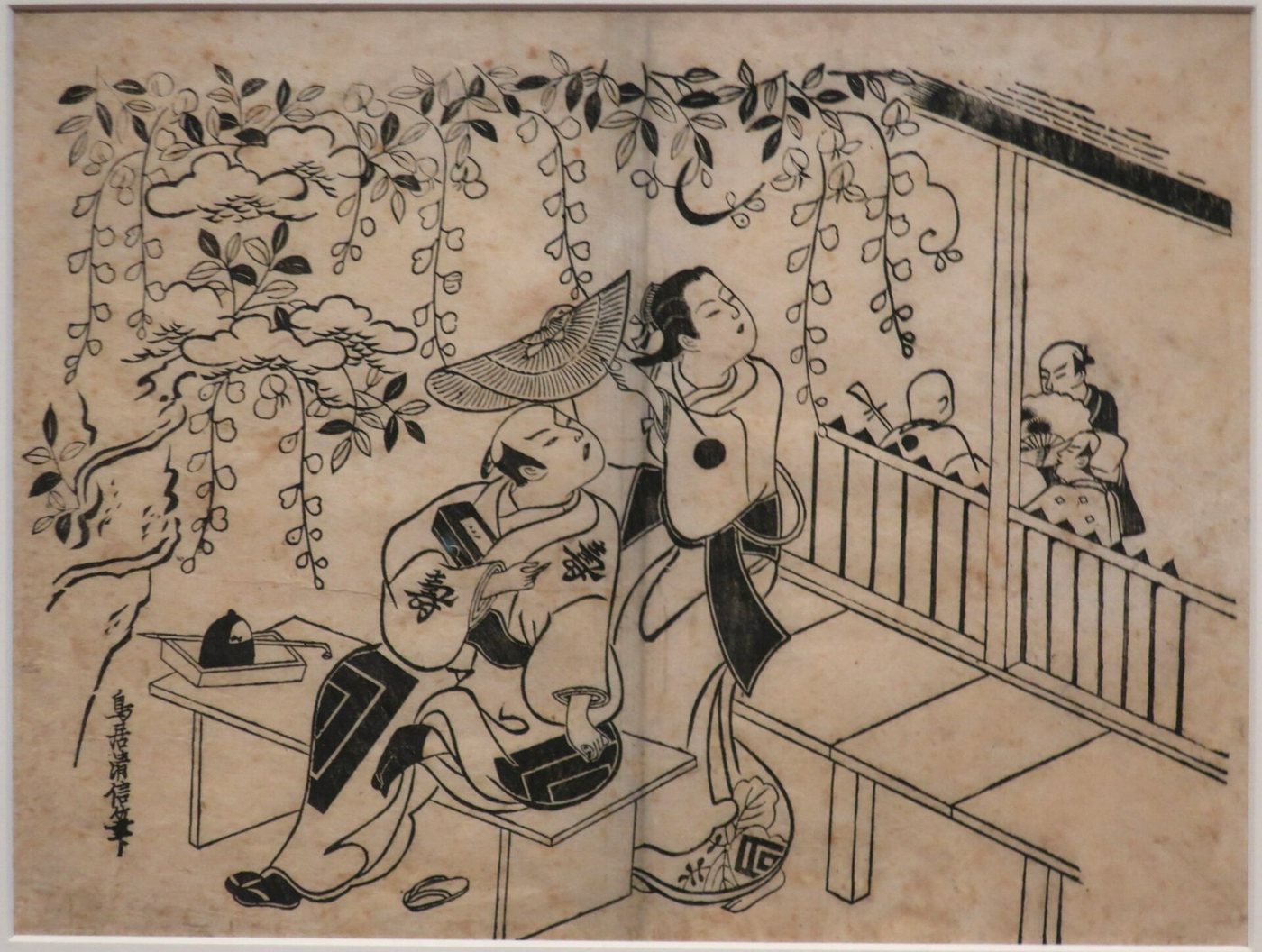
Japan, which received both the Buddha and Chinese poetry, brought the two answers face to face and turned the love-death into theater, for in 1703 the playwright Chikamatsu Monzaemon put on the puppet stage a clerk and a courtesan who had killed themselves together a month before. The last act of The Love Suicides at Sonezaki follows the lovers through the night to the place where they will die: “We who walk the road to death, to what should we be likened? / To the frost by the road that leads to the graveyard, / Vanishing with each step ahead: / This dream of a dream is sorrowful.” They pray that “in the world to come, / May we remain together on one lotus,” and they die with the Buddha’s name on their lips, asking of him the one thing his teaching tells them to give up, which is to be together still, in the next world, forever. In that prayer the poets’ longing enters the Buddha’s own frame and refuses to be quenched there, and a century and a half later, in Europe, a composer who had just found the Buddha’s verdict in Schopenhauer would make the same refusal into an opera.
Night and Day: Tristan and Its Reverse
That composer was Richard Wagner, and his Tristan und Isolde stands at the center of this essay, because if being-in-love is a way of being in the world, the hardest test of that claim is a love that wants to leave the world. Between his letter to Arendt in 1925 and Being and Time in 1927, Heidegger moved the ownmost from love to death, from what binds us to another to the one possibility that is “non-relational,” which no one can take over for anyone else. In Wagner’s opera those two ownmosts meet, because the lovers try to make of death, the most solitary of all possibilities, something that two people can share.
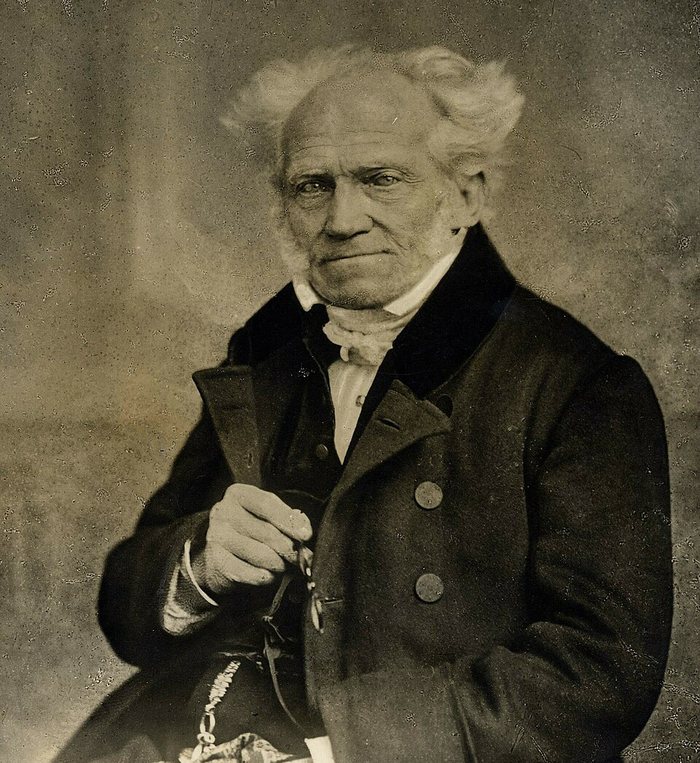
In 1854 Wagner wrote to Franz Liszt about two discoveries, the first of which was Schopenhauer, “the greatest philosopher since Kant,” whose “chief idea, the final denial of the will to live, is of a terrible seriousness, but uniquely redeeming.” The second was an opera: “As I have never in my life enjoyed the true happiness of love, I want to raise a monument to this most beautiful of all dreams, in which, from beginning to end, this love shall for once be wholly sated. I have in my head a Tristan and Isolde.” In the same letter he describes the consolation he has found, “the heartfelt and inward longing for death: full unconsciousness, total non-being, the vanishing of all dreams.”
Schopenhauer’s theory of love leaves the lovers no will of their own, for what draws two people “exclusively to each other with such power is the will-to-live which manifests itself in the whole species,” and their longing “exceeds the measure of a mortal heart” because it is not theirs at all but the longing of life itself to go on. When it is thwarted, “the individual is too weak a vessel to be capable of enduring the infinite longing of the will of the species,” and “the issue is suicide, sometimes the double suicide of the two lovers,” and lovers themselves, in his bitter phrase, “are the traitors who secretly strive to perpetuate the whole trouble and toil that would otherwise rapidly come to an end.”
Yet Schopenhauer’s own system complicates the reading of Tristan that is usually drawn from it, because suicide, “far from being denial of the will, is a phenomenon of the will’s strong affirmation. … The suicide wills life.” On his terms a love-death would be the will asserting itself rather than the will denied, and Wagner saw the problem. In December 1858, alone in Venice, he reread Schopenhauer and decided that the philosopher had missed “a path of salvation recognised by none of the philosophers, particularly not by Sch., the pathway to complete pacification of the Will through love, and that no abstract love of mankind, but the love which actually blossoms from the soil of sexual love.” Two years later, in 1860, he confessed to Mathilde Wesendonck, “Wistfully I often look towards the land Nirvana,” and he went on to tell her how the Buddha’s verdict turned in his hands into the opera itself: “Nirvana in its turn, however, soon changes into Tristan; you know the Buddhist theory of the world’s creation: A breath perturbs the heaven’s translucence … it swells, condenses, and at last the whole wide world stands forth,” so that the breath of craving that makes the world becomes Tristan’s longing itself.
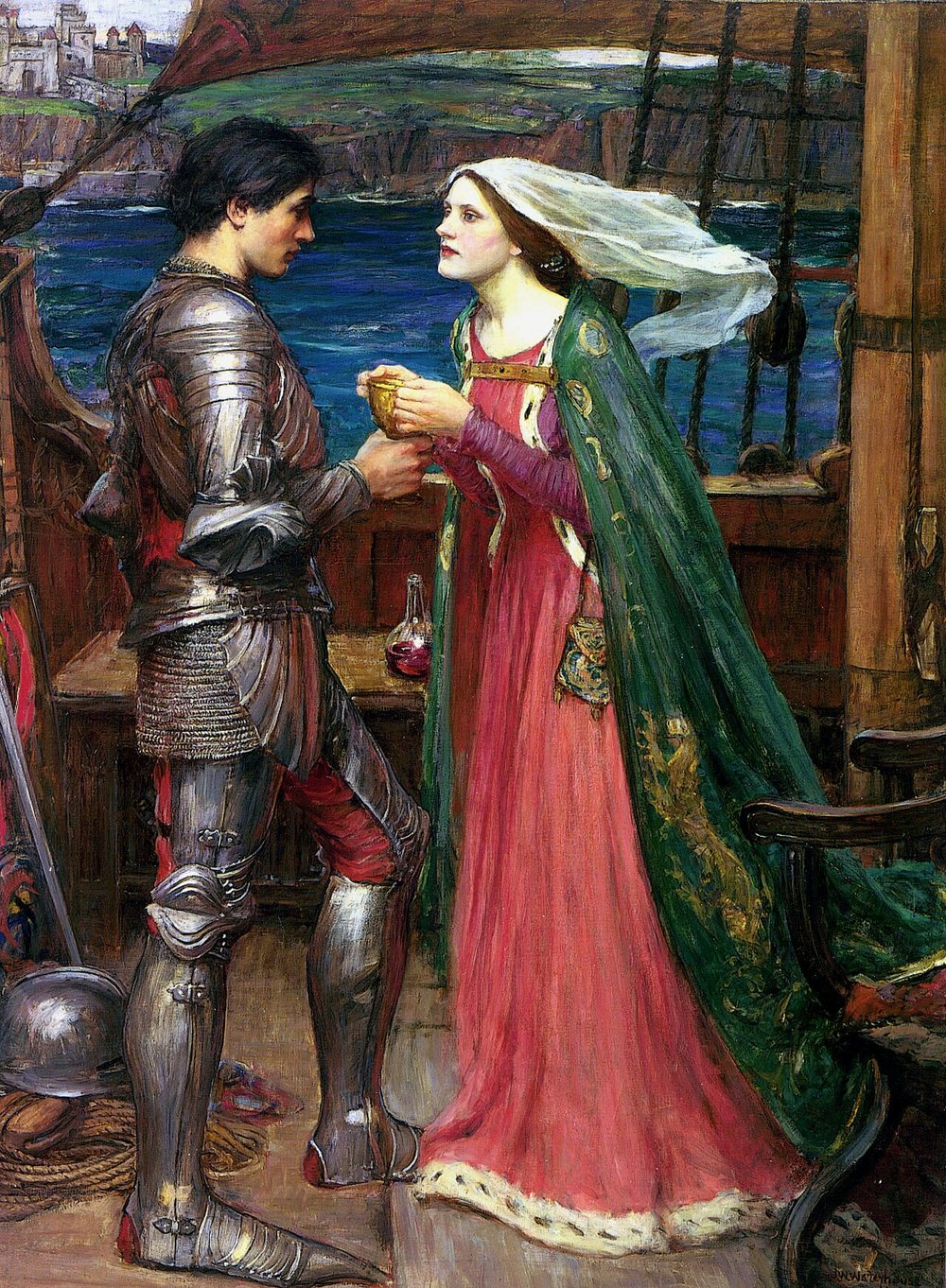
As the opera opens, Tristan is bringing the Irish princess Isolde across the sea to be the bride of his uncle, King Marke, and Isolde, who loves him, resolves that they will both die. She orders the death potion, and Tristan understands and drinks, “Kindly potion of forgetting, I drink you without wavering!”, until Isolde snatches the cup from him: “Mine the half! Traitor, I drink it to you!” But her maid has poured the love potion instead, and the stage direction says that in their faces “defiance of death soon gives way to the glow of love.” When Isolde learns what she has drunk, her first words are not a cry of joy but a question, Muß ich leben?, Must I live? In Wagner the potion does not create the love; it removes the last thing that kept it unspoken, which was the expectation of going on living, so that the lovers, drinking in the belief that they are already dead and with nothing left to lose to the world, can at last confess what the world forbade. Love in Tristan begins at the moment the lovers consent to die, and in the third act, delirious, Tristan says that he brewed the potion himself, “from father’s need and mother’s woe, from love’s tears ever and always.”
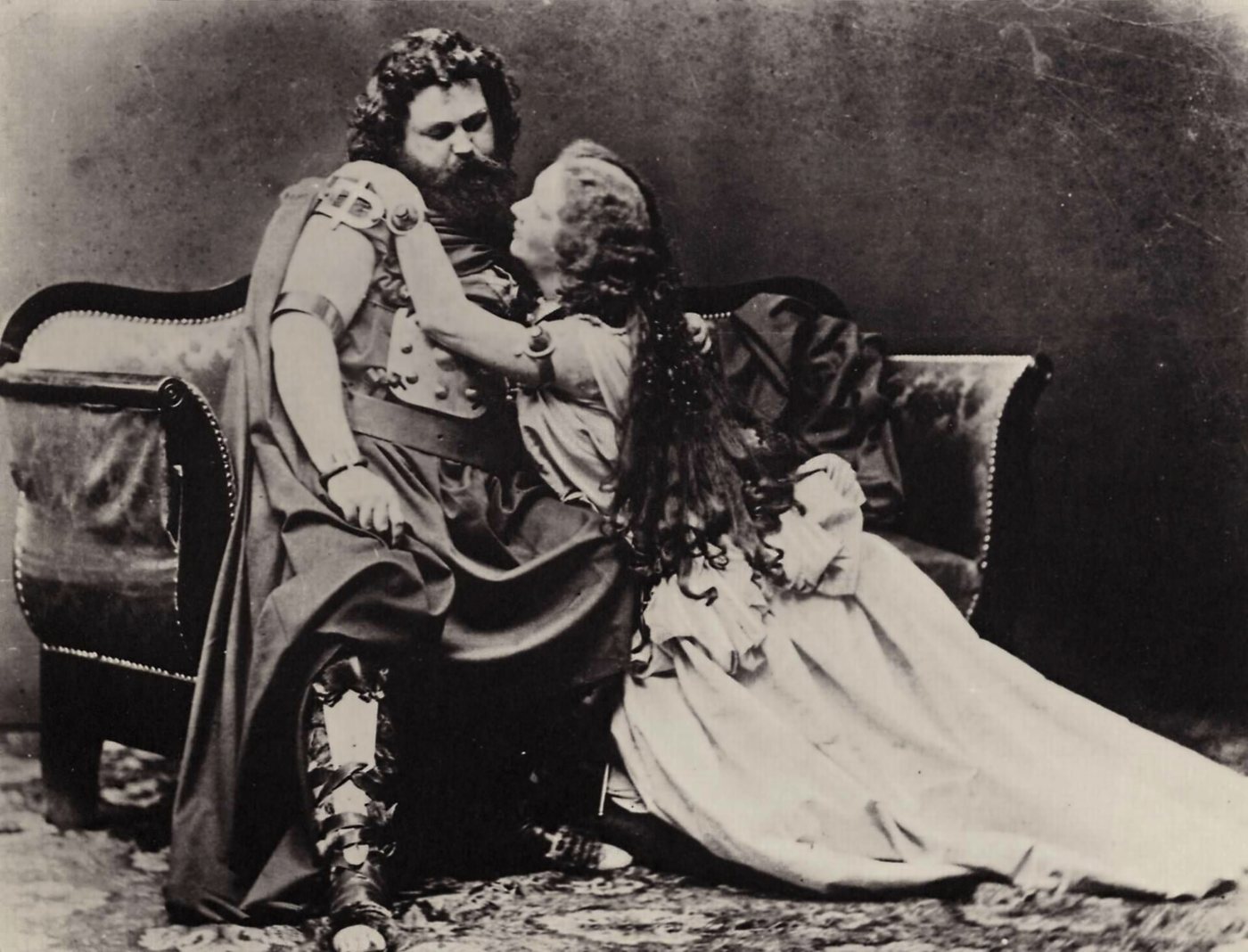
The second act is a hymn to the night, sung against a day that is the world of King Marke’s court, of “fame and honor, power and gain,” which the lovers curse as they call themselves Nachtgeweihte, consecrated to the night. That day is what Tang Xianzu called li, reason and propriety, and what Heidegger called the “they,” the public world in which “everyone is the other, and no one is himself,” and it is from this day that the lovers beg to be released: “O sink down, night of love,” they sing, “make me forget that I live; take me up into your lap, release me from the world.” Yet the night they pray for is not the authentic existence that Heidegger set against the “they,” which is still a way of being in the world, but a release from the world as such, a love that would no longer have a world to be in. The night has its own theology, which Isolde states when she asks whether her maid did not know “Lady Love,” Frau Minne, the “ruler of the world’s becoming,” of whom she says, “Life and death are subject to her”; Isolde had taken the work of death into her own hands, and “Lady Love wrested it from my power,” so that Phaedrus’s god returns here under a medieval name. Then Isolde asks a question about grammar: “But our love, is it not called Tristan and Isolde? This sweet little word, and: if Tristan died, would death not destroy it?” Tristan answers that death could destroy only what keeps him from loving her forever, and so they exchange their names, “You Isolde, Tristan I, no longer Isolde!”, and sing ohne Nennen, ohne Trennen, without naming, without parting, and, in the same breath, the word Liebestod: “longingly desired love-death.”
In the third act Tristan lies wounded at his castle by the sea, waiting for her ship and crying out, “Longing, longing: in dying, to long; for longing, not to die!”, and he curses the potion for condemning him “never to die.” Li Shangyin’s silkworm spins its longing until it dies, but Tristan cannot die of his, and Wagner’s program note for the Prelude reads like a gloss on that longing in Schopenhauer’s own terms, “longing, longing, unquenchable, ever newly self-begetting desire; the only redemption, death,” before it asks a question Schopenhauer could not have asked: “Shall we call it death? Or is it the wondrous world of night, out of which, as the legend tells, an ivy and a vine grew up in close embrace on Tristan’s and Isolde’s grave?” When Isolde arrives at last, Tristan dies in her arms, and she sings over his body:
Mild und leise wie er lächelt, wie das Auge hold er öffnet, seht ihr’s, Freunde? Säht ihr’s nicht? … In dem wogenden Schwall, in dem tönenden Schall, in des Welt-Atems wehendem All, ertrinken, versinken, unbewußt, höchste Lust!
“Gently and softly, how he smiles, how sweetly he opens his eyes: do you see it, friends? … In the surging swell, in the ringing sound, in the wafting All of the world’s breath, to drown, to sink, unconscious, highest bliss!” With these words she sinks, says the stage direction, “as if transfigured,” onto his body. We call this ending the Liebestod, although Wagner did not, for in 1863 he called the Prelude “Love-Death” and the ending “Transfiguration,” Verklärung, and the names were reversed only later.
What, then, is the psychology of the Liebestod: is it the futile yearning of a will that has fooled itself, ending in the nothing it fled, as the Schopenhauerian reading has it, or is it a martyrdom to love as a god, of the kind Phaedrus praised? Wagner’s own documents tell against the first reading, since Isolde does not take her own life but dies in “highest bliss,” Wagner called the ending a transfiguration, and he set out to amend Schopenhauer so that the opera could mean what its music says. The second reading fits only in part, for Alcestis died for her husband, in his place, so that he might live, and the gods rewarded the deed. Tristan and Isolde, by contrast, do not die for each other but into each other, to abolish the little word “and,” which brings them closer to Aristophanes’ smithy than to Phaedrus’s martyrs, since what they long for is to be welded into one and to share a single death.
That little word holds the whole ontology of love in miniature, for Heidegger insists that “Being-in is Being-with Others,” and in love being-with is lived at its most intense, as the “and” that joins two people without dissolving either of them. The Liebestod wants to cancel that “and,” and with it the non-relational character that Heidegger gave to death, since what the lovers long for is precisely a death in common. Freud described the state that Wagner had set to music as ohne Nennen, ohne Trennen: “At the height of being in love the boundary between ego and object threatens to melt away. Against all the evidence of his senses, a man who is in love declares that ‘I’ and ‘you’ are one.” On this description the Liebestod is not a wish for nothing but a wish for a being without boundary, a self that no longer has to guard its borders, and Nietzsche, who loved Tristan above everything else Wagner wrote, felt its double edge when he wrote, “I still seek today a work of equally dangerous fascination, of an equally shuddering and sweet infinity, as Tristan is.”
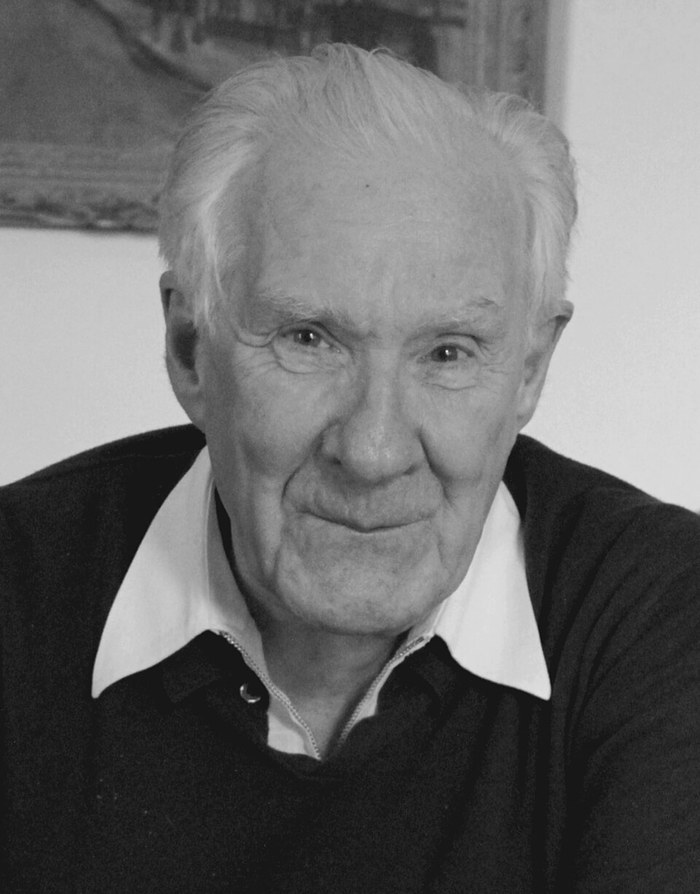
In our own time Badiou has called such a love a “One scene” rather than a “Two scene,” and he names Wagner’s opera as its summit: “There is a close and profound link between love and death, the highest point of which no doubt is Richard Wagner’s Tristan and Isolde, because love is consumed in the ineffable, exceptional moment of the encounter, after which it is impossible to go back to a world that remains external to the relationship.” He finds it “artistically extremely beautiful” but “existentially seriously lacking,” for, as he says, “love takes place in the world,” a sentence this essay could take as its own. Whether the lovers even reach their common death is another matter, since the philosopher Slavoj Žižek, in the afterword he wrote for Badiou’s lectures on Wagner, observes that “in the music, it is as if the two lovers die together, while in reality they die one after the other, each immersed in his/her own solipsistic dream,” so that death, as Heidegger’s account of it would lead us to expect, refuses in the end to be shared.
Heavy spoilers for Obsession follow: skip to the next section if you haven’t watched it.
The reverse of this night can be seen in a recent horror film, Curry Barker’s Obsession, which is about a love potion, or about something that plays the part of one when we read it beside Tristan und Isolde. Bear, a shy young man, has loved his childhood friend Nikki for years without the courage to confess it, until he buys a novelty toy called a One Wish Willow, snaps it in his car, and wishes that Nikki would love him more than anyone or anything in the world, and the wish comes “true.” In the middle of their first kiss, however, she screams in blind panic, and we later understand that the real Nikki is trapped inside her own body while what critics have called a possession, though “without any actual demons,” takes her place as a result of the wish, a possessed Nikki who is “obsessed” with Bear. The toy’s helpline tells Bear that a wish cannot be changed or cancelled and ends only when the person who made it dies, and at night, when her body sleeps, the real Nikki surfaces and begs him to kill her, while Bear only asks, “What’s so bad about being with me?” At the end he swallows a handful of pills, and “Nikki,” off-screen, snaps the last willow, seemingly wishing that he would love her as she loves him, so that he kisses her among the bodies of the two people she has killed and dies in her arms. She lifts a gun to follow him, and in that instant his death breaks his wish: the real Nikki drops the gun, pushes his body away, and wails.
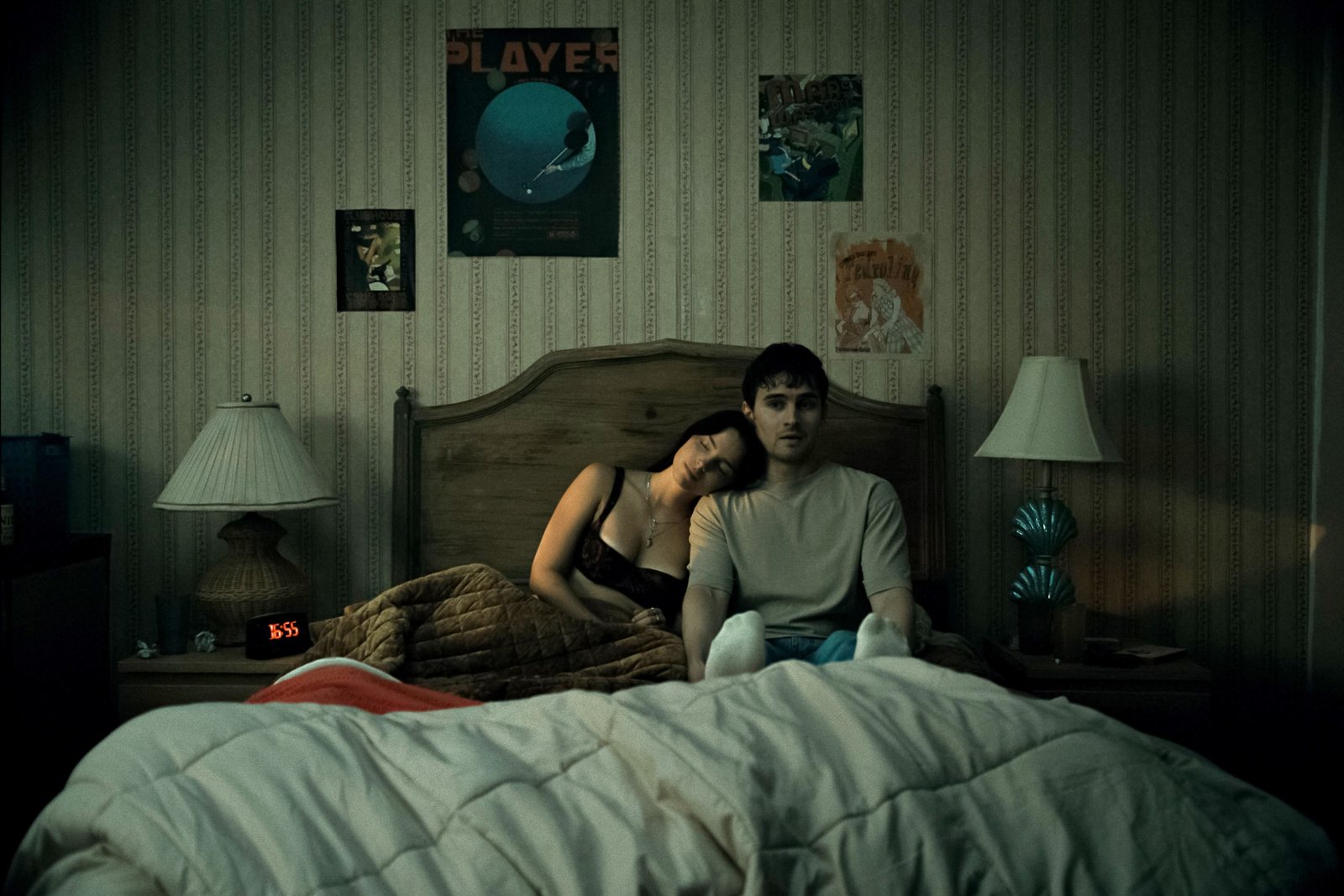
Set beside Tristan, the wish is the love potion turned inside out, for in Wagner the potion was meant to be death and released a love that was already there, chosen and mutual, whereas in Barker’s film the wish is meant to be love, and what it releases, in the film’s own image, is a self screaming inside a body that adores him. Barker has described the wish in exactly these terms, “taking away someone’s autonomy, taking away someone’s self,” and critics have read the film as a parable of consent and of the entitlement of the “nice guy.” In the terms of the first section, the wish is love understood ontically, for it treats Nikki as an entity whose properties can be set, as though love were a quality that could be installed in her, and not as a being for whom her own being “is an issue.” What it takes away, then, is not any one of her qualities but the very fact that her existence is her own.
The film also inverts Tristan point by point, for where Wagner’s night is the realm of true love and his day the realm of lies, in Obsession the day belongs to the enchanted Nikki and the night is the only time the real Nikki can speak. The ending stages a Liebestod and then undoes it: for one kiss both of them are under a spell, each wishing the other into love, and he dies in her arms as Tristan dies in Isolde’s, yet when she lifts the gun to follow him, as Isolde follows Tristan, the love vanishes. Here too love and death are bound together, but in reverse, because the wish can end only with the wisher’s death, so that death is not the consummation of the love but the only way out of it; and Barker, who first filmed a double death like that of Romeo and Juliet, changed it to the ending in which Nikki survives.
Is Obsession, then, a horror only in the modern sense, and Tristan, for all its deaths, not a horror at all, or do the two works suggest two different senses of the word? The modern sense, which most critics wrote about, is the horror of consent violated, of one person’s will imposed on another, while the older sense is the one Nietzsche felt in Tristan, a “shuddering and sweet infinity,” the dread and rapture of losing oneself in a love one has chosen. Read in Heidegger’s terms, the two works stage two ways of undoing being-with, the “and” on which being-in-love depends. The lovers in Tristan dissolve both names into a night they enter together, where there is no longer a world in which to be with anyone, while the wish keeps the world and removes one of the two, turning being-with into one self holding a thing and leaving Bear’s question, “What’s so bad about being with me?”, asked of someone who is not there to answer. Between them the two works mark the limits of being-in-love from either side, since it cannot survive the loss of the world any more than the loss of the other.
The Image and the Other
“I think Bear was in love with the idea of Nikki,” Michael Johnston said of his character, adding, “Total limerence,” and in that phrase he named one of the oldest worries about love: do I love you, or an image of you that I have made? The question sounds epistemological, a question about what I can know of another person, but in love it is also ontological, because it asks what the beloved is, whether a thing with qualities I can see or a being that always exceeds what I see.
Plato had already seen the problem, for in the Phaedrus the lover, seeing in a beautiful face an image of the beauty he once saw among the gods, “would offer sacrifice to his beloved as to an idol or a god,” and each lover “chooses his love from the ranks of the beautiful according to his character, and he fashions him and adorns him like a statue, as though he were his god.” The lover thus becomes a sculptor, and the beloved a statue of the lover’s own god. Schopenhauer called the image a trick: Nature, he says, reaches its end only “by implanting in the individual a certain delusion,” a Wahn, and when the species has what it wanted, “every lover finds himself duped.” Wagner turned the word around, for in Tristan it is the day that is “deceiving delusion,” täuschender Wahn, and the night of love that is wahnlos, free of delusion.
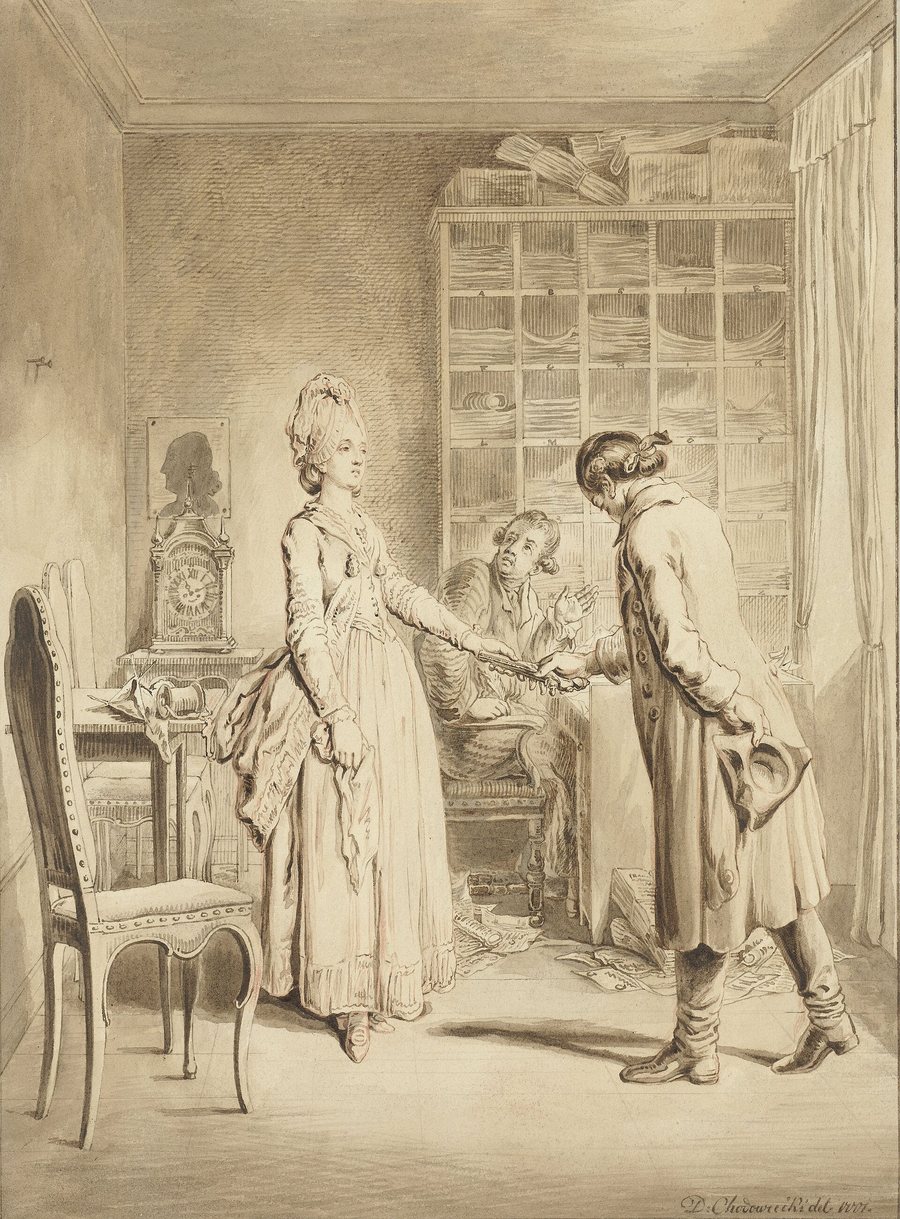
Goethe made the image the subject of his first masterpiece, whose hero, Werther, loves a woman engaged to another man and lives his love mostly in letters, knowing all the while what he is doing, since what he writes of her, he admits, is “tiresome abstractions that do not express a single trait of her self.” In one letter he gives love as projection its emblem:
Wilhelm, what is the world to our hearts without love! What a magic lantern is without light! You have only to bring in the little lamp, and the brightest pictures shine on your white wall! And if it were nothing but that, passing phantoms, it still makes our happiness, when we stand before them like boys and are enchanted by the wondrous apparitions.
He ends the letter with the question of this section, “Wilhelm, are they phantoms, when we are happy?”, and the lantern is both things at once, since love projects, and what it projects is a phantom, yet love is also the light without which there are no pictures at all, Heidegger’s joy in another key. The Diamond Sutra has its own answer to Werther’s question, a verdict on every such picture: 凡所有相,皆是虛妄。若見諸相非相,則見如來, “all that has form is illusory; if you see forms as no-forms, you see the Thus-Come.” In the end Werther shoots himself with pistols that Lotte herself took down from the wall, and Goethe, who wrote the book out of his own unhappy love, later said that he had felt “eased and enlightened by having turned reality into poetry,” while his readers “thought that poetry ought to be turned into reality, … and that at any rate one ought to shoot oneself.”
The psychoanalyst Jacques Lacan gave this problem its modern theory when he called the order of images the imaginary and traced it to the moment when an infant first recognizes itself in a mirror and takes the image for a self. In 1960 he spent a year of his seminar reading the Symposium, and he found the image at work in its last scene. There the drunken Alcibiades says that Socrates is like the statues of Silenus sold in the shops, grotesque on the outside, which open to show little figures of gods within, and that he once glimpsed the golden images, the agalmata, hidden inside him. What draws a lover, Lacan concluded, is not any of the beloved’s qualities but this treasure that the lover sees inside, which he called the objet petit a, the something in you more than you, and so, where the lover of the Phaedrus carves the beloved into a statue of his god, Lacan’s lover believes the god is already hidden in the statue. Lacan knew what this does to the person who has to carry it: “I love you, but, because inexplicably I love in you something more than you, the objet petit a, I mutilate you.”
If the image promises fullness, love itself, for Lacan, works the other way, and his formula, which he repeated for the rest of his life, was that “love is giving what you don’t have.” He found it already in Diotima’s myth, in Penia, Poverty, the mother of Eros, who “by definition, by structure, has nothing to give but her lack,” because what a lover offers the beloved is not a perfect image of himself but his own want. In an early seminar Lacan placed love “at the junction of the symbolic and imaginary,” between the images we make of each other and the speech in which another person answers us, and late in his teaching, having declared that “there’s no such thing as a sexual relationship,” that no Hephaestus will weld the halves, he added that “what makes up for the sexual relationship is, quite precisely, love.”
Read with Heidegger and Lacan, the line does not run between love with images and love without them, for we never see another person without imagination, and Werther’s lantern is also the light by which the world becomes visible; it runs instead between an image that remains answerable to the other person and an image that replaces her. Badiou puts the enemy of love on the same line, and not in any rival: “my love’s main enemy, the one I must defeat, is not the other, it is myself, the ‘myself’ that prefers identity to difference, that prefers to impose its world against the world re-constructed through the filter of difference.” The difference between the two images is ontological before it is epistemological, because a stone is what it is, and to know it is to know its properties, whereas a human being, in Heidegger’s language, is a potentiality-for-being, always ahead of herself in possibilities that are not yet actual. To love her, on this account, is to see possibilities that are hers and to hold them open for her to choose, which is why Heidegger could say that love “calls forth the essence,” and why even Lacan, the analyst most suspicious of love’s illusions, could say that love “aims at being, namely, at what slips away most in language.” Love imagines, as it must, but it imagines toward the other’s freedom, the way morning light falls on a face without deciding what that face will become.
Love’s Dialectic: The Labour of the Negative
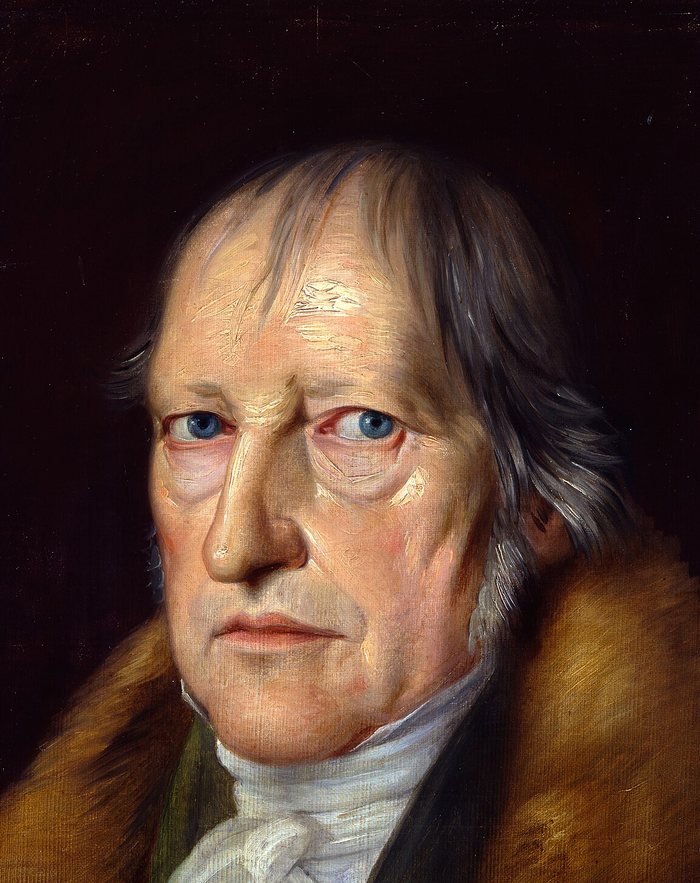
Between the image that answers to the other and the image that replaces her, between the self that prefers identity and the difference it is asked to love, the lover lives inside a contradiction that no choice of sides can settle, and the philosophy that made contradiction its very subject is dialectic. The word is old and has meant many things, but since Hegel it has named one idea above all: that a thing becomes what it is by passing through its opposite. Followed to the end, a position turns out to contain its own contradiction and passes over into its other, and the two are then taken up into a richer unity that ends the one-sidedness of each while keeping what was true in it. Hegel’s word for this is aufheben, usually translated “to sublate,” and he took pleasure in the fact that ordinary German had it, for the word “has a twofold meaning in the language: on the one hand it means to preserve, to maintain, and equally it also means to cause to cease, to put an end to.” Something is sublated, he added, “only in so far as it has entered into unity with its opposite.” For Hegel this was not a method that a philosopher applies to things from outside but the movement of being itself, which is why his Science of Logic begins with “being, pure being, without any further determination,” finds that pure being cannot be told apart from nothing, and concludes that their truth is “this movement of the immediate vanishing of the one in the other: becoming.”
That contradiction is why love is so hard to think about, for it seems to be two things at once, the wish to be one with another person and the wish that the other remain other, a losing of oneself that is also a finding. Where ordinary logic asks which of the two love really is, dialectic is a way of thinking in which a contradiction held together can be the truth of a thing, and so it does not make love choose. Love was, in fact, the young Hegel’s first name for this movement, and in a fragment of about 1797 he wrote: “In love the separate does still remain, but as something united and no longer as something separate; life [in the subject] senses life [in the object].” More than twenty years later, in his lectures on the philosophy of right, he called love “the most tremendous contradiction,” which the understanding cannot resolve, since love means “that I do not wish to be a self-subsistent and independent person” and “that I find myself in another person,” and “love is at once the propounding and the resolving of this contradiction.” In his lectures on art he put it in one sentence: “The true essence of love consists in giving up the consciousness of oneself, forgetting oneself in another self, yet in this surrender and oblivion having and possessing oneself alone.”
If we set that sentence beside Isolde’s last word, we find that she too forgets herself in another self, unbewußt, but she does not come back, and the second half of Hegel’s sentence is exactly what the Liebestod leaves out. Hegel had no patience for nights in which all differences dissolve, and in the preface to the Phenomenology of Spirit he mocked the philosophers who “pass off their Absolute as the night in which, as the saying goes, all cows are black.” The life of God may be called “a disporting of Love with itself,” he wrote, but the idea “sinks into mere edification, and even insipidity, if it lacks the seriousness, the suffering, the patience, and the labour of the negative,” and a little later he wrote that “the life of Spirit is not the life that shrinks from death and keeps itself untouched by devastation, but rather the life that endures it and maintains itself in it. It wins its truth only when, in utter dismemberment, it finds itself.” For Hegel, then, love does not abolish the little word “and” but keeps it alive, since the isolated self dies and is found again in the other, and in this sense dialectic is the grammar of love’s being, a unity that keeps its difference, a self won by being given away, a contradiction posed and resolved at once. To dissolve both terms into the night is the Liebestod; to remove one of them is the wish.
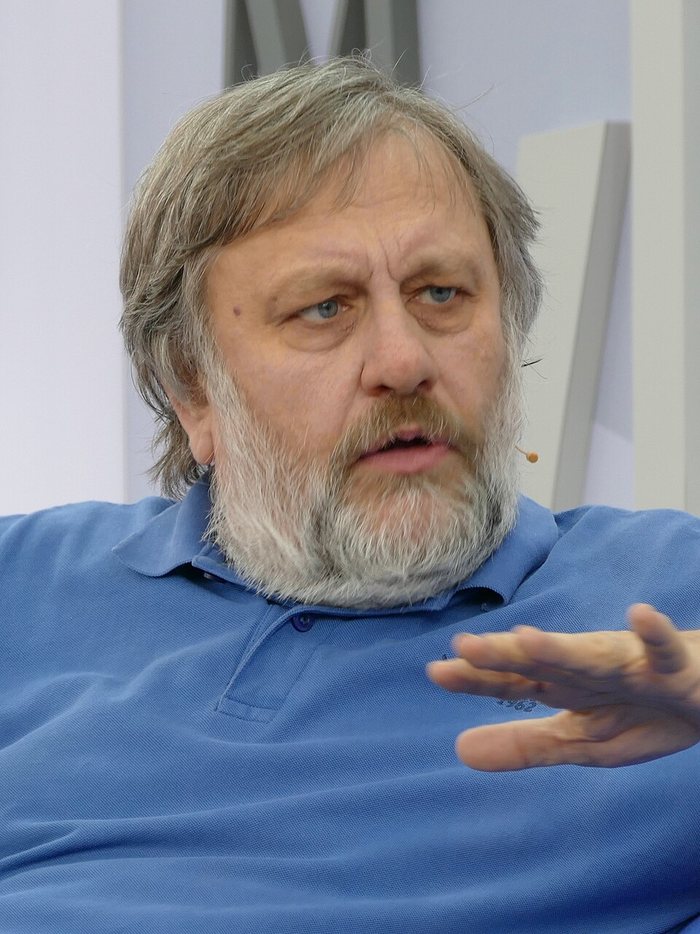
Slavoj Žižek has spent his career reading Hegel through Lacan, and his writing on love draws on both, beginning with Hegel’s labour of the negative, which he takes at its word. When Hegel says that spirit looks the negative in the face and tarries with it, this does not mean, Žižek writes, that the subject has merely to clench his teeth and hold out until everything somehow turns out fine, for “Hegel’s whole point is that the subject does not survive the ordeal of negativity.” What comes out of the ordeal is a different subject, and Žižek says the same of love: “When I fall in love, it is not because the beloved is the one who best satisfies my needs—the fall into love redefines who I am.” Even the limit that love sets, one person chosen out of the whole world, is lived as its opposite: “When I am really in love, the limitation to One (the beloved) is experienced as its opposite—as a true liberation.” His most Hegelian sentence about love, from the same afterword to Badiou’s Wagner, concerns the end of the Ring, where Brünnhilde passes from eros, “the suicidal-fatal immersion which obliterates all social links,” to agape, “the all-encompassing ‘political love’”: “The first love is a species, and the second one the genus encompassing itself as its own species: in Hegelese, love encounters itself here in its own ‘oppositional determination’ (gegensaetzliche Bestimmung), as its own species.” Love, in other words, divides into two loves and meets itself in its opposite, a thought we will meet again when East and West draw their own line between two loves.
On the question of choice, Žižek joins Lacan’s object to an old puzzle about freedom, since “the decision to love somebody is free (compulsory love is no love), yet this decision can never be a present and conscious one … all I can do in the present is to ascertain that the decision has already been taken and that I am caught in the inexorable necessity to love.” Nor can the choice be justified, because “the moment I can enumerate reasons why I love you, the things about you that made me fall in love with you, we can be sure that this is not love,” and what I have chosen is the something in you more than you, which no list of your qualities contains. Žižek goes further and likens this choice to original sin, “the abyssal disturbance of primeval Peace, the primordial ‘pathological’ Choice of unconditional attachment to some specific object (like falling in love with a specific person who, thereafter, matters to us more than anything else).”
Žižek also returns us to Tristan, for the death drive, he says, is not a wish to die but “a name for the ‘undead’ eternal life itself,” and Tristan in the third act “is not desperate because of his fear of dying: what makes him so desperate is the fact that, without Isolde, he cannot die and is condemned to eternal longing.” For Schopenhauer the lovers’ longing was the will to live of the species, but for Žižek it is a life that cannot stop, an excess no living body can contain, which is why it looks so much like death.
Homecoming in the Unhomely
A longing that can neither stop nor die is a longing without a home, and home is the very word with which the philosopher Simon May, in Love: A History, defines love in terms of ontology: “Love, I will argue, is the rapture we feel for people and things that inspire in us the hope of an indestructible grounding for our life.” He calls this hope “ontological rootedness,” for “love’s overriding concern is to find a home for our life and being,” and yet May is also a critic of the religion of love whose liturgy Tristan is: “That new god was love. Human love.” The formula “God is love” has been turned into “love is God,” and “to its immense cost, human love has usurped a role that only God’s love used to play,” and Isolde’s Frau Minne is that god.
But May’s word “home” is exactly where Heidegger would raise his hand, for although being-in-the-world begins as dwelling alongside what is familiar, in anxiety the world loses its familiarity, and we discover that “‘uncanniness’ also means ‘not-being-at-home’.” The ordinary comfort of the “they” is a flight from this discovery, and Heidegger insists that “that kind of Being-in-the-world which is tranquillized and familiar is a mode of Dasein’s uncanniness, not the reverse,” so that if love were only a home in that sense, a warm room in which to forget that we are mortal and alone, Heidegger would call it a flight. Freud explained why the homely turns so easily into its opposite when he wrote that the uncanny “is what was once heimisch, homelike, familiar,” and he added a joke: “Love is home-sickness.”
So is love the inauthentic comfort Heidegger describes, or something beyond it, when Diotima’s Eros is “shoeless and homeless” and Augustine’s heart is restless until it rests in God? Heidegger himself called philosophy a homesickness and added, “Our very being is this restlessness,” and love does not cure that restlessness but is that restlessness itself, finding at last a place to rest that does not deny it. In his lectures on Hölderlin, Heidegger found the phrase for it, “becoming homely in being unhomely,” and that is the home that love is: not a flight from the uncanniness of existence into the comfort of the “they,” and not the lonely, “non-relational” uncanniness of anxiety, but a third thing, the uncanny shared. The beloved does not make one’s existence less strange, less mortal or less thrown, but is the one with whom its strangeness becomes habitable, as a lamp carried into a dark house does not make the house any smaller but makes it a place where someone can live. May is right that love seeks ontological rootedness, but the roots go down into the unhomely, not away from it, and a love that tries to abolish the unhomely, by sinking into the night, abolishes itself.
That is also why being-in-love is an authentic way of being-in-the-world, and perhaps the most common way in which ordinary people are ever lifted out of the everyday “they.” Few people know the anxiety that Being and Time describes, in which the whole world slides away, but most people have fallen in love, and when they do, what one does and what everyone thinks no longer decide anything. The question of who one is comes back with a force that nothing else has, and that is what Heidegger, in 1925, called being pressed into one’s ownmost existence.
Two Loves
If love finds its home in the unhomely, East and West seem at first to disagree about whether that home should be sought at all, and the disagreement looks like the deepest there could be, because both traditions see the same structure and pass opposite verdicts on it. Both see that love begets being, as Diotima’s Eros binds the All together and the Buddha’s chain says 愛緣取,取緣有. In the West, from Plato to Hegel and Heidegger, love’s movement toward being is good, the sign that we are made for more than we are, while for the Buddha the same movement is thirst, the motor of the wheel, and liberation is 涅槃, nirvana, the blowing out of a flame. A second tension follows from the first, for Western love insists on the singular: “In romantic love,” Hegel said, “everything turns on the fact that this man loves precisely this woman, and she him.” The Buddha distrusts exactly that “mine,” and his highest love, 慈, loving-kindness, is boundless, so that one of his best-known discourses describes it with the most exclusive love there is: “Even as a mother would protect with her life her child, her only child, so too for all creatures unfold a boundless heart.”
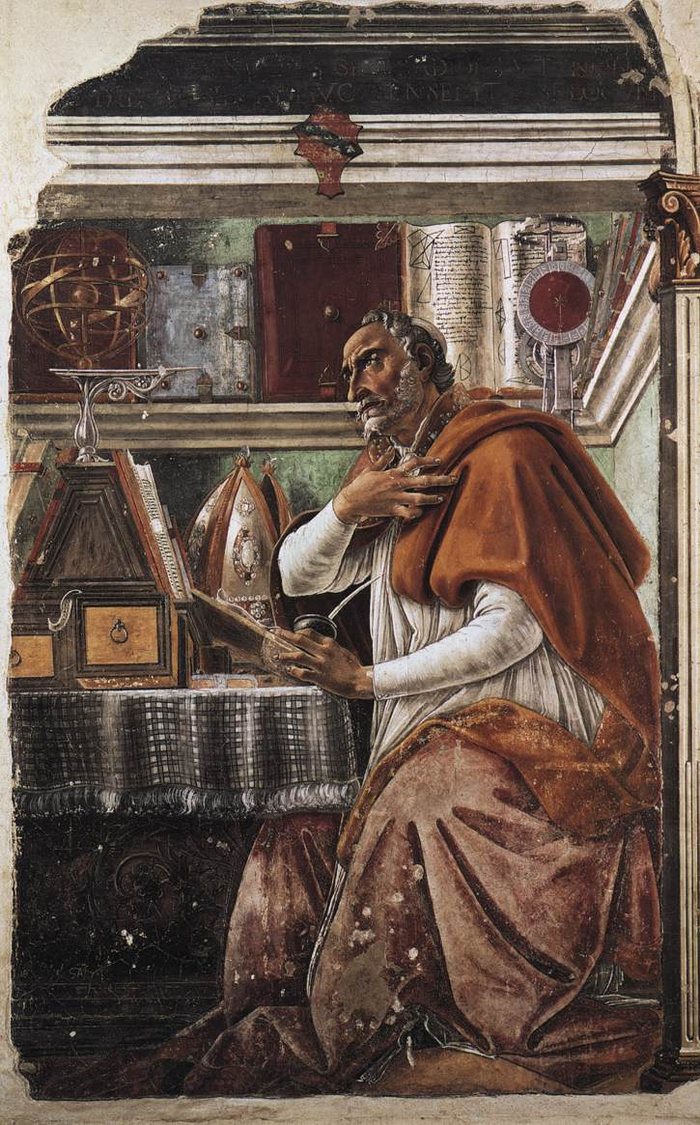
But the tension is not a border between continents, since it runs through each tradition, as Tang Xianzu’s reply to the Chan monk, Chikamatsu’s lovers praying for one lotus and Wagner’s turn from Nirvana to Tristan have already shown, and beneath it lies a deeper unity, for both traditions distinguish two loves and draw the line between them in the same place. “Two cities have been formed by two loves,” Augustine wrote, “the earthly by the love of self, even to the contempt of God; the heavenly by the love of God, even to the contempt of self,” and Buddhism divides 愛, the thirst that clings, from 慈悲, kindness and compassion: 大慈與一切眾生樂,大悲拔一切眾生苦, “great kindness gives happiness to all beings; great compassion pulls all beings out of suffering.” What separates kindness from thirst is not that it loves less but that it does not grasp, and the Diamond Sutra has a single line for that, saying that the mind should not dwell on forms, sounds or any object, but 應無所住而生其心, “should give rise to a mind that dwells nowhere”; the Platform Sutra tells us that Huineng, the sixth patriarch of Zen, was awakened on hearing this line. A mind that dwells nowhere is not a mind that loves nothing but a love that does not settle on its image of the other. Where the West draws its line between the love that possesses and the love that lets be, the East draws it between the mind that clings and the mind that dwells nowhere, and it is the same line.
大乘 Buddhism gave the line a figure, and the figure is the East’s reply to the Liebestod: the 菩薩, the bodhisattva, is the one who could enter 涅槃, could let the flame go out, and does not, because beings are suffering. His vow is chanted in Zen monasteries to this day, 眾生無邊誓願度, “beings are numberless; I vow to save them all,” and without great kindness and great compassion, says the same treatise that defined them, 便早入涅槃, he would have entered 涅槃 early. If we set him beside Isolde, the Liebestod is a love that sinks into the night of the All and leaves the world behind, while the bodhisattva is a love that could leave the world and turns back at the shore. Hegel’s spirit finding itself in its dismemberment and the bodhisattva at the edge of extinction choosing to stay are two pictures of the same turning back, which is what being-in-love, as a way of being-in-the-world, looks like.
I Will That You Be
I promised to come back to the saying Heidegger called “probably the deepest interpretation of what love is,” amo, volo ut sis, which he first wrote to Hannah Arendt in 1925: “Amo means volo, ut sis, as Augustine once said: I love you, I will that you be what you are.” Arendt, who had written her dissertation on love in Augustine, used it a quarter of a century later in The Origins of Totalitarianism, of “the great and incalculable grace of love, which says with Augustine, ‘Volo ut sis (I want you to be),’ without being able to give any particular reason for such supreme and unsurpassable affirmation.” No one, however, has found the words in Augustine’s writings, and the saying is Heidegger’s distillation more than a quotation; but whoever first said it, it draws the line between love and the wish, for the wish says, I want you to be what I wish, and love says, I will that you be what you are.
Heidegger drew the line himself, in notes from the late 1930s: “‘Love’ is the will that the beloved be, by finding its way to its essence and dwelling in it. Such a will does not wish and does not demand. Honoring, it first lets the lovable ‘become’ the beloved, without, however, creating it.”Heidegger, Besinnung (1938–39): “»Liebe« ist der Wille, daß das Geliebte sei, indem es zu seinem Wesen finde und in ihm wese. Solcher Wille wünscht und fordert nicht. Würdigend läßt er erst das Liebens-würdige als das Geliebte »werden«, ohne es doch zu schaffen.” Buddhist kindness says the same thing in another grammar, 大慈與一切眾生樂, great kindness gives happiness to all beings, for where craving says, let it be mine, kindness says, may it be, and may it be well. In volo ut sis and in 應無所住而生其心, West and East at their summits found the same words for love, a will that the other be, which dwells nowhere and does not demand.
And so I come back to the goose and to the boy’s question, 問世間,情是何物,直教生死相許: what is this thing, love, that it makes two creatures pledge each other their lives and their deaths? Love is the will that another be, a will so deep that one’s own being becomes bound to it, and to be in love is to be in the world through another’s existence, so that the world is opened by the fact that you are there, as Heidegger’s joy opened it, and it closes, as it closed for the goose, when you are gone. That is why love and death are never far apart, not because love wants death but because to love is to have staked one’s being on the being of another; yearning is that being stretched across distance and time, the Liebestod is that being refusing to outlive its world, and compassion is the same will turned toward every being that suffers.
The Song of Songs says that love is strong as death, not stronger but as strong, and because they are equals they keep meeting at the edges of every love. But the next verse says something more, “Many waters cannot quench love, neither can the floods drown it,” and though Isolde sank into the surging swell and Werther received his death from Lotte’s hands, what the waters cannot quench is not the longing to be loved but the will that you be.
Translations. Quotations in English follow these translations: Plato by W. R. M. Lamb and Harold N. Fowler, Aristotle by W. D. Ross, and Augustine by Marcus Dods; Heidegger’s Being and Time by John Macquarrie and Edward Robinson, and his lectures and seminars by David Farrell Krell, Franz Mayr and Richard Askay, William McNeill, Nicholas Walker and Julia Davis; Schopenhauer by E. F. J. Payne, Hegel by A. V. Miller and T. M. Knox, Goethe’s memoirs by John Oxenford, Wagner’s letters to Mathilde Wesendonck by William Ashton Ellis, Freud by James and Alix Strachey, Lacan by John Forrester, Alan Sheridan and Bruce Fink, and Badiou by Peter Bush; Tang Xianzu’s preface by Cyril Birch, Chikamatsu by Donald Keene, and the Discourse on Loving-Kindness by Bhikkhu Sujato. All other translations are my own.
Image credits. The photograph of Martin Heidegger is by Willy Pragher (CC BY 4.0), the photograph of Slavoj Žižek is by Amrei-Marie (CC BY-SA 4.0), and the photograph of Alain Badiou is by Keffieh67 (CC BY-SA 3.0). The still from Obsession is © Focus Features, reproduced at reduced size for criticism and commentary. All other images are in the public domain.