The Virtue of Friction
Some friction only wastes our time, and some is how understanding is built and how hard work becomes absorbing. On learning, skill and flow when a machine can do the work.

For the things we have to learn before we can do them, we learn by doing them.
Each year some version of the same question reaches me, usually from one of the strongest students in the room. If a model writes better code than they do, explains a proof more clearly than the textbook, and is available at one in the morning, why should they spend four hours on a problem set it could finish in four minutes?
The question deserves a better answer than the ones it usually gets. Telling students they will need the material for the exam gives them a reason to use the tool more carefully, not a reason to learn. Telling them that employers want fundamentals is true for now, but it is a claim about the job market, which is exactly what these tools are changing. And the claim that struggle builds character is usually made by people who never had the option of avoiding it. I spent two lectures this year trying to give a better answer, and this essay is a longer version of both.
The answer I arrived at concerns friction. Every tool we have built for learning, from the printed textbook to the search engine to the language model, has reduced the friction between a question and its answer, and most of that reduction has been a plain good. Friction is not only a cost, however. In mechanics it is the force engineers spend much of their effort minimizing, yet it is also what allows a tire to grip the road and a foot to push off the ground, and on a perfectly frictionless surface effort produces no forward motion at all. Learning works in a similar way. Some of the resistance we meet when we study is waste, and removing it costs nothing. Some of it is the means by which understanding is formed, and removing it removes the learning along with it.
The title is meant in two senses. Friction has a virtue in the ordinary sense, a merit that is easy to overlook now that so much of it can be removed. It is also the condition under which virtue, in the older sense Aristotle gave the word, is formed, because the excellences of a mind, like the strength of a body, are built by working against resistance. The first half of this essay, drawn from a lecture on skill building, makes that case and asks why anyone should keep friction that a machine could remove. The second half, drawn from a lecture on what the psychologist Mihaly Csikszentmihalyi called optimal experience, takes up the question students raise as soon as the first argument is over: if friction is necessary, does it have to be miserable? It does not. Friction that is matched to a person’s ability is what makes hard work absorbing, and the same match is what makes it instructive.
This is the first of a weekly series of essays based on a lecture series I am giving this year, The Impact of LLMs and AI Agents on College Life. The two lectures before these dealt with the mechanics of taking a course and finding work, and these two were the first to ask why.
The friction we used to have
When I was an undergraduate, the answer to a question I could not resolve on my own was a person, and people keep office hours. A teaching assistant might hold a single hour a week, on a Tuesday afternoon, with a line out the door. You could wait ninety minutes to reach the front of it, and the answer, when it came, often took four minutes. A question therefore had to survive from whenever you got stuck until Tuesday, and most of mine did not.
Much of that friction was simply waste, and I do not want to romanticize it. Students waited six days to learn that they had misread a single line of a problem. A textbook explained each idea in exactly one way, and a student for whom that way did not work had nowhere else to turn. Nobody was available at one in the morning, which is when undergraduates actually work. Help was also distributed by social confidence rather than by need, since the students who asked first and most often were rarely the ones who needed it most, and schedules, commutes, jobs and shyness quietly decided who received help at all. A model that answers at one in the morning, patiently and in as many different ways as a student needs, removes all of this, and I would not want to go back.
Even so, I tell my students that struggling with homework is one of the best ways to learn, and I mean something narrower than it sounds. The claim is not that difficulty is noble or that suffering improves people. It is that certain kinds of learning happen only under difficulty, so that the struggle is the mechanism by which they happen rather than a toll paid on the way to them.
What the old friction did
Looking back, the friction of the old arrangement was doing at least three useful things, none of which anyone had planned.
The first was that it forced students to formulate their confusion. Before you could ask a person for help, you had to put what you did not understand into words, and naming a confusion precisely is often half of resolving it. Programmers know the effect as rubber-duck debugging: if you explain a bug line by line to a rubber duck on your desk, you frequently find it yourself somewhere around the fourth line, even though the duck has contributed nothing. A chat window that accepts two hundred pasted lines and the word “fix” removes the need to formulate, and with it the part of the solution that formulating used to supply.
The second was time. Waiting until Tuesday meant carrying a problem around for several days and thinking about it intermittently, often without meaning to, and that was when much of the real thinking happened. In The Art of Thought (1926), Graham Wallas divided creative problem-solving into four stages: preparation, incubation, illumination and verification. The second describes exactly this period, in which you are no longer working on the problem but it continues to work on you.Wallas drew partly on Henri Poincaré, who described in Science and Method (1908) how the key to a problem he had set aside came to him “at the moment when I put my foot on the step” of a bus, while he was talking about something else entirely. A problem solved in four minutes has no chance to incubate.
The clearest example in my own work is my first paper, FUSE, which I wrote before any of these tools existed.“FUSE: Measure-Theoretic Compact Fuzzy Set Representation for Taxonomy Expansion,” ACL 2024 (arXiv). The central problem was to find a rigorous formulation of fuzzy set embeddings, and I spent weeks on it. I read whatever seemed relevant, drew on the mathematics I had studied, and carried the problem around with me for most of that time until the formulation finally came together. A model today might well arrive at a similar formulation, and perhaps faster. But I do not think I would understand it in the same way. Because I built the formulation myself, my understanding of it is active: I know why each piece is there, because I put it there. Reading a model’s version would have meant processing someone else’s work, which produces a more passive kind of understanding. That difference, between building an understanding and receiving one, is what the rest of this section is about.
The third was memory. When you finally understood something you had struggled with, you could recall your own wrong attempts and what had corrected them, and that record is a large part of what it means to know something rather than to have read about it. Psychologists have documented pieces of this. Information that people generate themselves is remembered better than information they read, which is known as the generation effect, and errors made with high confidence turn out, once corrected, to be among the most durably corrected of all, which is known as the hypercorrection effect.Slamecka and Graf (1978) for the generation effect; Butterfield and Metcalfe (2001) for hypercorrection. An explanation that is simply received involves no wrong attempt of your own, so it leaves no such record behind.
These three functions point to the distinction on which the rest of this essay depends, between receiving an explanation and building an understanding. Receiving an explanation feels like understanding at the moment it happens. It is fluent and quick, and most of it is gone by the midterm. Building an understanding feels worse, because it involves attempting, being wrong and finding out exactly where, but what it produces lasts. The trouble is that the two feel alike from the inside. Leonid Rozenblit and Frank Keil called one version of this the illusion of explanatory depth: people who rate how well they understand everyday devices such as zippers and flush toilets rate themselves much lower once they are asked to write out how those devices actually work.Rozenblit and Keil, “The misunderstood limits of folk science: an illusion of explanatory depth,” Cognitive Science, 2002. A language model can produce fluent prose on any subject on request, and with it the same illusion. The psychologist Robert Bjork’s term for the useful kind of friction is “desirable difficulties,” which covers conditions such as spacing practice out, testing yourself instead of rereading, and mixing different kinds of problems. These make learning feel slower and harder at the time, and they make it last considerably longer.Bjork, “Memory and metamemory considerations in the training of human beings,” 1994. The testing effect in particular is among the best-replicated findings in the field; see Roediger and Karpicke, “Test-enhanced learning,” Psychological Science, 2006.
Under the old arrangement, building an understanding was close to compulsory, because receiving explanations was expensive. Under the new one, receiving explanations is nearly free. The danger therefore lies less in the tools themselves than in the defaults they create, since the path of least resistance now runs through the kind of learning that does not last.
There is now direct evidence of what that default does. In a field experiment with nearly a thousand high-school students in Turkey, Hamsa Bastani and her colleagues gave some students access to GPT-4 during math practice sessions. Students who used an unrestricted, ChatGPT-style interface did 48% better on the practice problems than students without it, but when the tool was taken away for the exam they scored 17% worse than students who had never had it. A second version of the tool, prompted to give hints rather than answers, raised practice scores by 127% and left exam scores roughly where the control group’s were.Bastani et al., “Generative AI without guardrails can harm learning: Evidence from high school mathematics,” PNAS 122(26), 2025. The authors concluded that the students in the first group had used the tool as a crutch: their practice had never looked better, and they had learned less.
Mathematicians have recently made the same point about their own field. In September 2026 more than two dozen Fields Medalists, including Terence Tao, Peter Scholze, Maryna Viazovska, Cédric Villani and Pierre Deligne, signed a public declaration titled A Severe Misalignment of AI in Mathematics.Published 11 September 2026 at mathandai.org (doi:10.5281/zenodo.22737750). Its central sentence states the thesis of this essay better than I could:
But solving problems is only a tool and proxy for achieving the primary goal of conceptual understanding and insight.
The declaration does not complain that AI systems get mathematics wrong. They have begun to settle open problems, and the signatories accept that. Their concern is that a proof used to be a reliable sign that someone had developed a new insight or method, which the field would then spend years digesting and simplifying until a student could follow it. A system that produces the result without the insight breaks the link between the two, and in their words “the mass production at faster and faster pace of ’true/false’ statements could destroy fertile ground.” They also note that the problem is not confined to mathematics, since in many sciences and creative professions years of training have served not only to produce answers but “to develop understanding and the ability to formulate new questions and ideas.”
The same principle is uncontroversial when it applies to the body. Muscle grows in response to work against a load close to its current limit, which trainers call progressive overload: a weight that can be lifted easily produces no change, so the load has to increase as strength does. The training session itself leaves the body tired and temporarily weaker, and the strength is built during the recovery that follows, much as the thinking about a problem used to happen in the days before office hours. A forklift can lift far more than any person, and nobody concludes from this that weight training is pointless or that watching someone else lift will build their own muscles. A model that does a problem set on a student’s behalf plays the part of the forklift, because the purpose of the homework was never to move the weight.
The analogy needs two qualifications. Soreness is not the goal of training and is a poor measure of progress, since what matters is the load. And a load far beyond a person’s limit does not make them stronger more quickly; it injures them. The useful amount of friction is therefore not the largest amount, a point that becomes central in the second half of this essay.
Using the tools without losing the friction
None of this is an argument against using these tools. It is an argument about how to use them, and the question that matters in any particular session is whether it leaves you having thought more than you would have without it, or less.
Consider a student whose code crashes with a segmentation fault at one in the morning. In one version of the evening, the student pastes two hundred lines of code and the error message into a chat window, receives a corrected file, confirms that it compiles and submits it, all within about four minutes, and learns nothing about how memory works. Six weeks later the same kind of bug appears during an internship, in a codebase of four hundred thousand lines that cannot be pasted anywhere. In another version, the student pastes the stack trace and asks the model not to reveal the fix but to ask three questions that would help locate the invalid write. This takes about twenty-five minutes, and at the end the student knows how to read a stack trace and will recognize that class of bug the next time it appears. The tool is the same in both versions, and it is arguably used more skillfully in the second. What differs is who does the thinking.
The habits that keep a student in the second version of the evening are mostly applications of the distinction between receiving and building. The most important is to attempt a problem before looking at any solution, so that you never see a correct answer before producing a wrong one of your own. Manu Kapur’s research on what he calls productive failure finds that students who struggle with a problem before receiving instruction understand the underlying concept better than students who are taught first, even though they fail during the struggle.Kapur, “Productive failure,” Cognition and Instruction, 2008, and a large body of work since. It also helps to ask the model to quiz you rather than explain things to you, because retrieving an idea from memory strengthens it in a way that reading about it does not. Explaining an idea to the model in your own words and asking where the explanation became vague is the rubber duck again, except that this duck can reply. When the model cites a source, open it and read it, because the source is sometimes missing and sometimes says something different from what was claimed. If you cannot tell a correct answer from a plausible one, you are not yet in a position to submit it. Finally, it is worth keeping the fundamentals of your own field as an area where you do not use the tools at all, since working unassisted is how you preserve the ability to check them. We continue to teach arithmetic in a world full of calculators for a similar reason: a person who can estimate is a person who notices when the calculator has been given the wrong input.
These habits come down to a single question students can ask before handing in any piece of work, which is whether they could defend it if the model disappeared. The question is less about academic honesty than about agency, that is, about whether the work is something the student directed or something they merely passed along. Every answer submitted without the ability to evaluate it hands a little authority over the student’s own judgment to a system that has no awareness of having received it, a danger that Kant, as we will see, described more than two centuries ago.
The body offers one further lesson, which extends the one about weight training. Doing the work yourself is necessary, but it is not enough if your attention is somewhere else while you do it. Running on a treadmill, where the belt sets the pace and a screen usually holds your attention, exercises the legs while the mind is elsewhere. Running on a trail, where the ground is uneven, the route turns and the weather changes, requires a constant series of small decisions, and so it requires you to be present.

I learned this on a trail in the hills above Los Angeles in the week before my first boxing bout. Instead of my usual sprints, I ran up in the dark listening to Mahler, watched the sun rise over the city, and ended up shadow boxing alone on the trail. Shadow boxing, like dancing, demands complete presence, since there is a sequence to remember, a rhythm to keep and an imagined opponent to answer. I wrote at the time that I was completely relaxed and in the flow, although I did not yet understand why.
The research on attention during exercise is modest and should be described modestly. A 2011 systematic review found that exercising outdoors was associated with more revitalization and less tension than the same exercise indoors, although the studies it reviewed were small.Thompson Coon et al., Environmental Science & Technology, 2011. A 2003 study of older adults in the New England Journal of Medicine found frequent dancing associated with a lower risk of dementia, the only physical activity in that study to show the link, though the study was observational and cannot establish cause.Verghese et al., “Leisure activities and the risk of dementia in the elderly,” 2003. The principle does not depend on large studies, however. Exercise done while your attention is elsewhere is the physical equivalent of a chapter read while scrolling through a phone, and the second half of this essay returns to this kind of attention, which turns out to be one of the conditions of flow.
Why keep friction a machine could remove
So much for how to work with these tools. The harder question is why anyone should keep friction that a machine could remove. I want to offer two kinds of answer, one economic and one philosophical, which disagree about the reason while recommending the same behavior.
The economic answer
The first answer is economic, and I want to state it with some care, because the evidence about how AI is changing the labor market is still early and mixed. One way to picture the concern is as a change in the shape of the returns to skill. In the familiar picture, skill pays on something like a smooth curve, so that a little more skill brings a little more income across the whole range and most people live in a broad middle. The concern is that capable tools could turn that curve into something closer to a step.


The reasoning behind the concern is simple. Once a tool can do something competently, the price of the tool tends to set the price of that work, and whatever premium remains moves to people who can go beyond what the tool produces. A person who can operate the tool but cannot check it is limited by the tool’s output and learns of its mistakes from someone else. A person who can use the tool at full speed, recognize when its output is likely to be wrong and go further than it can holds the judgment that stays scarce. If the concern is right, what separates the two positions is less a matter of additional coursework than of a few daily habits sustained over four years.
Whether the labor market will actually take this shape is an open question, and the best-known study so far points partly the other way. In a study of customer-support agents at a large software company, Erik Brynjolfsson, Danielle Li and Lindsey Raymond found that an AI assistant raised productivity by 14% on average and by 34% for the newest and least skilled agents, narrowing the gap between novices and experienced workers.Brynjolfsson, Li and Raymond, “Generative AI at Work,” Quarterly Journal of Economics, 2025. One reading of this result is that when a tool raises everyone to competence, competence itself stops commanding a premium, and the premium moves to what the tool cannot do. The research is moving quickly, however, and I would not rest the case for learning on any particular forecast of wages.
The part of the economic argument I am more confident of is narrower and does not depend on such forecasts. These systems are probabilistic by construction and are confidently wrong at a rate that never quite reaches zero, and the cost of an error bears no relation to how cheaply it was produced, as anyone who has shipped one can confirm. As long as that remains true, someone in the room has to be able to catch the errors, and that ability is built in exactly the way this essay has described. On this view, learning works as a hedge rather than as a form of nostalgia, and there is no reason the person who can catch the errors should not be you.
Why the economic answer is not enough
I made that argument in the vocabulary of the market deliberately, so that it would hold even for a student who cares only about income, and its limitation follows from the same choice. If income were the only reason to learn something, then any subject whose wage premium a machine drove to zero would cease to be worth learning. Almost nobody believes this about their own life, in the same way that nobody stopped running when cars were invented. There must therefore be another account of why understanding is worth having, and two philosophical traditions provide one: Aristotle’s account of excellence and the Enlightenment’s account of autonomy.
Aristotle on excellence
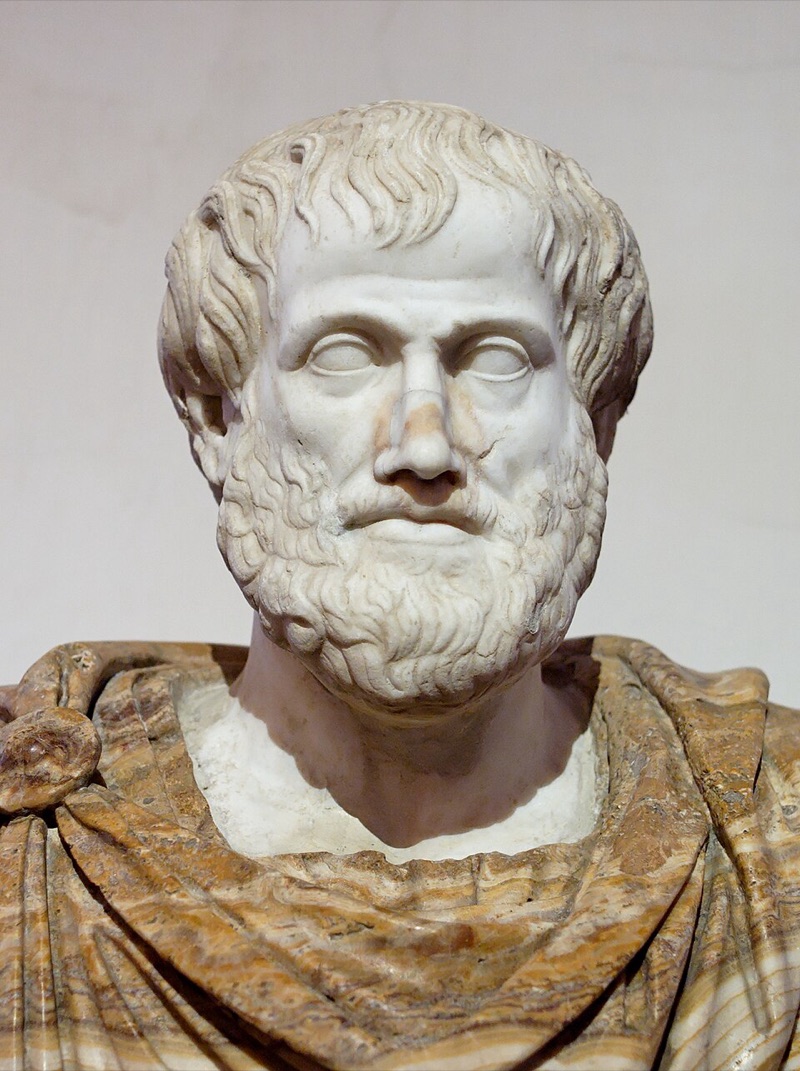
Aristotle’s argument in the Nicomachean Ethics requires no religious or sentimental premise, which in my experience is part of why engineering students find it persuasive. He begins from the observation that everything we do is done for the sake of some end, and that not every end can be pursued for the sake of a further one, since otherwise our wanting would never come to rest. There must therefore be something we want for its own sake, which he calls eudaimonia (I.2, I.4). The usual translation, “happiness,” is misleading, because he means neither a mood nor a pleasure but a whole life going well, something that can be fully judged only once the life is complete (I.10).
To determine what a good human life consists in, Aristotle asks how we judge whether anything is good, and answers that a thing is good when it performs its characteristic work well: “for just as for a flute-player, a sculptor, or any artist… the good and the ‘well’ is thought to reside in the function, so would it seem to be for man” (I.7). The characteristic work of a human being is the exercise of reason, which includes deliberating, understanding and judging what is true and what to do, and so a human life goes well when that activity is performed excellently across a complete life (I.7). Aretē, the Greek word translated as virtue or excellence, is precisely the condition in which an activity is performed well (II.6). It follows that excellence is not an ornament added to a good life but the material of which a good life is made.
You need not accept every step of this argument to accept its consequence for the question about AI, which rests on a distinction between products and activities. Some things have their value in what they produce, such as an essay, a proof, a working function or a completed problem set, and because it makes no difference who or what produced them, they can be delegated. Other things have their value in the doing, such as deliberating, following an argument or judging whether something is true, and there is no version of these that can happen to a person while a machine does the work. Aristotle is explicit that a good life belongs to the second kind. It is an activity rather than a possession, and he observes that if happiness were merely a disposition, it could belong to someone who slept through their entire life (I.8, X.6). His account of how excellence is acquired makes the same point from the other direction: “we become builders by building and lyre-players by playing the lyre; so too we become just by doing just acts” (II.1). Nobody becomes a good reasoner by watching someone else reason.
This is why the question “why do it, if something else does it better?” is badly formed. It treats an activity as though it were a product. A model can supply the product of an activity, but it cannot perform the activity on anyone’s behalf, because the value of the activity lies in its being performed by the person whose excellence is at stake.
The best-known summary of this view is not Aristotle’s own but the historian Will Durant’s:
We are what we repeatedly do. Excellence, then, is not an act, but a habit.
Durant was paraphrasing, but faithfully, and the paraphrase makes clear that the excellences that matter in an age of capable machines are mostly small and repeated. They appear as curiosity when a student asks a follow-up question that will not be on the exam, as honesty when they notice the difference between understanding something and having heard something that sounded right, as courage when they stay with a problem for twenty minutes longer before opening a chat window, and as judgment when they notice that an answer is more confident than its evidence warrants. No tool can have any of these on a student’s behalf, and each is formed by exactly the kind of friction the tool is able to remove.
Kant on price, dignity and convenience
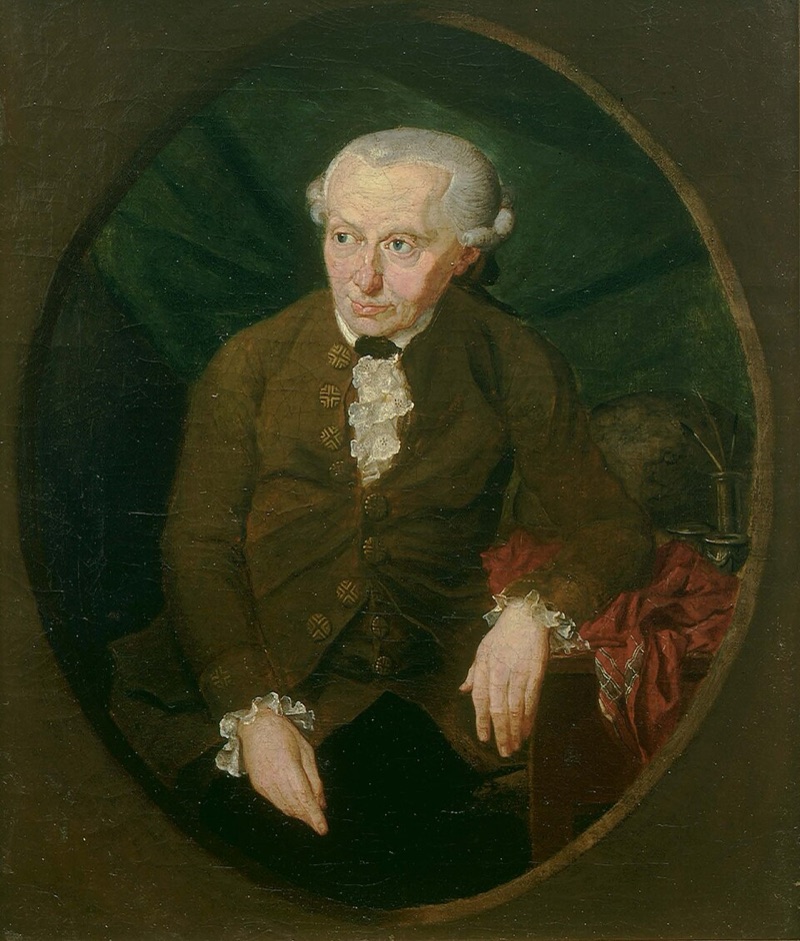
The second philosophical answer comes from Kant, and it addresses the economic argument directly. In the Groundwork of the Metaphysics of Morals he distinguishes two kinds of worth:
In the kingdom of ends everything has either a price or a dignity. What has a price can be replaced by something else as its equivalent; what on the other hand is raised above all price and therefore admits of no equivalent has a dignity.
For Kant a rational being has dignity, and must therefore be treated as an end in itself and never merely as a means. This is not a sentimental objection to markets. A labor market prices labor, as it is meant to, by valuing a worker at the cost of their closest substitute, and there is nothing insulting in its doing so. What a market cannot register is whether a person understood what they produced, what they are like to work with, what they find beautiful, or whether they can be trusted to judge a case that nobody has judged before. Aristotle makes a related point about money when he writes that “wealth is evidently not the good we are seeking; for it is merely useful and for the sake of something else” (I.5). The step in the returns to skill describes what the market will pay for, but it cannot tell anyone what is worth wanting.
A year before the Groundwork, in 1784, Kant had answered a question posed in a Berlin magazine, What is Enlightenment?, and his answer bears directly on the question of friction:
Enlightenment is man’s emergence from his self-incurred immaturity. Immaturity is the inability to use one’s own understanding without the guidance of another.
The important word is “self-incurred.” Kant goes on to say that immaturity is self-incurred when its cause lies not in a lack of understanding but in a lack of the resolve and courage to use one’s understanding without someone else’s guidance. His diagnosis, in other words, was never ignorance but convenience, which is to say the absence of friction, and the passage that follows reads as though it had been written about language models:Translations differ; this one is lightly adapted from the standard English versions.
It is so convenient to be immature! If I have a book that understands for me, a pastor who has a conscience for me, a physician who judges my diet for me, and so on, I need not trouble myself at all. I need not think, so long as I can pay.
Kant was writing about deference to books, priests and physicians, each of which spared its clients a particular kind of effort. A single chat window can now play all three roles, at any hour and for the price of a subscription, which makes his warning about the appeal of convenience more pressing than it was when he wrote it.
Isaiah Berlin later gave modern names to the distinction on which Kant’s argument depends.Berlin, “Two Concepts of Liberty,” his inaugural lecture at Oxford, 1958. Berlin was wary of positive liberty, which he thought had too often been used to justify coercion in the name of people’s “true” selves. The concern here runs the other way: not that someone will force a capacity on you, but that you will let it lapse. Negative freedom is freedom from interference, and by that measure students have never been freer, since every tool is available to them, nothing is forbidden, and no authority stands over their shoulder. Positive freedom is the freedom to do something, which in this case means the actual capacity to reach your own conclusions. Because positive freedom is a capacity rather than a permission, it has to be built and can quietly be lost, and Kant’s word for it is autonomy, which literally means giving the law to oneself. A person who does whatever the most convenient available source tells them is entirely unconstrained in the negative sense and not free in the positive one.
This kind of freedom is rarely taken from anyone. It is handed over, and the handover is difficult to notice because each individual act of delegation is reasonable. The results remain good, nothing visibly fails, and there is never a moment that registers as a loss. Conclusions continue to arrive, but they are no longer the person’s own, and the person would have no way of telling if one of them were wrong.
Rousseau on self-government
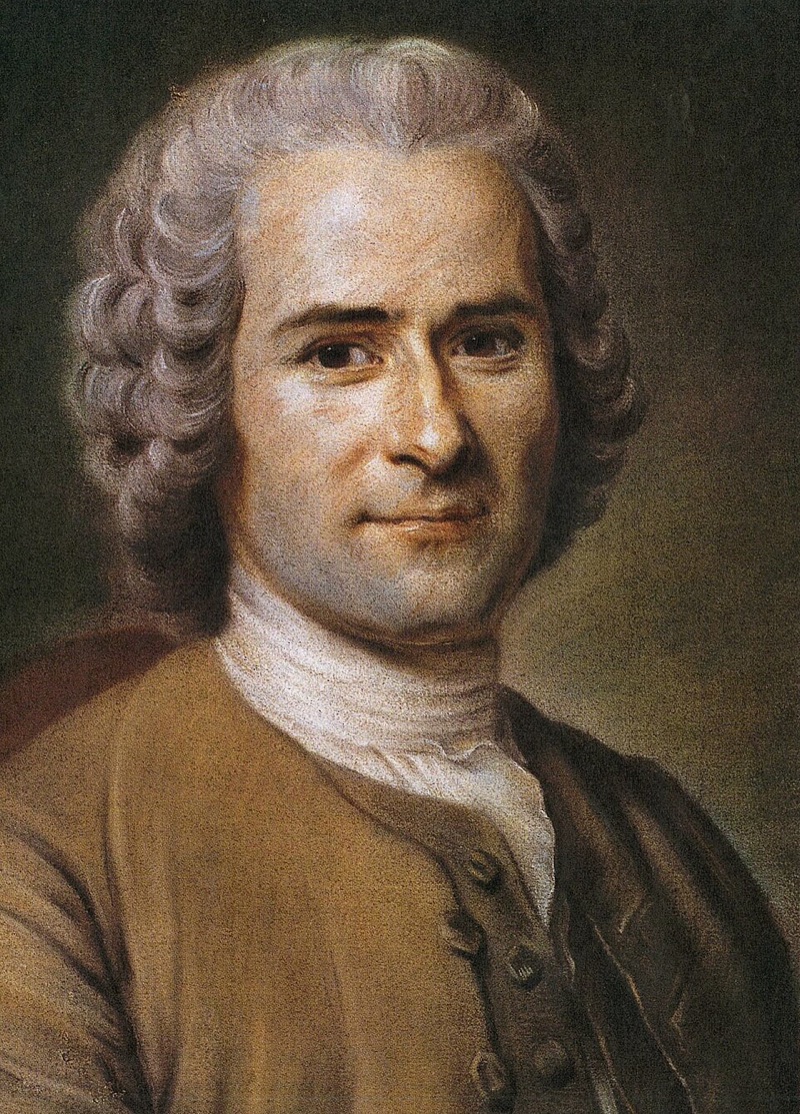
Rousseau carries the philosophical answer from the individual to the political. In 1762 he published two books, The Social Contract, on how a people can legitimately govern itself, and Émile, on how to educate a single child, and he regarded Émile as the more important of the two. The judgment looks strange until you see the connection between the books. Collective self-government works only if the people doing the governing can examine a question and reach their own judgment about it, so that education is not a preparation for political life but a condition of it. A republic of people who cannot think for themselves would be less a republic than an audience.
It follows that the capacity each student builds does not remain a private matter. Autonomy developed one person at a time is also the material from which self-government is made, which means that coursework is neither purely personal nor purely economic. The argument also runs in reverse, since a population that has handed over its judgment is not so much oppressed as unable to govern itself, a condition that is harder to undo than oppression. Later essays in this series, on AI and democracy and on AI and power, return to this question from the outside.
These answers disagree about why understanding matters. On the economic view it is the ability to catch a tool’s errors, which stays valuable for as long as the tools make them. On Aristotle’s and Kant’s it is part of what a good life consists in and what keeps a person’s judgment their own, and Rousseau adds that it is what allows a people to govern itself, which now includes holding its machines to account. They nonetheless recommend the same behavior, which is to keep the friction through which understanding is formed. There is also a further reason that belongs to none of them, which is that understanding is one of the few goods that is not used up when it is shared. Thomas Jefferson made the point while explaining why ideas resist being owned: “He who receives an idea from me, receives instruction himself without lessening mine; as he who lights his taper at mine, receives light without darkening me.“Letter to Isaac McPherson, 13 August 1813.
When friction becomes absorbing
The case so far has been for keeping friction, and the objection that follows is predictable: if friction is necessary, must it also be miserable? The answer from the second lecture is that it need not be, and that answer rests on a body of research that I think every student should know.
Most people have experienced the state this research describes, though rarely in a library. Three hours pass and feel like forty minutes. Concentration arrives without having to be summoned, and you have no attention left over for thoughts about yourself, the grade or how you are doing, only for the next move. The activity is difficult rather than pleasant in the way a film is pleasant, and yet you do not want to stop. Most students meet this state by accident, in a game, a musical instrument or a side project, and rarely in their coursework. For many people the most dependable way into it is through the body, in the kinds of activity described earlier: running with your attention on the trail, dancing, or, in my case, shadow boxing. That is no coincidence, since each of them demands the kind of presence that turns out to be one of the conditions of flow. Boxing has also shown me how much skill the state requires, which I have written about before. A punch makes the shoulders tense by instinct, and the relaxed alertness it takes to slip one comes only after years of training.
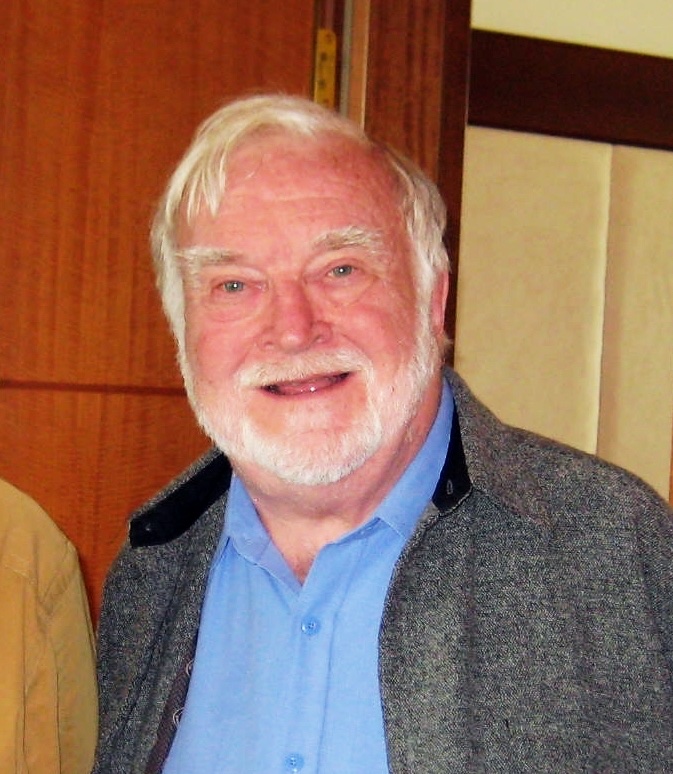
Mihaly Csikszentmihalyi (1934–2021) was a Hungarian-American psychologist, first at the University of Chicago and later at Claremont, who devoted his career to a question most of his field had set aside, which was not what makes people unwell but what makes life worth living.
He began by interviewing people who threw themselves into demanding activities for their own sake, among them rock climbers, chess players, dancers, composers and surgeons.The first book-length account is Beyond Boredom and Anxiety, 1975. They repeatedly described the same state, and several of them used the same image to do so, that of being carried along by a current, which is why he called it flow.
What made this a finding rather than a slogan was the method he developed with Reed Larson, known as experience sampling.Larson and Csikszentmihalyi, “The experience sampling method,” 1983. Participants carried pagers that signaled at random moments several times a day for a week or longer, and at each signal they recorded what they were doing, how challenging it was, how skilled they felt and how they felt. Because the signals were random, the data did not consist of the moments people chose to remember. Across thousands of participants in many occupations and countries, the moments people rated most highly fell into the same pattern, and they were not the restful ones. Csikszentmihalyi summarized the result in his 1990 book:
The best moments in our lives are not the passive, receptive, relaxing times… The best moments usually occur if a person’s body or mind is stretched to its limits in a voluntary effort to accomplish something difficult and worthwhile.
In a 1996 interview with Wired he gave a shorter definition, describing flow as “being completely involved in an activity for its own sake.” Those last four words connect his work directly to Aristotle’s, as the next section explains.
Friction matched to skill
Csikszentmihalyi described flow in terms of nine elements, four of which are conditions you can arrange in advance. You need a clear goal for what the next move is meant to achieve, which means the next twenty minutes rather than the semester. You need immediate feedback on whether the move worked, in seconds rather than a week later when a grade arrives. The challenge has to match your skill, demanding everything you have and no more. And your concentration has to be undivided, so that distractions stop registering.
The other five elements are experienced rather than arranged, and you usually notice them only afterwards. Action and awareness merge, so that you stop narrating what you are doing and simply do it. You feel a sense of control, which Csikszentmihalyi called paradoxical because it comes from exercising control in a difficult situation rather than from having the outcome guaranteed. Self-consciousness disappears. Your sense of time distorts, so that hours compress or seconds stretch. And the activity becomes its own reward.
Csikszentmihalyi’s term for that last element is “autotelic,” from the Greek auto, self, and telos, end or purpose. It describes an activity whose purpose lies within itself, so that the grade stops being the reason for the work. Telos is Aristotle’s word, and the connection is more than etymological. Aristotle argued from first principles that some things are wanted for their own sake and that a good life consists in the excellent exercise of our characteristic capacities. Csikszentmihalyi, working from random pager signals rather than first principles, found that the hours people valued most were those spent working at the edge of their ability on something done for its own sake. Two very different methods, separated by twenty-three centuries, arrive at the same description, and neither of them describes an easy afternoon.
Of the four conditions you can arrange, the one on which the theory depends is the match between challenge and skill, and this is where friction enters the account. The state you are in depends on two quantities, how difficult the task is and how skilled you currently are, and only the relationship between them matters.

When the task exceeds your skill, your attention goes to the fear of failing rather than to the work, and the result is anxiety. When your skill exceeds the task, your attention drifts toward anything more interesting, and the result is boredom. Learning happens in neither state. Flow occupies the band between them, where the friction of the task is matched to the person doing it.
This is close to Aristotle’s own account of virtue as a mean. In the chapter in which he defines excellence, he argues that virtue lies between excess and deficiency, and that the mean in question is relative to the person rather than fixed (II.6). His example comes from athletic training. If ten pounds of food are too much for a particular person and two pounds too little, a trainer will not simply prescribe six, because six pounds may be too little for the wrestler Milo and too much for someone just beginning to train. The right amount of friction in learning is relative in the same way, which is why the same problem set can produce anxiety in one student, boredom in a second and flow in a third.
A fuller version of the model, developed by Fausto Massimini and Massimo Carli in Milan from experience-sampling data and made widely known by Csikszentmihalyi’s Finding Flow (1997), divides the space into eight states arranged around a person’s own average levels of challenge and skill.Massimini and Carli, “The systematic assessment of flow in daily experience,” in Csikszentmihalyi and Csikszentmihalyi (eds.), Optimal Experience, 1988.

Two of these states describe most coursework honestly: apathy, in a class a student has given up on, and boredom, in one that is beneath them. The two states on either side of flow are the most useful to recognize, because each is a small adjustment away from it. A student in the state of control, where skill is high and the challenge moderate, needs more difficulty, while a student in the state of arousal, where the challenge is high and skill moderate, needs more skill.
The model also makes it possible to diagnose a bad study session rather than merely endure it. Such a session is usually one of two kinds, and since the remedies are opposite, it helps to identify which kind it is before trying to fix it. A student above the channel, in anxiety, rereads a problem four times without absorbing it, because they are thinking about their inability to solve it rather than about the material. The remedy is to reduce the difficulty by finding a smaller version of the problem, not to try harder. A student below the channel, in boredom, works through the tenth instance of something they understood by the third, reaching for their phone between each one. The remedy is to increase the difficulty by adding a constraint, working faster or asking why the method works.
Finally, the channel does not stay in one place, and this is what makes flow a theory of learning rather than only of enjoyment. Each hour spent in the channel increases your skill, so that the task that produced flow last month produces boredom this month.

Remaining in flow therefore requires taking on harder work continually. It is not a place you reach and settle into but a band you have to keep climbing in order to stay inside, which is the progressive overload of the weight room experienced from the inside, and that continuing climb is what the first half of this essay called learning.
Arranging good friction
You cannot decide to be in flow, but you can arrange the conditions that produce it and then begin working.
Reading a difficult book is the clearest everyday example, although it is rarely described this way. It provides a clear goal, which is to follow the argument, and immediate feedback, since a reader knows the moment a sentence stops making sense. Its difficulty is matched to the reader if the book is well chosen, and the experience collapses as soon as the reader is interrupted. What makes reading an honest test is that nothing holds the reader in place. The page does not move, reward, escalate or notice that the reader has left, so all of the momentum has to come from the reader. A social media feed, by contrast, supplies all of its own momentum and asks for none. Both can make an hour disappear, but only the book asked anything of the reader, and only the book leaves the reader able to do the same thing again tomorrow, for longer.
The conditions for flow can be arranged deliberately, and none of them depends on mood. The first is a goal for the next twenty minutes rather than for the semester. “Study for the midterm” gives you nothing to aim at, whereas “derive part (b) without looking at my notes” does, and it helps to write the goal down before starting. The second is a feedback loop, which engineering students have readily available in the form of a test, a compiler or a small case that can be checked by hand, and which a grade returned a week later does not provide. The third is deliberate adjustment of difficulty: when you are anxious, look for a smaller version of the problem, and when you are bored, add a constraint, such as working without notes or a calculator, in half the time, or while explaining each step aloud. The fourth is a block of uninterrupted time long enough to enter the state, since a session made of ten-minute fragments never reaches the channel, however many hours the fragments add up to.
The last condition matters more than it appears to. Deep concentration does not begin instantly, and Tom DeMarco and Timothy Lister, writing about programmers in Peopleware (1987), estimated that it takes at least fifteen minutes to enter. The real cost of an interruption is therefore not the twenty seconds spent glancing at a message and replying but the time it takes to get back in, with a partly collapsed picture of the problem in mind. The organizational psychologist Sophie Leroy calls part of what lingers after such a switch “attention residue”: when people move from one task to another, some of their attention remains with the task they left, so that a student who answers a quick message returns to the problem with part of their mind still on the message.Leroy, “Why is it so hard to do my work? The challenge of attention residue when switching between work tasks,” Organizational Behavior and Human Decision Processes, 2009. Four such interruptions in an evening can consume three hours at a desk without a single minute in the channel, while leaving the student sincerely convinced that they studied for three hours. Putting the phone in another room is therefore not superstition but the cheapest intervention available.
Tools that add, steal or remove friction
Technology is not a single thing, and whether a tool helps depends on which of three things it does to the channel.
Some tools supply the conditions of flow, and the best tools in engineering work this way. A test suite, a compiler or an interactive interpreter puts a few seconds between an action and the knowledge of whether it worked, which musicians and climbers have always had and most other disciplines still lack. A failing test written in advance states exactly what the next twenty minutes must achieve and signals the moment it has been achieved. Version control makes a wrong attempt free to undo, and when mistakes are cheap people attempt harder things, which keeps them near the top of the channel. Even a search that answers in a second, rather than requiring a walk to the library, keeps a student inside a problem instead of outside it. Tools of this kind remove the friction that does no work and leave the useful friction in place.
Other tools take attention away. Some products are engineered against concentration, so that a notification amounts to a request to leave the channel, sent by someone whose revenue depends on its being accepted. A feed is a cheap imitation of flow, providing absorption and a distorted sense of time without any challenge or skill, so that it resembles flow while building nothing. Csikszentmihalyi called this kind of experience passive leisure, and his data showed it to be far less rewarding than people expect. These products are not badly built. They are built extremely well, toward goals that are not those of the people using them. The difficulty is that the same device serves both purposes, since a student’s phone is at once the greatest threat to their concentration and their calculator, notebook and course app, which is why it calls for a rule rather than for willpower.
A different tradition has thought carefully about this second kind of threat. Kant’s enlightenment concerned freedom from being led by other people, but an older idea that English also translates as enlightenment is concerned with being led by one’s own appetites. In Buddhism, enlightenment translates bodhi, awakening, and it is presented as something to be tested rather than believed. In the Kalama Sutta, villagers confused by rival teachers are told, roughly, not to rely on tradition, scripture or a teacher’s authority but on what they find to be true for themselves. The Second Noble Truth locates the source of suffering in taṇhā, craving, a word that literally means thirst, and the teaching locates agency in intention: “Intention, I tell you, is kamma” (Aṅguttara Nikāya 6.63). On this account freedom consists in the space between an impulse and what you do about it. The practice that widens that space is sati, mindfulness, which students usually take to mean meditation alone but which means noticing an impulse as it arises, wherever that happens. Noticing the pull of a post designed to provoke anger, and pausing before reacting to it, is the same practice, and so is noticing the urge to open a chat window three minutes into a hard problem.
The third relationship is new and specific to AI. A model that does a task on a student’s behalf does not take their attention. It removes the difficulty itself. Once the problem has been handed over, the challenge the student faces falls to zero, which places them neither above the channel nor below it but beneath the entire diagram.

This accounts for an experience many students describe, of an evening of correct, finished and effortless work that nonetheless leaves them feeling flat and slightly hollow, because the output was correct but nothing was experienced in producing it. Boredom can be escaped by raising the difficulty, but when the difficulty has been removed entirely there is nothing left to raise.
Used deliberately, however, the same tool may be the best instrument for flow ever built, because it can adjust friction in either direction. A student in anxiety can ask it not for the answer but for a smaller version of the problem, such as the two-variable case or a missing prerequisite, and so return to the channel instead of giving up. A student in boredom can ask for a harder instance, such as a version that breaks their current approach, and so return to the top of the band. A student blocked at one in the morning can get feedback in seconds instead of waiting until Tuesday, which is exactly what I wanted as an undergraduate. Each of these uses adjusts the challenge or shortens the feedback loop, and none of them does the student’s thinking.
The distinction that runs through this whole essay can therefore be reduced to a question worth asking before any prompt, which is whether the help being requested removes an obstruction or removes the difficulty. An obstruction is a missing prerequisite, an unreadable error message, notation you have never seen, or a setup step unrelated to the idea being learned, and clearing it lets you keep working. The difficulty is the reasoning the exercise exists to make you do, and if it is removed the work still gets finished, but without you having taken part in it. In the terms of this essay, an obstruction is friction that does no work, and the difficulty is friction that does. Reading makes the distinction especially clear. A summary of an argument is not a faster way of reading the argument, because it removes the only part of the reading that was going to change the reader.
The friction worth keeping
None of this asks anyone to suffer. What it asks is that students work at the edge of their own ability, which is where Aristotle’s ethics, Csikszentmihalyi’s psychology and, I suspect, most people’s memories of their best hours agree that the most valuable work is done. The hours that teach us most also tend to be the ones we enjoy most, and this is not a coincidence, since both depend on friction matched to the person meeting it. The friction worth removing is the friction that does no work, such as the queue, the unreadable error, the missing prerequisite and the six-day wait. The friction worth keeping is the friction through which understanding and excellence are formed, and the central skill of studying alongside capable machines is learning to tell the two apart.
Telling them apart is a matter of judgment more than technique, and judgment is trained in particular places. Courses in philosophy, history and literature are where students practice holding an argument they disagree with for long enough to understand it, and the habits those courses train, reading closely and writing precisely, will outlast several generations of technical tools. The question of what is worth building at all is also not one that computer science can answer by itself, and nobody who works in the field is excused from it. Those courses are best taken the slow way, by reading the primary texts without a summary open in another tab, which is the same choice about friction in its plainest form.
None of this is an argument for spending college entirely at a desk. The friendships, the late-night arguments and the clubs that nobody funds are part of the education rather than distractions from it, and they come only once.
Next week the series turns from how to work well in the world as we find it to the people who are building that world: the ideas several of them hold, where those ideas came from, and why so much of the public conversation about AI sounds religious.
Notes and sources
Aristotle’s Nicomachean Ethics is cited by book and chapter, with quotations from W. D. Ross’s translation. On incubation, see Graham Wallas, The Art of Thought (1926), and Henri Poincaré, Science and Method (1908). On memory and learning, see N. J. Slamecka and P. Graf, “The generation effect: Delineation of a phenomenon,” Journal of Experimental Psychology: Human Learning and Memory (1978); B. Butterfield and J. Metcalfe, “Errors committed with high confidence are hypercorrected,” Journal of Experimental Psychology: Learning, Memory, and Cognition (2001); L. Rozenblit and F. Keil, “The misunderstood limits of folk science: An illusion of explanatory depth,” Cognitive Science (2002); R. A. Bjork, “Memory and metamemory considerations in the training of human beings,” in J. Metcalfe and A. Shimamura (eds.), Metacognition: Knowing about Knowing (1994); H. L. Roediger and J. D. Karpicke, “Test-enhanced learning,” Psychological Science (2006); and M. Kapur, “Productive failure,” Cognition and Instruction (2008).
The study of high-school mathematics is H. Bastani et al., “Generative AI without guardrails can harm learning: Evidence from high school mathematics,” PNAS 122(26) (2025). The declaration is A Severe Misalignment of AI in Mathematics (11 September 2026). The study of customer-support work is E. Brynjolfsson, D. Li and L. Raymond, “Generative AI at Work,” Quarterly Journal of Economics (2025). The studies of exercise are J. Thompson Coon et al., “Does participating in physical activity in outdoor natural environments have a greater effect on physical and mental wellbeing than physical activity indoors? A systematic review,” Environmental Science & Technology (2011), and J. Verghese et al., “Leisure activities and the risk of dementia in the elderly,” New England Journal of Medicine (2003).
The philosophical sources are Will Durant, The Story of Philosophy (1926); Immanuel Kant, “An Answer to the Question: What Is Enlightenment?” (1784) and Groundwork of the Metaphysics of Morals (1785); Isaiah Berlin, “Two Concepts of Liberty” (1958); Jean-Jacques Rousseau, The Social Contract and Émile, or On Education (both 1762); Thomas Jefferson’s letter to Isaac McPherson of 13 August 1813; and, for the Buddhist texts, the Aṅguttara Nikāya 3.65 (the Kalama Sutta) and 6.63.
On flow, see Mihaly Csikszentmihalyi, Beyond Boredom and Anxiety (1975), Flow: The Psychology of Optimal Experience (1990) and Finding Flow (1997), his 1996 interview with Wired, and his 2004 TED talk, “Flow, the secret to happiness”; R. Larson and M. Csikszentmihalyi, “The experience sampling method,” New Directions for Methodology of Social and Behavioral Science (1983); and F. Massimini and M. Carli, “The systematic assessment of flow in daily experience,” in M. Csikszentmihalyi and I. S. Csikszentmihalyi (eds.), Optimal Experience (1988). On concentration and interruption, see T. DeMarco and T. Lister, Peopleware: Productive Projects and Teams (1987), and S. Leroy, “Why is it so hard to do my work? The challenge of attention residue when switching between work tasks,” Organizational Behavior and Human Decision Processes (2009).